
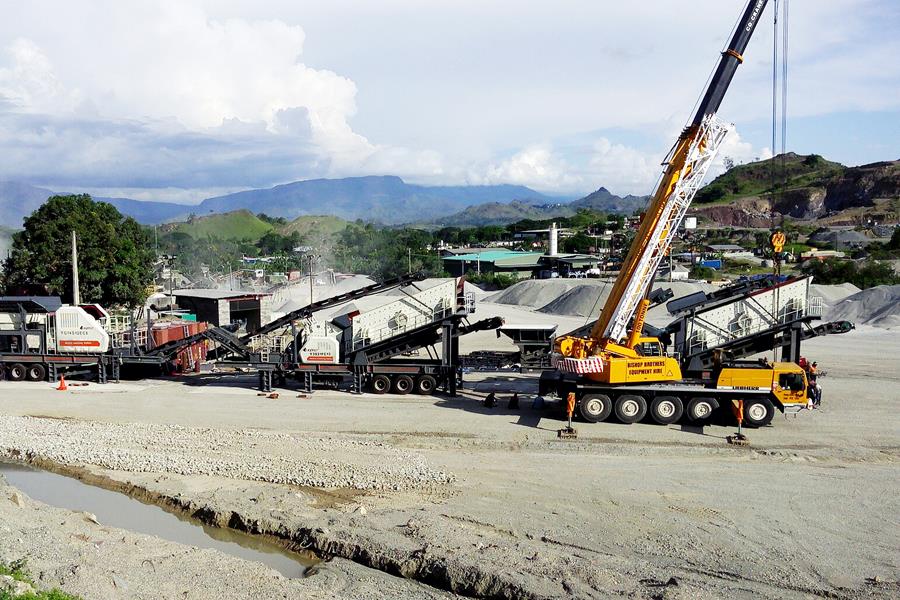
Which Vibrating Screen Is Best for Wet Bauxite 220 TPH in Guinea
Guinea‘s Bauxite Is Not a Dry Material Problem
Guinea is the world’s largest bauxite producer, and 2026 has pushed that position further ahead. National output is projected to grow by 18.5% to 207.3 million tonnes this year, driven by the resumption of major operations including Tinguilinta, AGB2A, and Bel Air. For a 220 TPH screening circuit, that scale matters—but it is not the number that decides whether your plant works. The deciding factor is moisture. Guinean bauxite, particularly from the Boké and Boffa corridors, is notoriously sticky when wet. Even in dry months, at its lowest moisture content, material builds up in transfer chutes and requires frequent cleaning. Once surface moisture climbs into the 5–8% range, screening performance collapses. The material stops behaving like discrete particles and starts behaving like a cohesive mass. If your 220 TPH circuit is designed around a conventional vibrating screen, that mass will blind the deck, peg the apertures, and send saleable fines out with the oversize. The question is not which screen is “best” in a catalogue. It is which screen keeps working when the feed turns to mud.
Why Standard Vibrating Screens Fail on Wet Bauxite
Conventional circular-motion or linear-motion screens rely on the material bed stratifying so that fines can fall through the apertures. Wet bauxite does not stratify. It agglomerates. Operators in Queensland’s tropical bauxite operations have documented exactly this failure mode: material tends to agglomerate as it passes over the existing vibrating screen, leading to low screening efficiencies and loss of saleable product to oversized reject material. The same report notes that traditional screening equipment such as vibrating screens and grizzly feeders often struggle with the wet, sticky texture of bauxite, an issue especially pronounced in tropical environments. The consequences are measurable. Blinding reduces open area, which reduces capacity. Pegging forces manual intervention—high-pressure water guns and shovels—which means downtime. And because fines are rejected with oversize, recovery drops. In a 220 TPH circuit, losing even 15% of the minus-fine fraction to the oversize stream represents tens of thousands of tonnes of saleable product per year. That is the real cost of choosing the wrong screen.
Flip-Flow Screens: The Design That Solves Blinding at the Source
For wet, sticky bauxite, the screen type that consistently outperforms is the flip-flow screen, also called a self-cleaning screen. The principle is straightforward but effective. Instead of a rigid wire mesh that holds a fixed aperture shape, a flip-flow screen uses elastic polyurethane panels mounted on alternating tensioning frames. The frames move in opposition to each other, subjecting the screen surface to hundreds of high-frequency flip-flow cycles per minute. No aperture maintains a fixed shape. The continuous flexing action physically ejects adhering mud and prevents the wedging of semi-dry particles. The performance data from open-pit bauxite operations is compelling. After switching to self-cleaning flip-flow screen mats, mines reported that average screen service life extended from just a few days to several months, hourly throughput per screening unit doubled, and the need for dedicated personnel to monitor the screen surface around the clock was eliminated. Clogging rates stay under 5%, and screening efficiency is double that of standard vibrating screens. For a 220 TPH wet bauxite circuit in Guinea, that difference is not incremental. It is the difference between a plant that runs and a plant that stops for cleaning every few hours.
Polyurethane Media: The Material Choice That Makes Flip-Flow Work
The flip-flow principle depends on the screen media. Steel wire mesh cannot flex the way a flip-flow screen requires. The material of choice is polyurethane, and its properties are well matched to bauxite. Polyurethane is elastic, so it flexes without cracking under the repeated tension cycles. Its surface is non-stick, so wet clay minerals have less tendency to adhere. And its abrasion resistance is substantially higher than steel in this application, with documented service life 5 to 8 times longer than traditional steel screens in bauxite processing. The aperture geometry also matters. Proven designs use tapered polyurethane panels with converging slot geometry—wider at the feed side, narrowing toward discharge—which helps material pass through rather than wedge. For Guinean bauxite with variable clay content and moisture, this combination of elastic media and tapered slots is the practical answer to blinding. A rigid screen, regardless of motion type, cannot replicate it.
Machine Configuration: What to Specify Beyond the Screen Deck
Choosing a flip-flow screen solves the deck problem. It does not solve the circuit. A 220 TPH wet bauxite screening station needs several supporting decisions made correctly. The screen body should be engineered for high-amplitude operation to handle the increased load of wet, cohesive feed. The feed arrangement must distribute material evenly across the full width of the deck; concentrating flow in the centre will overload one section and starve the rest. Spray bars integrated into the feed zone can help initiate particle separation before the material reaches the flip-flow section, but they should be controlled to avoid adding unnecessary water. The discharge chutes need smooth, steep walls with minimal ledges, because wet bauxite will build up on any horizontal surface. And the support structure must account for the dynamic loads of a flip-flow mechanism, which differ from those of a conventional vibrator. These are not optional refinements. In Guinea’s operating conditions—high humidity, variable feed, and no tolerance for frequent stoppages—they determine whether the machine delivers its rated capacity.
The Guinean Context: Why This Decision Matters Now
Guinea’s bauxite sector is expanding rapidly, and the operational discipline that supported older, smaller operations will not carry the new scale. State-owned Nimba Mining alone is targeting 10 million tonnes of shipments in 2026 and 12 million tonnes of annual capacity from 2027. A five-year offtake agreement with Glencore covers 50 to 60 million tonnes, providing a stable demand base that justifies investment in reliable processing equipment. For an operator running a 220 TPH screening circuit, the commercial case for getting the screen right is straightforward: a screen that blinds loses saleable product, a screen that requires manual cleaning stops the plant, and a screen that wears out in a week consumes maintenance resources that should be directed elsewhere. A flip-flow screen with polyurethane media addresses all three failure modes simultaneously. It is the specification that matches the material.
How OCP Mechanical Company Supports Guinean Bauxite Operations
OCP Mechanical Company has manufactured mining and processing equipment for over 40 years. We supply jaw crushers, cone crushers, impact crushers, VSI sand making machines, vibrating screens, feeders, sand washers, and complete crushing and screening plants. For wet bauxite applications, our engineering team can specify flip-flow screening stations with polyurethane panels, sized to your target throughput and feed characteristics. We do not sell a standard catalogue item for this application. The screen is configured around your moisture range, your clay content, and your product split. Because we sell direct from our factory, there is no distributor margin in the price, and our engineers work with you on the layout and the media selection. Our online customer service team is available 24 hours a day to discuss specifications, provide updated pricing, and help you work out which configuration suits your site. If you are evaluating a 220 TPH wet bauxite screening circuit in Guinea, click the chat button and start the conversation.
-
-
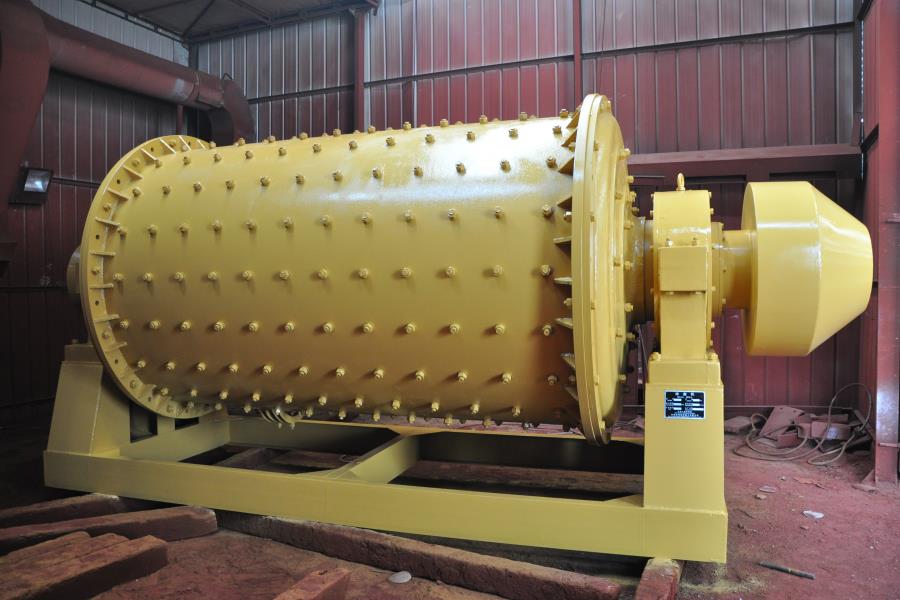
160 TPH Andesite Mobile Crushing Plant for Sale in Surabaya Indonesia
-
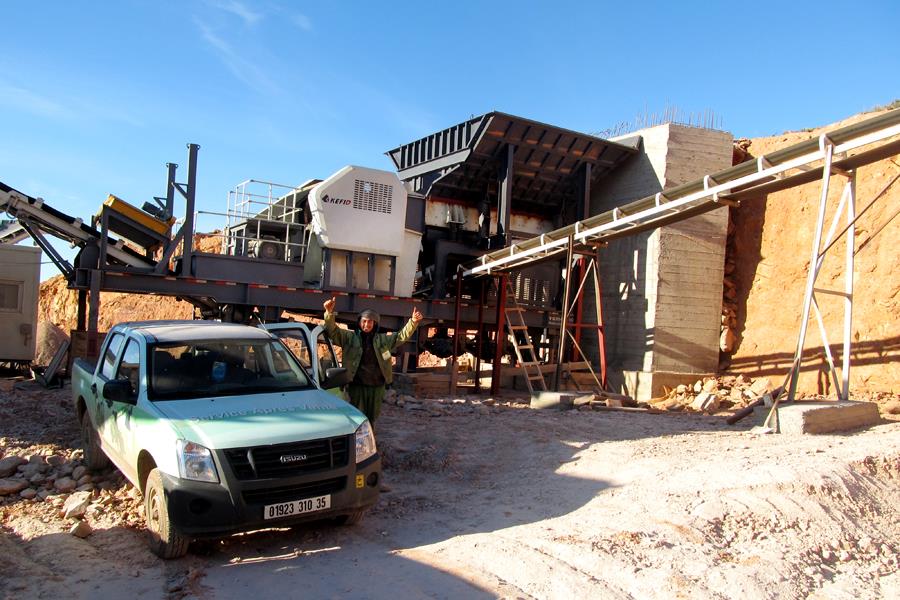
How to Reduce Dust from a 130 TPH Limestone Crusher Plant in Nigeria
-
80 TPH Construction Waste Mobile Impact Crusher in Port Harcourt Nigeria
-
220 TPH Iron Ore Cone Crusher Liner Replacement Guide in South Africa



