
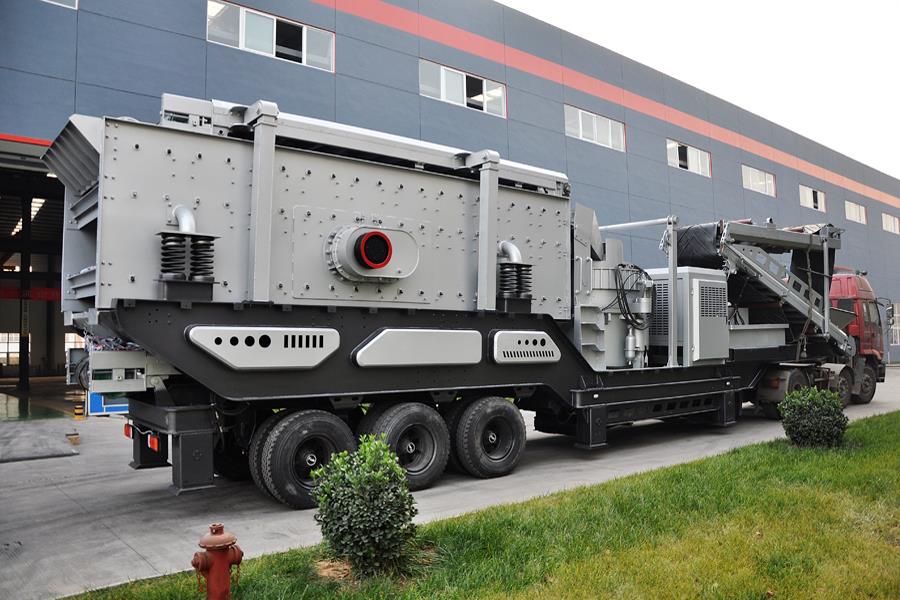
80 TPH Construction Waste Mobile Impact Crusher in Port Harcourt Nigeria
Port Harcourt Is Rebuilding, and the Rubble Has to Go Somewhere
Rivers State is spending money on infrastructure at a pace the city has not seen in years. The 50.15-kilometre Port Harcourt Ring Road is targeting completion by October 2026, with Julius Berger confirming the schedule holds as long as financing continues. The Federal Government has approved ₦74.51 billion for the Phase II upgrade of the East-West Road from Eleme Junction to Onne Port Junction, a nine-month contract that will tear up and rebuild one of the region‘s busiest freight corridors. Add to that the $85 million BUA terminal expansion at the port and the new commissioners‘ quarters under construction in Trans-Amadi, and the city is generating demolition debris faster than its landfills can absorb it.
That is the problem a mobile impact crusher solves. Not in theory—in practice, on the ground, at the demolition site.
What Port Harcourt‘s Demolition Waste Actually Looks Like
Research on construction waste flows in Port Harcourt is unambiguous. Concrete accounts for roughly 45% of the waste stream, followed by wood at 20%, metal at 15%, plastic at 10%, and mixed debris making up the remainder. The concrete fraction is the commercially interesting part, because it is the material that can be crushed and sold back into the construction cycle.
Port Harcourt already has a functioning informal market for this material. A tipper load of hardcore and rubble—what local contractors call hardcore—sells from ₦45,000 upwards for pothole filling and road base. The demand exists. What is missing is the equipment to process demolition concrete at scale, on site, without hauling it across the city to a dump.
Why an Impact Crusher, and Not a Jaw or Cone
Construction demolition waste is not quarry rock. It arrives as a mixed stream: reinforced concrete slabs, hollow blocks, tiles, mortar, and the occasional piece of timber or rebar. A jaw crusher handles this material, but slowly, and it struggles with the rebar that comes embedded in older concrete. A cone crusher is the wrong tool entirely—it is designed for hard, uniform rock, not a variable mixture that changes composition from one truckload to the next.
An impact crusher is the correct machine for this job. Its high-speed rotor breaks concrete along its natural fracture lines and tolerates the occasional piece of steel that would jam a compression crusher. It produces a well-graded, cubical product that compacts well as road base and blends cleanly into concrete block mixes. This is why the Nigerian mobile construction waste crushing projects that have been documented use a jaw crusher mobile station followed by an impact crusher mobile station—the jaw does primary size reduction, and the impact crusher does the shaping and secondary reduction.
For an 80 TPH operation in Port Harcourt, a single mobile impact crusher unit, fed by an excavator or a small primary jaw, is a realistic configuration. It is small enough to move between demolition sites in Trans-Amadi, Rumuigbo, and the Eleme corridor, but large enough to process a meaningful volume of material per shift.
What 80 TPH Means in Practice
Eighty tonnes per hour is not a headline number. It is a working number. At 80 TPH, a single shift operation can process roughly 640 tonnes per day of demolition debris. If a portion of that output is saleable as hardcore or recycled aggregate, the economics shift. The material that would have cost money to haul and tip becomes a product with a local market price.
The real cost advantage, though, is not the revenue from recycled aggregate. It is the elimination of haulage. Every truck that leaves a demolition site carrying rubble to a landfill is a truck that has to make a return trip empty. In Port Harcourt‘s traffic, that return trip is time and diesel that never comes back. Processing on site removes that cost entirely. The excavator feeds the crusher, the crushed material is stockpiled on site for reuse, and the trucks that would have hauled waste away are not needed at all.
Equipment Configuration for a Port Harcourt Site
A practical 80 TPH mobile impact crushing setup for Port Harcourt conditions includes a few non-negotiable features:
Overband magnet for separating rebar and other ferrous metals from the crushed product. Without it, steel contamination will damage screens and conveyors downstream.
Hydraulic adjustment for the impact plates. Demolition feed varies from soft mortar to hard concrete; being able to adjust the apron gap quickly keeps throughput consistent without stopping the plant.
Dust suppression at the crusher discharge and conveyor transfer points. Port Harcourt‘s residential areas are close to construction sites, and visible dust plumes attract complaints.
Tracked chassis rather than wheel-mounted. Port Harcourt‘s demolition sites are rarely flat or well-drained. A tracked unit can work on compacted laterite without getting stuck, and it can be driven between sites without a low-loader.
The Cost and the Payback
A mobile impact crushing plant in the 80–120 TPH range, equipped as described above, typically falls in the USD 120,000 to USD 250,000 range depending on chassis type, automation level, and whether a screening unit is integrated. Tracked units sit at the higher end of that range; wheel-mounted units at the lower end. Freight to Onne or Port Harcourt, customs clearance, and commissioning add a further layer, but Nigeria‘s import duty on construction machinery is generally in the low single digits for equipment classified under the right HS code.
The payback calculation is straightforward. If a contractor is currently paying to haul and tip demolition waste, and if a portion of the crushed output can be sold as hardcore or reused on the same project as backfill, the plant often pays for itself within 12 to 18 months of regular use. The variable that decides the outcome is utilisation—a machine that works five days a week pays back faster than one that sits idle.
Why Local Support Decides Whether the Plant Keeps Running
A mobile impact crusher is a mechanical machine with wear parts that need replacing. Blow bars wear out. Belts break. Screen meshes tear. The difference between a profitable operation and a frustrating one is how quickly those parts can be replaced.
Port Harcourt is not Lagos. Parts that are readily available in Ikeja or Apapa may take days to reach Rivers State. For an operator running a crusher on a demolition schedule, that delay is production lost. It is worth asking any supplier where their nearest parts stock is held, and how quickly they can mobilise a technician to a site in Trans-Amadi or Rumuokoro. A supplier with regional warehousing and a responsive service team reduces the risk that a single worn blow bar shuts the plant for a week.
How OCP Mechanical Company Fits This Market
OCP Mechanical Company has manufactured mining and crushing equipment for over 40 years. We build mobile impact crushers, mobile jaw crushers, mobile cone crushers, vibrating screens, feeders, and complete mobile crushing and screening plants. For an 80 TPH construction waste operation in Port Harcourt, our engineering team can configure a tracked or wheel-mounted plant around your actual demolition feed—whether it is reinforced concrete, hollow block, or a mixed stream—and your target output, whether that is road base hardcore or finer recycled aggregate for block making.
Because we sell direct from our factory, there is no distributor margin in the price. Our technical team works with you on the layout and equipment selection rather than handing over a catalogue. And our online customer service team is available 24 hours a day to discuss specifications, provide updated pricing, and help you work out which configuration suits your site.
If you are looking at a demolition project in Port Harcourt and want to stop paying to haul rubble away, click the chat button and start the conversation.
-
220 TPH Iron Ore Cone Crusher Liner Replacement Guide in South Africa
-
100 TPH Sand Washing Plant for Manufactured Sand in Can Tho Vietnam
-
What Is the Best Jaw Crusher for Lead-Zinc Ore 110 TPH in Peru
-
-
How to Extend Blow Bar Life in Impact Crusher for Dolomite 80 TPH



