
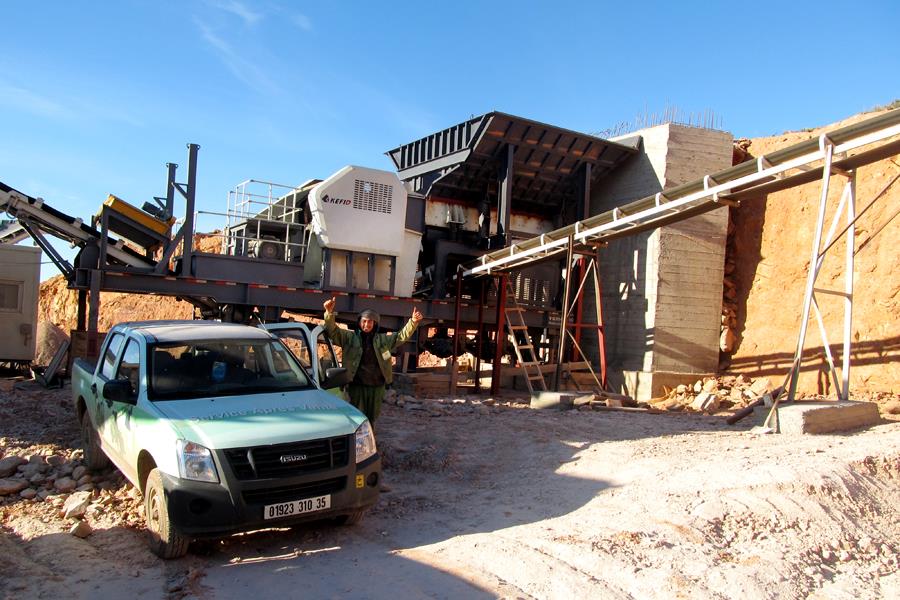
100 TPH Sand Washing Plant for Manufactured Sand in Can Tho Vietnam
Can Tho Is Building While Its Sand Supply Runs Out
The Mekong Delta is in the middle of its most significant transport infrastructure push in decades. Expressways including Can Tho–Ca Mau, Chau Doc–Can Tho–Soc Trang, and An Huu–Cao Lanh are under simultaneous construction, and the Ministry of Construction has flagged a shortage of roughly 1.8 million cubic metres of concrete sand in 2026 alone, rising to 4 million cubic metres for 2027–2030. The Chau Doc–Can Tho–Soc Trang expressway needs over 16.6 million cubic metres of leveling sand, of which only about 11 million cubic metres has reached site. Natural river sand is not going to fill that gap. Extraction rates in the Mekong far exceed natural replenishment, and licensed reserves are declining. For an operator in Can Tho with access to crushed stone feed, a 100 TPH sand washing plant is not a speculative investment. It is a response to a documented supply shortfall.
What the Feed Looks Like and What It Takes to Make Concrete Sand
Manufactured sand from crushed limestone, granite, or river pebble carries one problem that natural sand does not: fines. The crushing process generates dust, clay films, and ultrafine particles that, if left in the product, push the silt and clay content above the limits that concrete and mortar specifications allow. A washing plant exists to remove that material. For a 100 TPH circuit in Can Tho, the feed typically arrives from a VSI crusher at 0–5 mm with a fines content that can reach 15–20% . The washing stage must reduce that to a -75 micron content below 10–15% , depending on whether the output is destined for concrete, plaster, or block manufacturing. The plant also needs to handle the Mekong’s seasonal moisture variation. Feed that is dry in February can be saturated in September, and a washer that works in one condition may blind or overload in the other.
Choosing the Right Washer Type for Mekong Feed
Three washing technologies are commonly deployed for manufactured sand, and the choice depends on how much clay is in the feed. A wheel (bucket) washer is the simplest option, with low power consumption and good fines retention, but it struggles when clay content is high. A spiral (screw) washer is more aggressive, using a rotating auger to scrub material against itself as it moves up an inclined trough. It handles dirtier feed and delivers a drier product, making it the more common choice for manufactured sand where clay films are present. A log washer is reserved for heavily clay-bound material that will not break down in a screw washer. For a 100 TPH plant in Can Tho processing VSI sand from limestone or granite, a twin-screw spiral washer is typically the right specification, paired with a vibrating screen ahead of it to remove oversize and a fines recovery unit to capture saleable material from the wastewater.
Equipment Configuration for a 100 TPH Circuit
A workable 100 TPH washing plant is a sequence, not a single machine. The feed enters through a hopper with a grizzly section to reject oversize. A vibrating screen classifies the feed, sending the 0–5 mm fraction to the washer and diverting any coarser material back to the crusher. The twin-screw washer does the scrubbing and dewatering, discharging clean sand onto a stockpile conveyor. The wastewater stream, which carries fines and clay, goes to a fines recovery unit — typically a hydrocyclone and dewatering screen — to capture the fine sand that would otherwise be lost. On a concrete sand line, that recovery step can add 5–10% to saleable output, which pays for itself quickly at current sand prices. The clarified water returns to the washer, and a thickener handles the sludge. The table below gives a reference configuration.
| Stage | Equipment | Reference Specification |
|---|---|---|
| Feed preparation | Vibrating grizzly feeder | Gap 50 mm, heavy-duty bars |
| Classification | Vibrating screen | 2-deck, PU panels, 5 mm and 15 mm apertures |
| Washing | Twin-screw spiral washer | Spiral diameter 920 mm, outboard bearings |
| Fines recovery | Hydrocyclone + dewatering screen | Cut point 75 microns |
| Water management | Thickener + return pump | Closed-loop, 80–90% recovery |
| Stockpiling | Radial stacker conveyor | B800 mm belt, hydraulic lift |
Reference configuration only. Actual specifications depend on feed gradation and target product. Please consult our online customer service for the latest parameters tailored to your material.
What a 100 TPH Plant Costs in Vietnam
Equipment pricing for a 100 TPH sand washing line varies with configuration, but the ranges are reasonably well established. A single spiral washer in this capacity class typically runs USD 8,000 to USD 20,000, while a twin-screw unit sits at the higher end of that range. A complete washing plant — including the feed hopper, vibrating screen, twin-screw washer, fines recovery unit, and conveyors — generally falls between USD 60,000 and USD 160,000 depending on automation level and whether water treatment is included. A recent Vietnam project using a similar configuration for concrete sand at 100 TPH is documented with a gravity-flow layout and a 2XL-920 twin-screw washer, which gives a practical reference point for what a Can Tho installation would look like. These are equipment costs only. Freight to Cat Lai or Cai Rang, inland transport, foundations, and commissioning add a further layer that should be budgeted before the order is placed.
The Economic Case in the Mekong Context
The economics of manufactured sand in the Mekong Delta are straightforward. Natural river sand prices have risen four- to five-fold in recent years as extraction has been curtailed. Manufactured sand has been identified by WWF and the Vietnamese construction sector as the most promising immediate alternative, capable of replacing river sand at rates from 15% to 100% depending on the application. At current pricing, manufactured sand carries a unit cost advantage over river sand in most southern Vietnamese markets. For an operator in Can Tho, that means a washing plant is not just a compliance measure. It is a margin advantage.
Compliance and Water Management
Vietnam’s sand washing operations are subject to environmental regulations governing wastewater discharge and water consumption. The Mekong Delta’s water resources are under pressure, and a washing plant that discharges silt-laden water without treatment will attract regulatory attention. A closed-loop system with a thickener and return pump is the practical answer. Modern plants can recover 80–90% of process water, reducing freshwater intake to the volume lost in product moisture and evaporation. This is not only a compliance measure; it also lowers operating cost in regions where water is metered or where supply is intermittent.
How OCP Mechanical Company Supports Can Tho Operations
OCP Mechanical Company has manufactured mining and processing equipment for over 40 years. We supply spiral sand washers, wheel sand washers, dewatering screens, hydrocyclones, vibrating screens, feeders, and complete sand washing plants. For a 100 TPH manufactured sand operation in Can Tho, our engineering team can configure the washing circuit around your specific feed — whether it comes from limestone, granite, or river pebble — and your target product specifications. Because we sell direct from our factory, there is no distributor margin in the price, and our technical team works with you on the layout and equipment selection rather than handing over a catalogue. Our online customer service team is available 24 hours a day to discuss specifications, provide updated pricing, and help you work out which configuration suits your site. If you are evaluating a manufactured sand washing plant in Can Tho, click the chat button and start the conversation.
-
What Is the Best Jaw Crusher for Lead-Zinc Ore 110 TPH in Peru
-
-
How to Extend Blow Bar Life in Impact Crusher for Dolomite 80 TPH
-
150 TPH Mobile Cone Crusher Rental Cost in Iloilo Philippines
-
130 TPH Graphite Ore Jaw Crusher Selection Guide in Sri Lanka



