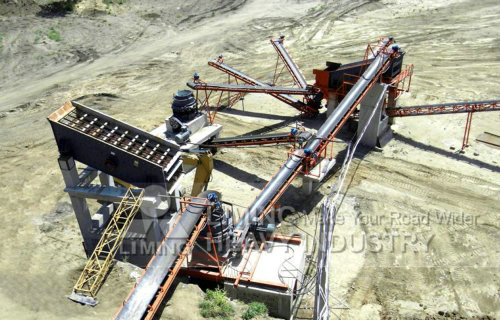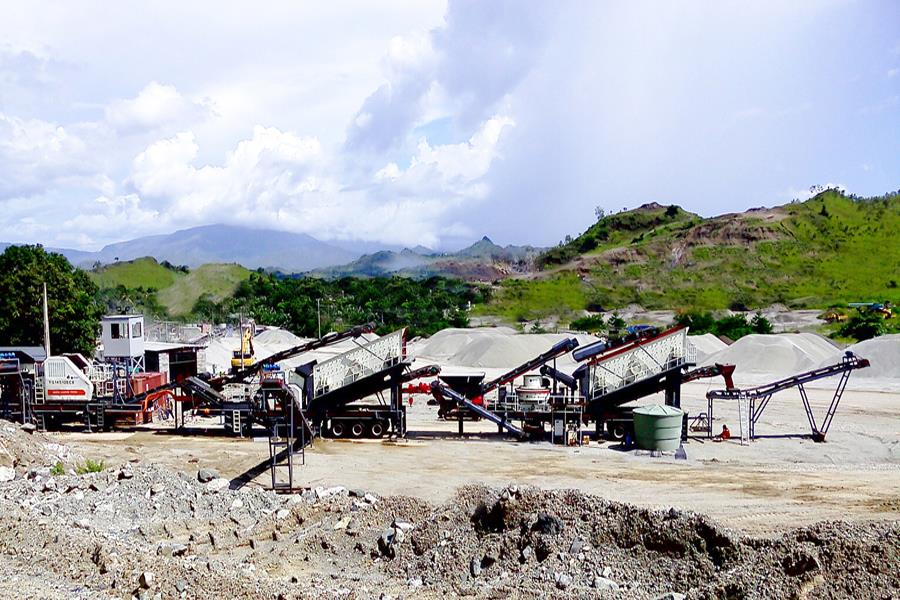
130 TPH Graphite Ore Jaw Crusher Selection Guide in Sri Lanka
Sri Lanka's Graphite Sector Is Being Rebuilt, and Equipment Choices Are Being Reset
Sri Lanka occupies a position no other country can claim: it is the world's only commercial producer of natural crystalline vein graphite, a material prized for carbon purity levels that routinely exceed 95% and often approach 99%. That geological distinction has kept the island's graphite industry relevant for over a century. It has not, however, kept it modern. As of early 2026, national output sits at an estimated 7,000–8,000 metric tonnes annually—less than 1% of global supply—with mining concentrated at the historic Kahatagaha and Bogala operations, both constrained by ageing infrastructure and limited mechanisation. The sector contributes under 0.2% to GDP and employs fewer than 3,000 workers directly.
That picture is now changing. A US delegation under the Montana State Partnership Program visited Colombo in February 2026 to explore investment in critical minerals. The government has opened the 102-acre Kahatagaha mine to public-private partnership, with Expressions of Interest closing on 30 April 2026. The Export Development Board has launched a field-level push to expand graphite exports through value addition. And the National Mineral Policy 2026 has replaced a framework that had been in place since 1999, explicitly directing the graphite industry toward higher-value products including anode materials.
For an operator planning a 130 TPH jaw crusher circuit in this environment, the selection question is not academic. The equipment chosen now will operate for the next decade, and it will do so under conditions that differ from those of Sri Lanka's previous mining era.
What Vein Graphite Demands from a Primary Crusher
Vein graphite is not a typical hard-rock ore. It is found in hydrothermal veins that cut through granulite-facies metasedimentary rocks and charnockites, and it arrives at the crusher in a form that is both hard and friable. The host rock is abrasive; the graphite itself is soft and easily over-crushed.
That combination creates a specific requirement that separates graphite crushing from aggregate or base-metal circuits: contamination control. Graphite is graded on carbon purity. Every gram of iron introduced by wear from crusher components dilutes the product and reduces its value. A jaw crusher that sheds metal into the ore stream is not simply inefficient—it is actively degrading the saleable product.
The second requirement is particle size discipline. Sri Lankan vein graphite is valued for its coarse flake and lump structure. Over-crushing at the primary stage generates fines that are more difficult to upgrade and command lower prices. The jaw crusher's job is to reduce run-of-mine feed to a size the secondary circuit can handle, without destroying the natural structure of the graphite.
These two constraints—low contamination and controlled size reduction—shape every subsequent equipment decision.
Sizing the Jaw Crusher for 130 TPH of Vein Graphite
A 130 TPH jaw crusher in a graphite flowsheet is not a high-capacity machine by mining standards. It does not need to handle the throughput of an iron ore primary crusher or a copper concentrator. What it needs to do is accept the feed size that Sri Lankan underground mines produce, reduce it consistently, and do so without contaminating the product.
Run-of-mine vein graphite from underground operations typically arrives with a top size in the 300–500 mm range. A jaw crusher with a feed opening in the 600×900 mm class is generally sufficient to accept that feed and deliver a product in the 80–120 mm range for secondary processing. Motor power for this duty sits in the 55–75 kW range. The table below gives reference parameters.
| Parameter | Reference Range |
|---|---|
| Feed Opening | 600×900 mm to 750×1060 mm |
| Max Feed Size | 400–500 mm |
| Closed Side Setting | 60–90 mm |
| Motor Power | 55–75 kW |
| Capacity | 100–140 TPH |
| Jaw Plate Material | Mn18Cr2, low-contamination profile |
Reference figures only. Actual specifications depend on feed gradation and target product size. Please confirm current parameters with our online customer service.
The jaw plate material specification deserves particular attention. Standard Mn18Cr2 manganese steel is the industry default, and it performs well in abrasive service. For graphite, however, the wear profile matters as much as the wear rate. A plate that wears evenly maintains a consistent closed side setting and produces a uniform product. A plate that develops deep gouges or uneven wear changes the crushing chamber geometry, which alters the product size distribution and increases fines generation. Operators should inspect jaw plates weekly during the first months of operation and record wear patterns, not just wear depth.
What 130 TPH Costs in Sri Lanka's Current Market
Equipment pricing for a jaw crusher in this capacity class is reasonably predictable. A brand-new unit with hydraulic adjustment and manganese jaw plates typically ranges from USD 25,000 to USD 55,000, depending on configuration and motor brand. A complete primary crushing station—including a vibrating grizzly feeder, discharge conveyor, and control panel—generally falls between USD 50,000 and USD 110,000.
These are equipment costs only. Freight to Colombo Port, inland transport to mining sites in the Sabaragamuwa and Central Provinces, customs clearance, foundations, and commissioning add a further layer. Sri Lanka's customs import duty structure operates on a four-band system (0%, 10%, 20%, 30%), and machinery classified under the appropriate HS code for mining equipment typically falls into the lower bands. Buyers should confirm the applicable code with their clearing agent before placing the order, because the difference between bands is material to the landed cost.
The Investment Climate: Policy Reform Is Real, But Implementation Is the Variable
Sri Lanka's National Mineral Policy 2026 is a genuine step forward in framework terms. It replaces a 27-year-old policy, mandates value addition before export, and directs the graphite sector toward higher-value products. The Kahatagaha PPP is the first concrete test of whether the framework translates into action. The government has structured the process with field visits for potential investors and a pre-proposal meeting, which suggests a more professional approach than previous mineral allocation exercises.
The Chamber of Mineral Exporters has been candid about the gap between policy and practice. Its July 2026 statement welcomed the policy but argued that "policy announcements alone will not unlock investment," citing regulatory uncertainty, stalled licences, and weak industry engagement as persistent barriers. The Chamber estimates its members generate around USD 100 million in annual exports and believes the figure could double if longstanding constraints were removed.
For an equipment buyer, this context has a practical implication. The project pipeline is real—Kahatagaha, Bogala's modernisation, and the US investment interest are all active. But timelines may extend. Equipment procurement should be planned with that reality in mind, and the supply chain for wear parts and service should be established before the plant is commissioned, not after.
Matching the Circuit to the Ore, Not the Catalogue
A 130 TPH jaw crusher selection guide that stops at the primary crusher is incomplete. The jaw crusher feeds a secondary circuit, and that circuit determines whether the plant produces saleable graphite or a stream of fines.
For vein graphite, the secondary stage is typically a roll crusher or a cone crusher configured for gentle reduction. Roll crushers are well suited to graphite because they apply compressive force across a controlled gap, producing a product with minimal fines and low contamination. Cone crushers can also work, but cavity selection is critical: a cavity that is too fine will over-crush the graphite and reduce the coarse fraction that commands premium prices.
The screening stage is equally important. A vibrating screen ahead of the secondary crusher removes fines that have already reached target size, preventing them from being crushed again. This is not merely an efficiency measure. In graphite processing, every pass through a crusher reduces the proportion of coarse, high-value material. A circuit designed for graphite keeps the number of crushing stages to the minimum required and removes finished product as early as possible.
Duty, Documentation, and the Practical Side of Importing
Sri Lanka's import process for mining equipment is manageable but requires preparation. The essential documents include the commercial invoice, packing list, bill of lading, and certificate of origin. For equipment that qualifies under a specific HS code for mining or mineral processing machinery, the applicable customs duty band should be confirmed in advance. The National Mineral Policy 2026 also signals a preference for value addition, which may affect the treatment of equipment imported for raw ore extraction versus processing.
Working with a supplier who understands these requirements reduces friction. OCP Mechanical Company has supplied equipment into South Asian markets and can provide the technical documentation and equipment specifications that Sri Lankan customs and the Geological Survey and Mines Bureau expect to see. That does not replace a local clearing agent, but it reduces the back-and-forth that delays clearance.
How OCP Mechanical Company Approaches Graphite Jaw Crusher Selection
OCP Mechanical Company has manufactured mining equipment for over 40 years. We build jaw crushers, cone crushers, impact crushers, VSI sand making machines, vibrating screens, feeders, and complete crushing plants. Every machine is new. For a 130 TPH graphite ore operation in Sri Lanka, our engineering team can review your feed characteristics—top size, hardness, and the proportion of host rock—and recommend a jaw crusher configuration that reduces the ore without over-crushing it or introducing contamination.
Because we sell direct from our factory, there is no distributor margin in the price. Our technical team works with you on the layout and the wear part specification rather than handing over a catalogue. And our online customer service team is available 24 hours a day to discuss specifications, provide updated pricing, and help you work out which configuration suits your site. If you are evaluating a graphite crushing circuit in Sri Lanka—whether at Kahatagaha, Bogala, or a new project—click the chat button and start the conversation.
-
200 TPH Complete Crushing Plant for Granite in Ibadan Nigeria
-
How to Automate a 250 TPH Sand Making Line with VSI in Saudi Arabia
-
80 TPH Barite Jaw Crusher Quotation for Mining in Morocco: What Actually Drives the Price
-
Which Cone Crusher Cavity Is Best for Manganese Ore 160 TPH in South Africa
-