
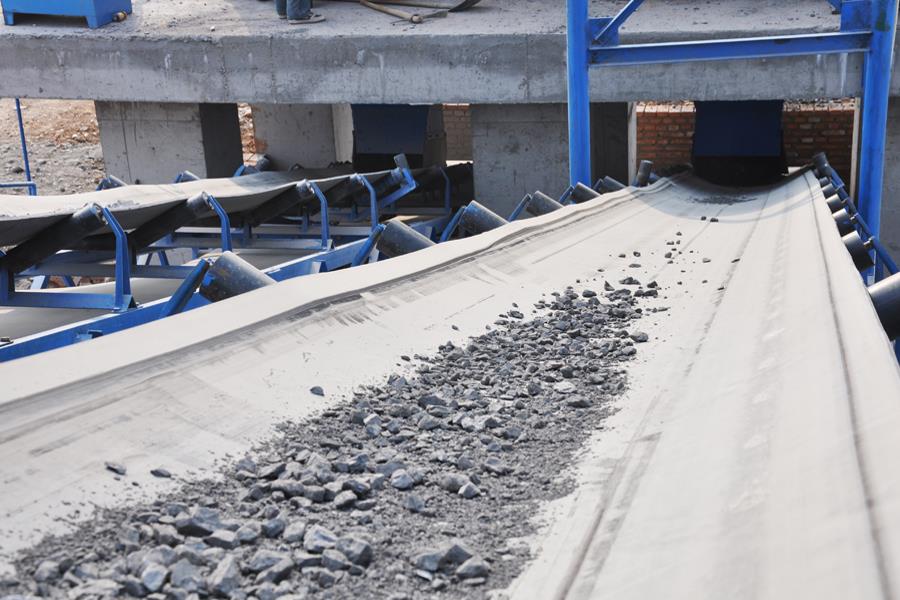
How to Automate a 250 TPH Sand Making Line with VSI in Saudi Arabia
Saudi Arabia's Sand Demand Is Outpacing What Manual Plants Can Deliver
Saudi Arabia's construction sector is not short of work. Vision 2030 projects, the ongoing buildout of NEOM, the New Murabba development in Riyadh, and the hundreds of kilometres of road and utility corridors across the Kingdom are all consuming aggregate at a pace that domestic supply is struggling to match. The Kingdom's construction sand and gravel market has been expanding steadily, and the demand for specification-grade manufactured sand — particularly for concrete, plaster, and asphalt applications — has pushed operators to look at higher-capacity plants.
A 250 TPH sand making line is a mid-to-large installation. It is large enough to supply a commercial sand market or feed a major infrastructure contract, but not so large that it requires a dedicated mining operation. The problem most operators encounter is not the crushing circuit itself. It is the operational discipline required to keep that circuit running at capacity, shift after shift, without a drop in product quality or an increase in energy consumption. That is where automation comes in — not as a gimmick, but as a practical answer to a real problem.
What Automation Actually Means on a Sand Line
Automation in a sand making circuit is not a single system. It is a set of linked functions that together reduce the need for manual intervention and keep the plant operating within its design parameters. On a 250 TPH VSI line, the functions that matter most are:
Automated feed control — a variable-frequency drive on the feeder that responds to crusher load rather than running at a fixed speed.
Crusher load monitoring — sensors that track motor amperage, bearing temperature, and hydraulic pressure, and adjust the feed rate to keep the crusher in its optimal band.
Product size feedback — continuous sampling or online particle size analysis that detects drift in the output gradation and triggers a correction.
Wear part monitoring — tracking of rotor tip and anvil wear so that replacement is scheduled on condition rather than on a fixed calendar.
Centralised control and data logging — a PLC-based system that records operating parameters and provides fault diagnosis.
Each of these functions is available as a standalone upgrade. Together, they change the plant from a machine that depends on operator experience to a machine that manages its own performance within defined limits.
Why Saudi Operators Are Moving Toward Automation Now
Three factors are driving the shift. The first is energy cost. Sand making is an energy-intensive process, and the VSI is the largest single consumer in the circuit. A plant that runs at a fixed rotor speed and a fixed feed rate consumes more power than it needs to, particularly when feed characteristics change. Automated load control reduces specific energy consumption by keeping the crusher in its efficient operating range rather than at the upper end of its capability.
The second factor is labour. Saudi Arabia's industrial sector faces the same skilled labour constraints as other markets, and finding operators with experience running a VSI circuit is not always straightforward. Automation reduces the experience required to run the plant well, which matters when you are staffing across multiple shifts.
The third factor is product consistency. Saudi concrete producers are increasingly specific about the sand they buy — fineness modulus, silt content, and particle shape all matter. A plant that relies on manual adjustment will drift. A plant with automated feedback holds the specification.
Configuring the Circuit: What Sits Where
A 250 TPH sand line is not a single crusher. It is a sequence, and the automation layer touches each stage.
The circuit typically starts with a jaw crusher for primary reduction, followed by a cone crusher for secondary work, and then the VSI for tertiary shaping and sand production. A vibrating screen classifies the VSI output, returning oversize to the VSI and sending finished sand to the washing or fines recovery stage. The automation functions in this circuit sit at three points: the feeder that supplies the VSI, the VSI itself, and the screen that classifies the output.
For a 250 TPH line, the VSI is typically a dual-motor machine with a rotor diameter in the 1,000–1,200 mm range and motor power between 250 and 400 kW. The feed to the VSI should be controlled to below 50 mm, ideally in the 20–40 mm range. The screening stage should be sized to handle the full circulating load, not just the finished product. The table below gives reference parameters.
| Stage | Equipment | Reference Specification |
|---|---|---|
| Primary crushing | Jaw crusher | Feed opening 900×1200 mm |
| Secondary crushing | Cone crusher | Multi-cylinder hydraulic, medium cavity |
| Tertiary shaping | VSI crusher | Dual motor, 250–400 kW, carbide rotor tips |
| Classification | Vibrating screen | Multi-deck, PU panels, 5 mm and 10 mm apertures |
| Fines recovery | Hydrocyclone + dewatering screen | Cut point 75 microns |
| Control | PLC system | Automated feed, load monitoring, fault diagnosis |
Reference configuration only. Actual specifications depend on feed characteristics and target product. Please consult our online customer service for current parameters.
The Practical Steps to Automate an Existing Line
Not every operator is building a new plant. Many are looking at retrofitting automation onto a circuit that is already running. The sequence that works in practice starts with instrumentation before control.
Step one is to install the sensors: amperage transducers on the VSI motors, temperature sensors on the bearings, a level sensor on the feed hopper, and a pressure transducer on the hydraulic system. Without this data, there is nothing to control.
Step two is to connect the feeder to a variable-frequency drive. This is the single highest-value upgrade on most plants. A feeder that runs at a fixed speed cannot respond to crusher load. A feeder on a VFD can, and the difference in energy consumption and wear part life is measurable within weeks.
Step three is to link the sensors and the VFD to a controller. This can be as simple as a PLC with a basic control loop, or as advanced as a system with online particle size analysis and automated closed side setting adjustment. The right level depends on the plant's budget and the operator's tolerance for complexity.
Step four is to establish the set points. These are not generic values. They are specific to your ore, your product, and your equipment. The VSI rotor speed, the feed rate, and the screen aperture settings all interact, and the control system needs to be tuned around the actual operating envelope of the plant.
What Automation Costs and What It Saves
The capital cost of automating a sand line varies widely with the level of sophistication. A basic retrofit — VFD on the feeder, amperage monitoring on the VSI, and a PLC with a simple control loop — typically falls in the USD 25,000 to USD 60,000 range for a 250 TPH circuit. A full system with online particle size analysis, automated CSS adjustment, and remote monitoring capability can run USD 100,000 to USD 250,000.
The savings are real but they accumulate rather than appearing as a single number. Energy consumption on the VSI typically drops by 10–15% when the crusher runs at its optimal load rather than at fixed speed. Wear part life extends by 15–25% when feed conditions are held steady and overloading is avoided. Unplanned downtime falls when the control system detects a developing fault before it becomes a failure. And product consistency improves, which reduces the volume of off-spec material that has to be reprocessed or sold at a discount.
For an operator running 250 TPH on two shifts, the combination of these savings often pays back the automation investment within 12 to 24 months, depending on the baseline the plant is starting from.
Matching the Automation Level to the Operation
Not every plant needs a fully automated control room. A quarry supplying a single concrete plant with a consistent feed and a stable product mix may find that a VFD on the feeder and basic load monitoring is sufficient. A commercial sand producer supplying multiple customers with different specifications needs a higher level of control, because the cost of off-spec material is higher and the product changes more often.
The decision should be driven by the plant's actual operating conditions, not by a preference for technology. Automation that is not used is not an investment. It is an expense.
How OCP Mechanical Company Supports Saudi Sand Producers
OCP Mechanical Company has manufactured mining and processing equipment for over 40 years. We build VSI sand making machines, jaw crushers, cone crushers, impact crushers, vibrating screens, feeders, sand washers, and complete crushing and sand production plants. For a 250 TPH sand line in Saudi Arabia, our engineering team can configure the circuit around your specific feed material and target product, and specify the automation level that matches your operation rather than a generic package.
Because we sell direct from our factory, there is no distributor margin in the price. Our technical team works with you on the layout, the equipment selection, and the control system configuration. And our online customer service team is available 24 hours a day to discuss specifications, provide updated pricing, and help you work out which configuration suits your site.
If you are evaluating a sand making project in Saudi Arabia — whether new build or retrofit — click the chat button and start the conversation.
-
80 TPH Barite Jaw Crusher Quotation for Mining in Morocco: What Actually Drives the Price
-
Which Cone Crusher Cavity Is Best for Manganese Ore 160 TPH in South Africa
-
-
How to Reduce Energy Consumption of VSI for Granite 200 TPH in Brazil
-
140 TPH Cobalt Ore Cone Crusher for Sale in Democratic Republic of Congo



