How to Improve Sand Shape from VSI for Concrete Sand 150 TPH in the UAE
The UAE Has a Sand Problem That Most Countries Do Not Have
The UAE sits on one of the largest sand reserves in the world, and almost none of it is usable for concrete. Desert sand grains are rounded and smooth, weathered by wind over millennia into a shape that slides past each other instead of interlocking. Concrete made with desert sand is weak, and every engineer in the Emirates knows it. That is why the country imports construction sand and why manufactured sand production is expanding as fast as the quarrying sector can support it.
The UAE concrete aggregate market was valued at USD 479 million in 2025 and is projected to reach USD 675 million by 2032. The ready-mix concrete market is growing from USD 3.7 billion in 2025 to USD 5.4 billion by 2032. Major projects including the Al Maktoum International Airport expansion, Palm Jebel Ali, and the Etihad Rail network are consuming aggregate at a pace that the import supply chain alone cannot sustain.
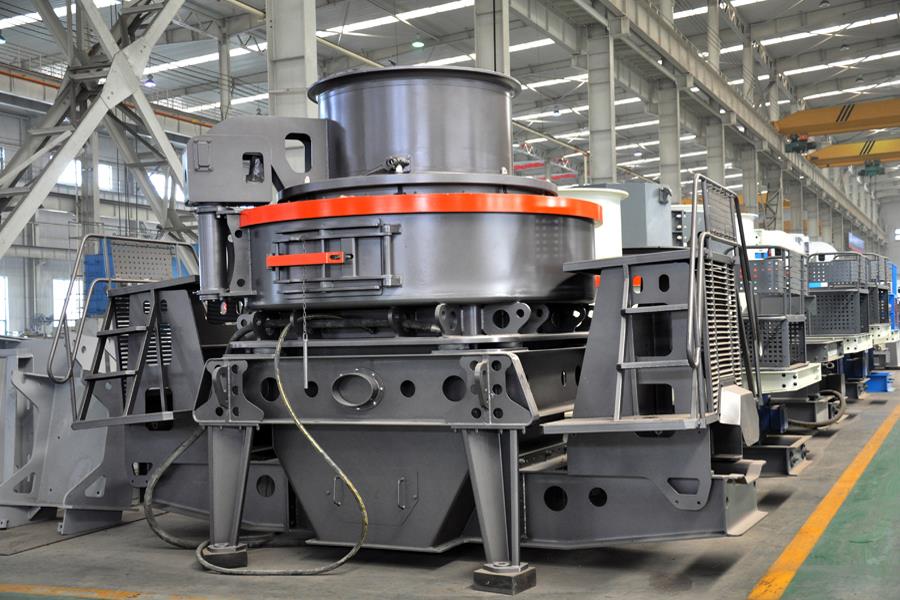
This is the context in which a 150 TPH VSI sand making plant operates. The machine is not producing sand to fill a generic specification. It is producing sand that has to substitute for a material that the country cannot use, in concrete that has to meet the same standards as concrete made from river sand anywhere in the world.
What Concrete Producers Actually Measure Before They Reject Your Sand
A UAE ready-mix producer does not buy sand based on how it looks. They run a set of standard tests, and those tests define what a VSI operator has to achieve.
The first is fineness modulus, which measures the average particle size across the gradation. For concrete sand in the UAE, the target typically sits between 2.4 and 3.0. Sand that falls below 2.4 contains too many fines; sand above 3.0 is too coarse and produces a harsh mix.
The second is gradation, checked against a specified envelope. The sand has to fall within defined limits at each sieve size, from 4.75 mm down to 75 microns. A product that is in-spec at the coarse end but lacks the mid-range fractions will produce a mix that bleeds or segregates.
The third is flakiness index, which measures the proportion of elongated particles. For high-strength concrete, this index typically needs to stay below 10% . Flaky particles reduce workability and increase the water demand, which increases cement consumption and cost.
A VSI that produces sand failing any of these three tests will be rejected, regardless of how much throughput it delivers. Sand shape is not a cosmetic property. It is a measured specification.
The Machine Setting That Changes Shape More Than Any Other
Of all the variables on a VSI, rotor speed has the single largest effect on particle shape. The mechanism is straightforward: higher rotor speed transfers more impact energy to each particle, which causes it to fracture along more planes and produce a more angular, cubical grain. Lower rotor speed produces less fracture, and the resulting particles retain more of the original rock's shape, which is often flatter.
Research on VSI crushing of concrete sand consistently shows that grain shape improves at higher rotor speeds and that filler content decreases with increased speed. The practical limit is wear. Push the rotor speed too high and the rotor tips and anvil wear accelerate, and the fines fraction increases even as shape improves. There is an optimal point, and it is specific to the feed material and the target specification.
For a 150 TPH plant in the UAE, the operating window is typically narrower than in a European quarry because the feed material — often limestone or gabbro — has its own fracture characteristics. Limestone fractures more readily than gabbro, and the rotor speed that optimises shape for one may over-crush the other. The starting point is not a catalogue number. It is a trial: run the machine at three speeds, sample the product at each, and measure the flakiness index. The speed that produces the best shape within the acceptable fines envelope is the operating point.
The Trade-Off Every Operator Has to Manage: Shape vs. Yield
Improving shape through higher rotor speed has a cost. More energy goes into producing fines that may not be saleable as concrete sand. The plant produces a higher proportion of material below the 75 micron threshold, and that material either has to be removed by washing or blended into a different product.
This is where the cascade feed ratio becomes useful. The cascade system allows a controlled portion of the feed to bypass the rotor and enter the crushing chamber directly, where it mixes with the material exiting the rotor. Adjusting the cascade ratio changes the particle population density in the chamber and alters the balance between impact fracture and inter-particle attrition. Research on VSI optimisation identifies the cascade ratio as one of four control variables that together determine the energy efficiency of the crushing process, alongside feed rate, rotor feed rate, and rotor tip speed. Field studies have shown that adjusting the cascade ratio can reduce energy consumption per tonne of sand produced while maintaining or improving shape.
The practical effect for a UAE plant is that shape improvement does not have to come at the cost of yield. The operator can increase rotor speed to improve shape and simultaneously increase the cascade ratio to maintain throughput. The combination that works is specific to the feed, and finding it requires measurement rather than assumption.
Chamber Design: Where Shape Is Actually Created
The crushing chamber determines how particles interact with each other and with the machine. A rock-on-rock chamber uses a bed of material as the impact surface, which produces shape through inter-particle collision. The result is typically a more cubical product with lower metallic contamination, because the rock does not contact steel at the point of breakage. A rock-on-anvil chamber uses steel anvils, which produces more consistent shape but at higher wear cost.
For concrete sand in the UAE, the rock-on-rock configuration is usually the better choice because it minimises iron contamination and reduces wear part consumption. The shape that comes from rock-on-rock crushing is adequate for most concrete specifications, and the lower operating cost matters at a plant running 150 TPH continuously.
The chamber design also affects the proportion of fines. A chamber with a larger open area allows more material to pass through without repeated impact, which reduces fines generation. A chamber that is too tight produces over-crushing. The chamber configuration should be matched to the rotor speed and the feed size, not selected in isolation.
Closed-Circuit Operation: The Step That Produces Consistent Results
A VSI running in open circuit produces a product that varies with the feed. If the feed gradation shifts, the output shifts with it. For concrete sand, that variability is the enemy. A product that meets specification in the morning may fail the fineness modulus test in the afternoon if the feed changes.
Closed-circuit operation solves this. The VSI discharge goes to a vibrating screen, and the oversize material returns to the VSI for a second pass. The finished product that passes the screen is uniform in gradation, because anything that does not meet the cut point is recirculated. This approach also allows the VSI to operate at a rotor speed optimised for shape rather than for maximum single-pass yield, because the recirculated material is not lost — it is reprocessed.
For a 150 TPH concrete sand plant in the UAE, the closed-circuit configuration is the standard arrangement. The screen cut point, the recirculating load, and the VSI rotor speed are set together, and they are adjusted together as the feed changes.
Diagnosing a Shape Problem on Site
When concrete sand fails the flakiness test, the cause is not always the VSI. Before adjusting rotor speed, it is worth checking three things.
The feed size going into the VSI should be within the machine's designed range. Oversized feed does not accelerate properly in the rotor and exits as flatter particles. Undersized feed passes through without sufficient impact energy to fracture along multiple planes.
The rotor tips should be in good condition. Worn tips do not transfer energy efficiently, and the shape degrades before the operator notices the drop in throughput.
The cascade setting should be verified. A cascade ratio that has drifted from the commissioning setting can change the particle population in the chamber and alter the shape result without any other visible change.
These checks take less than an hour and often resolve the problem before any mechanical adjustment is made.
How OCP Mechanical Company Supports UAE Concrete Sand Producers
OCP Mechanical Company has manufactured mining and processing equipment for over 40 years. We supply VSI sand making machines, jaw crushers, cone crushers, impact crushers, vibrating screens, feeders, sand washers, and complete crushing and sand production plants. Every machine is new. For a 150 TPH concrete sand operation in the UAE, our engineering team can review your feed material, target fineness modulus, and flakiness requirements, and recommend a rotor speed and cascade configuration that meets specification without over-crushing the feed. Because we sell direct from our factory, there is no distributor margin in the price. Our online customer service team is available 24 hours a day to discuss specifications, provide updated pricing, and help you work out which configuration suits your concrete sand production.
All price information provided is for reference only; final quotes depend on equipment configuration, shipping terms, optional features, and current exchange rates. Product specifications are continuously updated; please consult our online customer service for the latest parameters tailored to your application.
-
US Aggregate Production Rebounds After Six Quarters as Crushed Stone Jumps 7%
-
Metso Launches LT400RS and LT200HPX All-Electric Mobile Crushers
-
China's Sand and Gravel Demand Confirmed in Retreat, Falling from 18.1 Billion to 12.7 Billion Tons
-
-