China's Sand and Gravel Demand Confirmed in Retreat, Falling from 18.1 Billion to 12.7 Billion Tons
A Decade of Decline That Is Now Impossible to Ignore
China‘s sand and gravel industry has completed a transition that most commodity sectors take far longer to accept. The numbers are no longer a forecast or a warning. They are the record. National demand has fallen from a peak of 18.1 billion tons in 2016 to approximately 12.7 billion tons, a contraction of more than 30% over a decade. The first half of 2026 confirmed the trend with production of 6.32 billion tons, down 9% year on year, and the full-year projection points toward 12 billion tons, with a fluctuation band of no more than 5%.
The Chinese Sand and Gravel Association‘s H1 2026 report describes the industry as being in a phase of “supply exceeding demand, with both volume and price declining,” and characterises the period as a critical stage of reconstruction from “incremental expansion” to “stock quality improvement.” That language is careful, but the message is direct: the era of building new capacity to capture volume growth is over. What replaces it is a market where the value of what you produce matters more than how much of it you can produce.
Price Decline Has Flattened Margins to the Bone
The price data from the first half of 2026 is equally unambiguous. The national comprehensive sand and gravel price index stood at 72.7, down 7.8% year on year. By August 2026, the national average price had fallen to RMB 80.1 per ton, down 5.26% year on year. Natural sand averaged RMB 101.8 per ton, machine-made sand RMB 72.3, and crushed stone RMB 72.6.
The association notes that the monthly year-on-year decline has been gradually narrowing — from 9.3% in January to 5.1% in June — which it interprets as a sign of the market stabilising at a low level. That is a fair reading, but “stabilising at a low level” is not the same as recovery. For an operator running a crushing plant, a price of RMB 80 per ton leaves very little room for inefficiency. Every percentage point of energy consumption, every hour of unplanned downtime, and every liner change that happens earlier than necessary eats directly into what is already a thin margin.
Mining Rights Market Shows Investors Are Becoming Selective
The contraction is visible in the mining rights market as well. In the first half of 2026, 264 sand and gravel mining rights were transacted nationwide, compared with 363 in H1 2025 and 413 in H1 2024 — a steady decline over three years. Newly added reserves totalled 4.83 billion tons, significantly lower than the same periods in 2024 and 2025. The association interprets this as evidence of a “select-the-best-and-take” investment logic among mining rights holders.
The structural shift within the rights that were transacted is more telling than the headline decline. Mining rights with reserves exceeding 80 million tons accounted for 3.8% of transactions, up 1.8 percentage points year on year. Rights below 5 million tons fell slightly to 42.4%. The trend is toward larger, more capital-intensive operations, and away from the small, scattered mines that once dominated the supply landscape.
Consolidation Is Reshaping Who Remains in the Market
The consolidation that the price decline is forcing on the industry is accelerating. The top ten enterprises (CR10) held 27% of the market in 2023, up from 18% in 2020. Current projections put CR10 above 35% by 2028. The mechanism is not voluntary. Smaller operations that lack the capital to meet tightening environmental standards, energy efficiency requirements, and product quality specifications are being phased out. The Chinese Sand and Gravel Association notes that “under the normalised supervision of green mines and environmental inspections, backward capacity is being further cleared, and industry concentration is rising.”
For equipment buyers, this consolidation has a direct implication. The customer base is becoming more sophisticated. The surviving operators are not buying on price alone. They are evaluating total cost of ownership, energy efficiency per ton, and the ability of equipment to produce specification-grade product consistently. A plant that produces a blended pile of unsorted aggregate is not competitive against one that delivers four calibrated fractions to four different buyers.
The Equipment Market Has Already Shifted from New Build to Upgrade
The most consequential change for equipment suppliers and buyers alike is the pivot from new production line construction to existing line upgrading. Industry analysis from 2026 describes the shift plainly: “the focus of market demand has shifted from new production line equipment procurement to energy-saving renovation of existing production lines, intelligent upgrading, and environmental equipment replacement.” The growth logic of the equipment sector has “switched from incremental construction to stock renewal.”
This is not a temporary adjustment. It reflects the reality that China already has more installed crushing capacity than it needs. The capacity utilisation rate across the industry stands at approximately 34% , with operating rates around 60%. Adding new capacity makes no commercial sense for most operators. What makes sense is improving the capacity they already have — reducing power consumption per ton, increasing the proportion of saleable product per ton of feed, and reducing downtime.
That is a different kind of equipment purchase. It requires a different kind of supplier, one who can assess an existing circuit, identify where the losses are, and recommend specific changes rather than quoting a new plant.
What “Quality Over Quantity” Actually Means for Equipment Selection
The association‘s phrase “high-quality aggregate maintains relatively stable prices under the support of key project demand” contains a practical instruction for equipment buyers. The price data shows that while ordinary sand and gravel prices have fallen sharply, specification-grade material for major infrastructure projects has held up better. The projects that are still being built — high-speed rail, expressways, water conservancy, and urban renewal — require aggregates that meet strict gradation, shape, and cleanliness specifications.
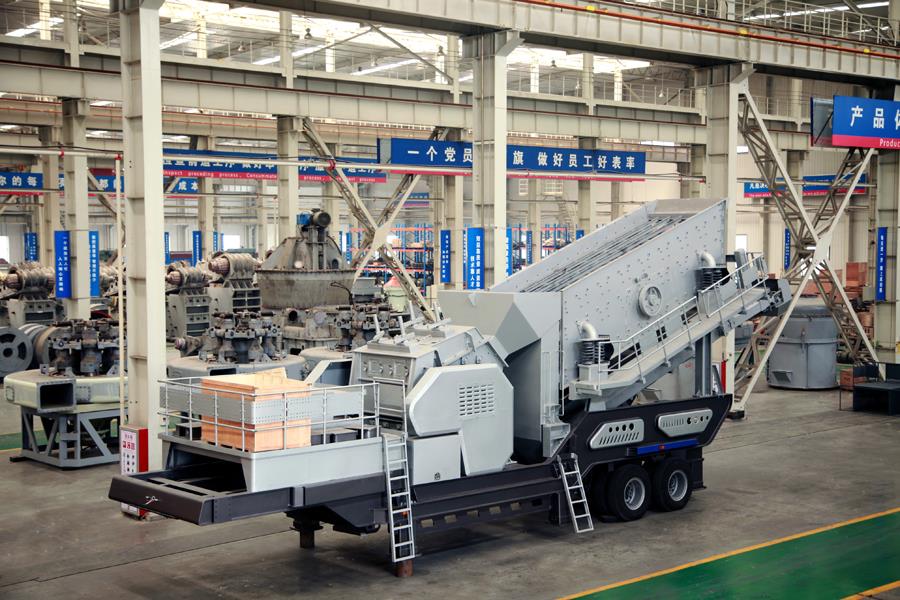
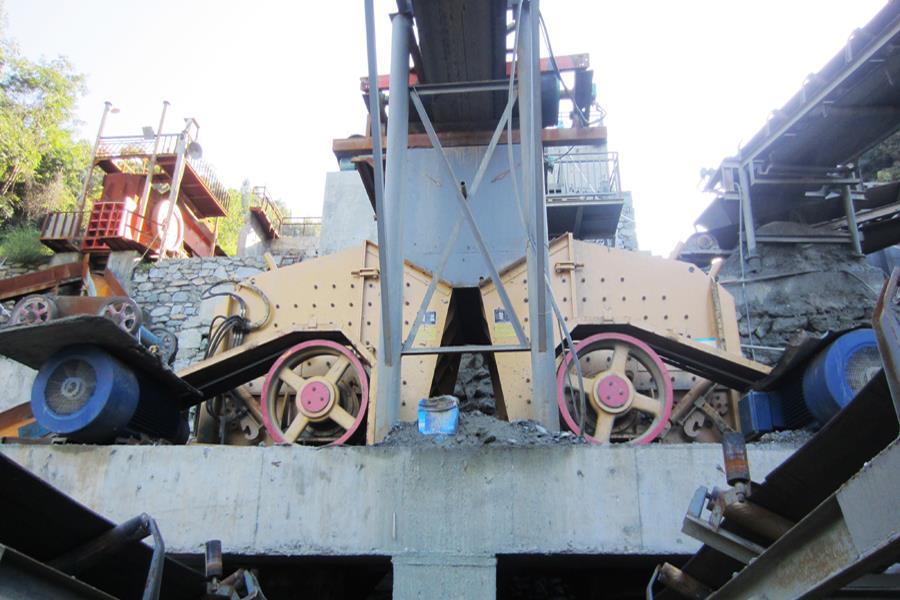
Producing that material requires equipment that can deliver consistent gradation, control fines generation, and produce cubical particles rather than flaky ones. A VSI crusher with adjustable rotor speed and cascade control is the standard machine for shape control. A multi-deck vibrating screen with the correct aperture configuration is what separates a plant producing three saleable fractions from one producing a single blended pile. A cone crusher with a cavity matched to the feed and the target product is what keeps the recirculating load within the screen‘s capacity.
None of these are new technologies. What is new is the pressure to get them right. In a market where the average selling price is RMB 80 per ton, there is no margin to absorb a plant that produces the wrong product or stops for unplanned maintenance.
How OCP Mechanical Company Supports the Transition to Stock Renewal
OCP Mechanical Company has manufactured crushing and screening equipment for over 40 years. We supply jaw crushers, cone crushers, impact crushers, VSI sand making machines, vibrating screens, feeders, sand washers, and complete crushing plants. Every machine is new. For operators who are upgrading an existing line rather than building a new one, our engineering team can review the current circuit, identify where the losses are occurring — energy consumption above the equipment‘s rated efficiency, product gradation that fails specification, throughput limited by a bottleneck at one stage — and recommend the equipment changes that address those specific problems.
Because we sell direct from our factory, there is no distributor margin in the price. That matters in a market where capital expenditure has to be justified against a return that is measured in fractions of a yuan per ton. Our technical team works with you on the configuration rather than handing over a catalogue, and our online customer service is available 24 hours a day to discuss specifications, provide updated pricing, and help you work out which changes will deliver the most immediate improvement in cost per ton.
If you are operating in China‘s sand and gravel market and want to understand what your plant could produce with the equipment it already has, click the chat button and start the conversation.
All price information provided is for reference only; final quotes depend on equipment configuration, shipping terms, optional features, and current exchange rates. Product specifications are continuously updated; please consult our online customer service for the latest parameters tailored to your application.
-
-
-
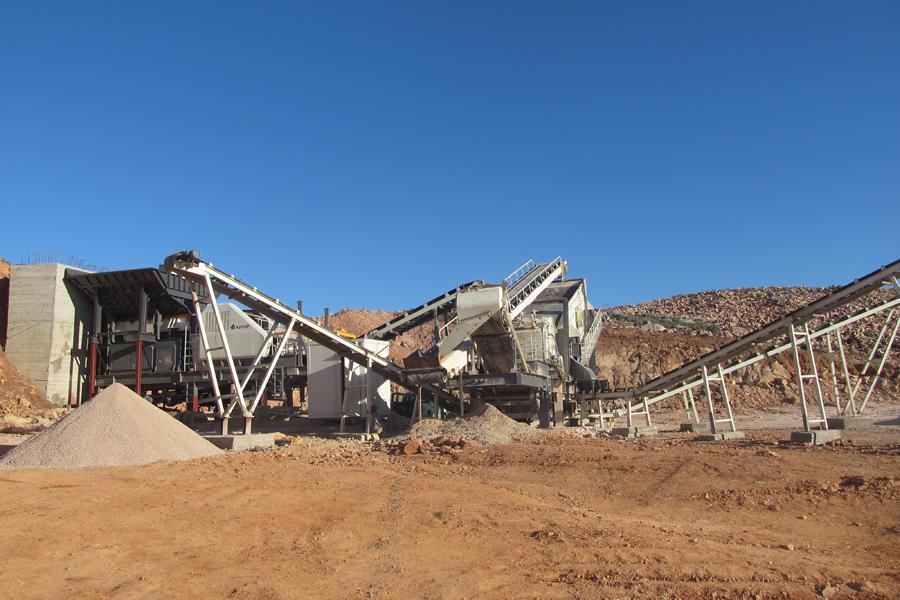
Global Crushing Equipment Market to Reach USD 15.44 Billion by 2035
-
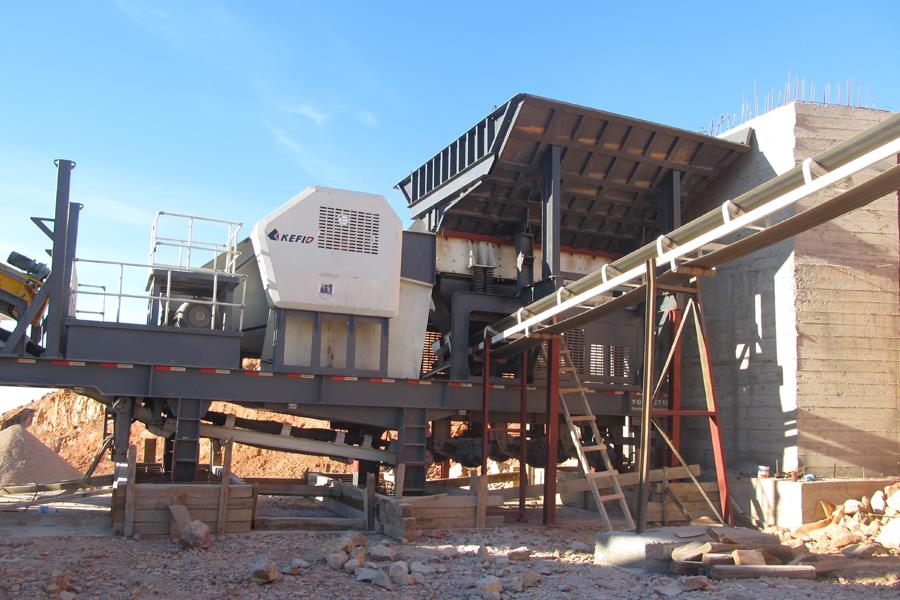
200 TPH Granite Mobile Jaw Crusher for Sale in Lagos Nigeria
-