
Mobile Crushing Stations Become Core Equipment for C&D Waste as Recycled Aggregate Costs Run 30% Lower
The Scale of the Problem Is Now Impossible to Ignore
China‘s cities generate more than 2 billion tonnes of construction and demolition waste every year, accounting for roughly 40% of total urban solid waste. The resource utilisation rate has climbed from below 10% in 2020 to approximately 25% in 2025, and is projected to reach 28–30% in 2026. That progress is real, but it still leaves the majority of demolition debris going to landfills or illegal dump sites. The State Council’s Action Plan for Comprehensive Solid Waste Treatment, issued in January 2026, set a national target of 4.5 billion tonnes in annual comprehensive utilisation of bulk solid waste by 2030 and identified construction waste as one of five priority areas for special rectification. For contractors and waste processors, the direction is clear: the material has to be processed, and the equipment has to be mobile enough to follow the work.
Why Recycled Aggregate Costs Less Than Natural Stone
The economic case for recycled aggregate has been documented repeatedly in peer-reviewed research and in field projects. A life cycle assessment published in Environmental Science and Pollution Research found that producing mixed recycled aggregate from C&D waste costs over 30% less than natural aggregate extraction, and that the cost advantage holds even when transport distances from the recycling plant to the work site exceed those of natural aggregate. That finding is consistent with project-level data. In a road base trial in Huzhou, Zhejiang, recycled aggregate delivered a 10% cost reduction compared with conventional crushed stone, with better compaction performance. A separate test section in Qingdao documented a 41% reduction in raw material cost when using recycled aggregate in road stabilisation layers.
The cost advantage comes from three sources. First, the raw material — demolition waste — is either free or carries a low gate fee. Second, recycling eliminates the haulage cost of moving waste to landfill and the purchase cost of virgin aggregate. Third, the processing itself is relatively simple: crushing, magnetic separation, and screening, with no need for washing or chemical treatment in most applications.
Tax Incentives and Policy Support That Shorten the Payback
The financial case for C&D waste processing is reinforced by a tax framework that most operators do not fully use. Under the Ministry of Finance and State Taxation Administration Announcement No. 40 of 2021, VAT general taxpayers selling self-produced recycled aggregate, road materials, blocks, and wall panels made from construction waste can claim VAT refund upon collection at 70% or 50%. That refund applies to the output VAT paid on the sale of qualified recycled products, and it effectively reduces the tax burden on every tonne of recycled aggregate sold. The policy was confirmed as continuing through 2026 under Announcement No. 10 of 2026.
Beyond VAT, the Action Plan for Comprehensive Solid Waste Treatment requires local governments to allocate no less than 1% of industrial land for resource recycling facilities, and to include construction waste reduction and disposal costs in project budgets. Some provinces have gone further: Fujian has set a target of 50% resource utilisation rate by the end of 2026, rising to 70% by 2030, with supporting policies that push treatment from end-of-pipe disposal toward source reduction, process control, and end utilisation. For a processor operating in a province with these targets, the regulatory tailwind is substantial.
What a Mobile Crushing Station Actually Configures
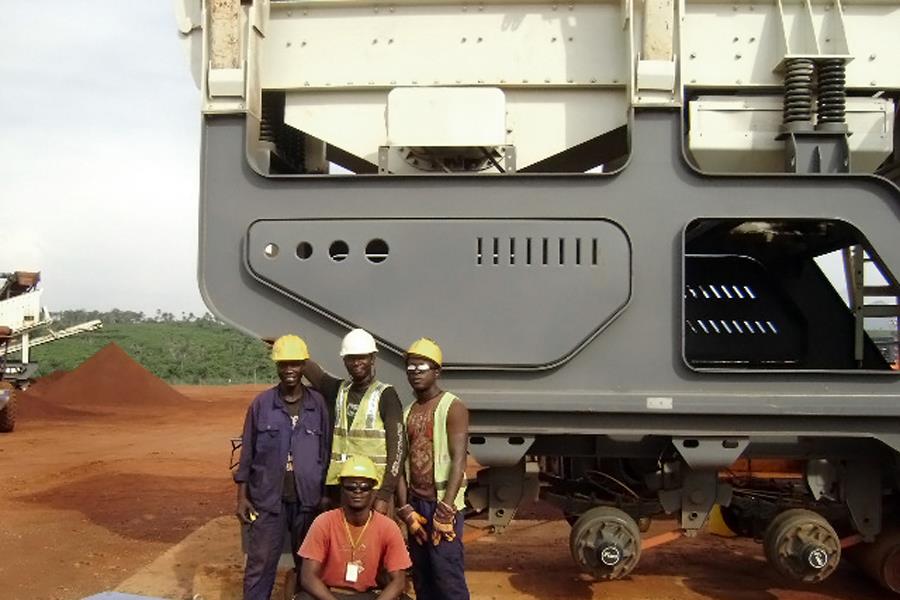
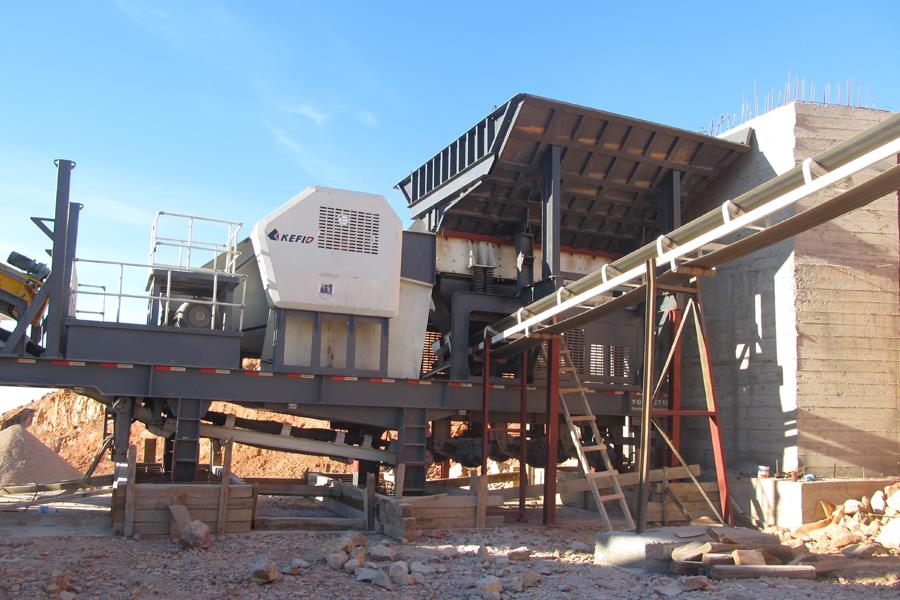
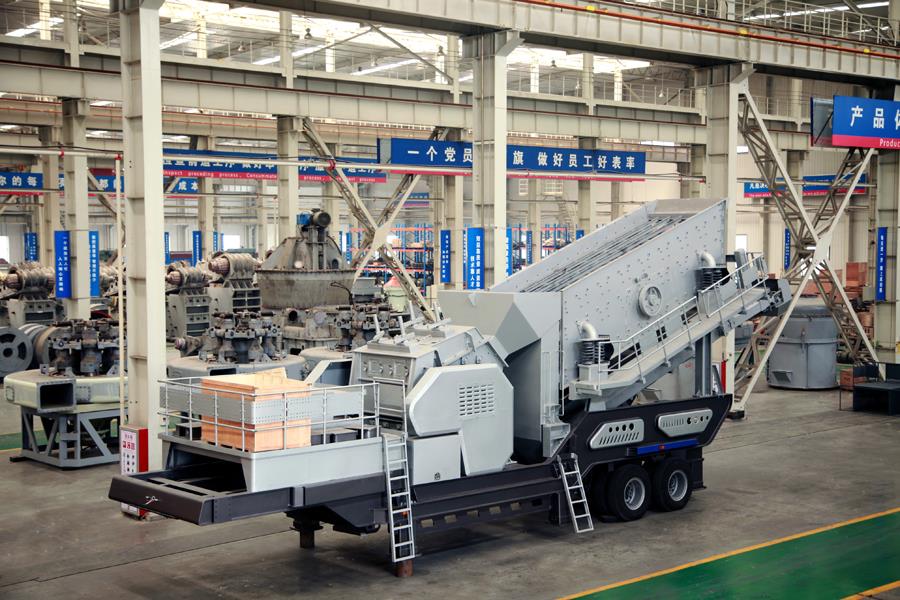
The equipment configuration that has become standard for C&D waste processing is a closed-loop system built around a mobile jaw crusher, magnetic separation, and screening. A patent filed by China Railway 21st Bureau and Lanzhou University of Technology describes the architecture: a primary jaw crushing module, a vibrating air separation module, a magnetic separation module, a secondary crushing and screening module, and a coarse aggregate processing module — all connected by conveyors, all electrically linked to a central control system, and all mounted on transportable frames.
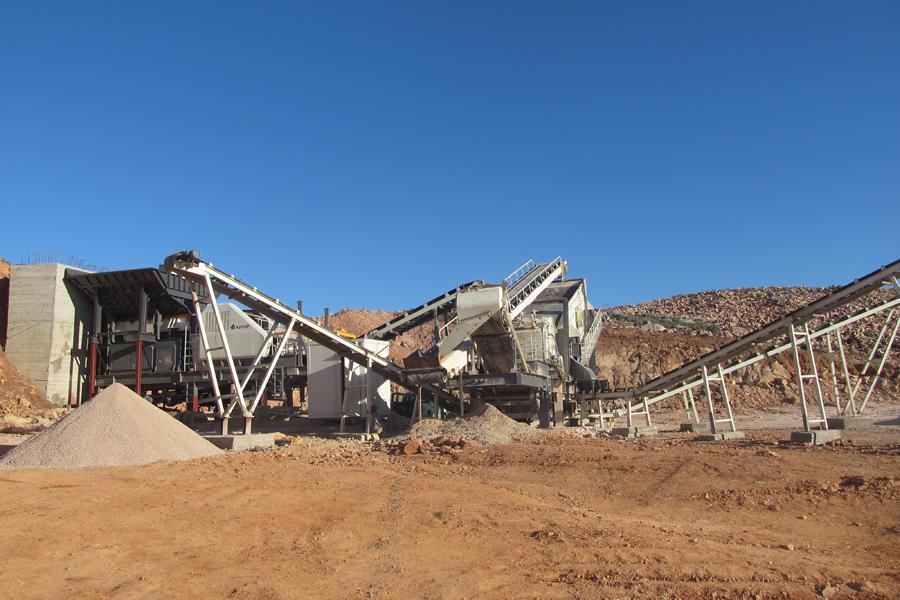
In practice, this translates into a configuration that can be deployed directly at a demolition site. Concrete blocks enter the jaw crusher, which reduces them to a manageable size. The material passes under an overband magnet that separates rebar and other ferrous metal. A vibrating screen classifies the crushed product into fractions — typically 0-5 mm, 5-10 mm, 10-20 mm, and 20-31.5 mm — and any oversize material returns to the crusher for a second pass. The finished aggregate goes to stockpile, and the separated steel goes to scrap. A project in Jiangxi processing 50 tonnes per hour of mixed demolition and decoration waste uses precisely this configuration, with the addition of a wind sifter to separate paper, wood, and other lightweight material for fuel recovery.
The Investment Arithmetic in Plain Numbers
A mobile crushing and screening station in the 100–150 TPH class, configured with a jaw crusher, magnetic separator, and multi-deck screen, typically falls in the USD 150,000 to USD 350,000 range depending on chassis type, automation level, and whether the plant is tracked or wheel-mounted. Freight, inland transport, foundations (minimal for mobile units), commissioning, and an initial stock of wear parts add a further layer.
The payback calculation is driven by three variables: the gate fee avoided, the aggregate price realised, and the utilisation rate. If a processor avoids a tipping fee of RMB 15–30 per tonne, sells recycled aggregate at RMB 40–70 per tonne, and runs the plant at 70% utilisation, the payback on a mobile station typically falls within three years, and in some markets within 18 months. The variables that determine the outcome are the local gate fee, the local aggregate price, and whether the plant can secure a steady flow of demolition material. In cities where demolition activity is concentrated and landfill costs are rising, the arithmetic works. In cities where demolition is sporadic and the plant sits idle between projects, it does not.
Where the Configuration Choices Actually Matter
Not every mobile plant is configured the same way, and the differences affect both cost and performance. Three decisions deserve attention before a purchase order is signed.
The first is the primary crusher type. A jaw crusher handles reinforced concrete well and tolerates the occasional uncrushable object better than an impact crusher. An impact crusher produces a better-shaped product and achieves higher reduction ratios in a single pass, but it wears faster when rebar is present. For C&D waste with significant steel content, the jaw-plus-magnet configuration is the more robust choice.
The second is the screen configuration. A single-deck screen produces one or two product fractions. A double- or triple-deck screen produces three or four. The choice depends on the local market. In cities where road base is the primary outlet, a single-deck screen producing 0-31.5 mm is sufficient. In cities where block manufacturers and concrete producers are buyers, a multi-deck screen producing calibrated fractions commands a higher price per tonne.
The third is the dust suppression system. Demolition waste generates dust, and urban processing sites are subject to environmental regulations that rural quarries are not. A plant without integrated dust suppression will face complaints and potential shutdowns in populated areas. The cost of adding a spray system and enclosed transfer points to the equipment specification is far lower than the cost of a work stoppage.
How OCP Mechanical Company Supports C&D Waste Processors
OCP Mechanical Company has manufactured mining and processing equipment for over 40 years. We supply mobile jaw crushers, mobile impact crushers, mobile cone crushers, vibrating screens, feeders, overband magnets, and complete mobile crushing and screening plants configured for construction and demolition waste. Every machine is new. Because we sell direct from our factory, there is no distributor margin in the price, and our technical team works with you on the configuration — primary crusher type, screen decks, magnet specification, and dust suppression — rather than handing over a catalogue.
Our online customer service team is available 24 hours a day to discuss specifications, provide updated pricing, and help you work out which configuration suits your demolition feed and your local aggregate market. If you are evaluating a C&D waste processing project, click the chat button and start the conversation.
All price information provided is for reference only; final quotes depend on equipment configuration, shipping terms, optional features, and current exchange rates. Product specifications are continuously updated; please consult our online customer service for the latest parameters tailored to your application.
-
-
Global Crushing Equipment Market to Reach USD 15.44 Billion by 2035
-
200 TPH Granite Mobile Jaw Crusher for Sale in Lagos Nigeria
-
-
China's Aggregate Equipment Market Grows to RMB 73–78 Billion as Manufactured Sand Exceeds 80%



