China's Aggregate Equipment Market Grows to RMB 73–78 Billion as Manufactured Sand Exceeds 80%
A Market That Is Growing Even as Aggregate Demand Shrinks
China's aggregate equipment market is expanding at a time when aggregate consumption itself is contracting. The equipment segment is projected to reach RMB 73–78 billion in 2026, up approximately 10% year on year, according to industry data. That growth is not driven by new capacity. It is driven by replacement, upgrade, and compliance. The Ministry of Industry and Information Technology has set specific energy consumption limits for the sector: no more than 10 tonnes of standard coal equivalent per 10,000 tonnes of product for soft rock, and no more than 13 tonnes for hard rock. The market concentration ratio CR10 stands at 28.4% and is rising. High-grade aggregate — material that meets strict gradation, shape, and cleanliness specifications — now accounts for more than 60% of total demand. The message for equipment buyers is clear: the market rewards plants that produce specification material efficiently, and it penalises plants that cannot.
The Energy Standard That Changes What Equipment Qualifies
The energy consumption limits published by MIIT are not advisory. They set a ceiling on how much power a crushing and screening line can consume per tonne of product, and equipment that cannot meet the threshold is excluded from new installations and upgrades. For a jaw crusher, that means the motor, the drive system, and the crushing chamber geometry all contribute to whether the machine qualifies. For a cone crusher, the hydraulic system efficiency and the cavity design determine the specific power consumption. For a VSI sand making machine, the rotor configuration and the cascade ratio are the variables that decide whether the machine produces sand within the energy envelope. The practical effect is that the equipment market has bifurcated. Crushers designed ten years ago may still run, but they increasingly cannot be sold into new projects or financed for upgrades. Crushers designed around the current energy standard are the ones that move.
Manufactured Sand's 80% Share Is Now the Default, Not the Exception
The structural shift in aggregate supply has completed. Manufactured sand now accounts for more than 80% of China's total sand supply, up from roughly 20% in 2010, according to research published in Nature Geoscience. That transition did not happen because the industry preferred manufactured sand. It happened because natural river sand extraction was curtailed by environmental regulation, and the construction industry had no alternative but to adapt. The equipment implication is significant. A VSI crusher producing manufactured sand must deliver consistent fineness modulus, controlled flakiness index, and a gradation that falls within the specification envelope for concrete sand. A plant that produces sand which fails any of those three tests cannot sell it to a ready-mix producer, regardless of the price. The market has moved from a commodity business to a specification business.
High-Grade Material Now Exceeds 60% of Demand
The demand structure within the aggregate market has shifted toward higher-quality material. High-grade aggregate — the material required for high-speed rail, expressways, bridges, and major water conservancy projects — now accounts for more than 60% of total demand. That figure reflects the nature of the projects still being built. The residential construction market has weakened, but the infrastructure projects that remain are the ones with the most demanding specifications. Producing that material requires equipment that can deliver consistent gradation across multiple fractions. A multi-deck vibrating screen with the correct aperture configuration separates a plant producing four calibrated products from one producing a single blended pile. A cone crusher with a cavity matched to the feed and the target product keeps the recirculating load within the screen's capacity. A VSI crusher with adjustable rotor speed and cascade control produces the cubical particle shape that high-strength concrete requires.
Intelligence and Modularity Are the Two Equipment Trends That Matter
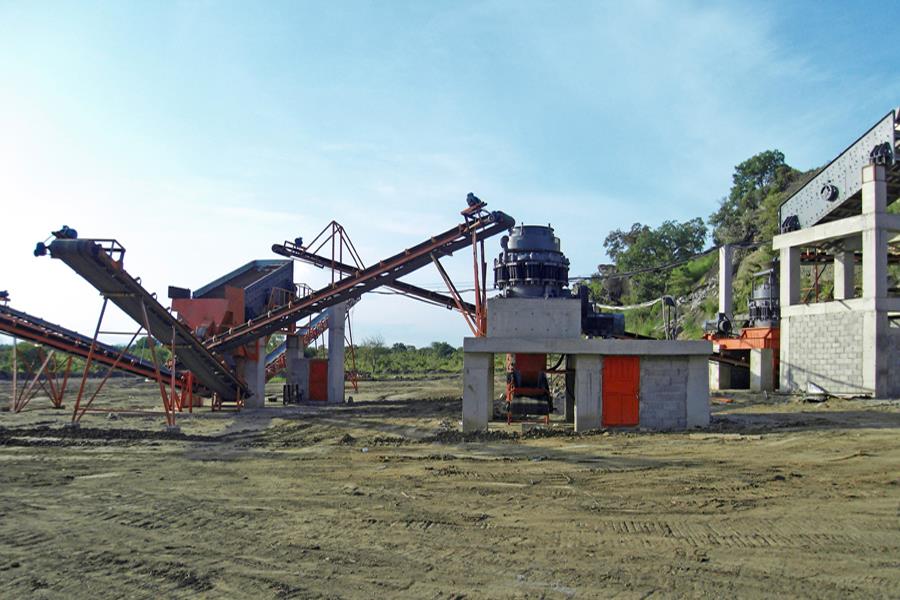
Two equipment trends are shaping the current market. The first is intelligence. Modern crushing plants are increasingly equipped with PLC-based monitoring that tracks motor load, bearing temperature, power draw, and liner wear in real time. Feeders respond to crusher load automatically. Screens report blinding before it reduces throughput. The second is modularity. Pre-engineered plant modules that can be assembled on site without extensive civil works are replacing bespoke installations. A modular plant can be commissioned in weeks rather than months, and it can be expanded or reconfigured as the operation changes. For an operator evaluating a new line or an upgrade, the two trends intersect at the same point: equipment that is easier to operate and easier to modify is worth more than equipment that only delivers a throughput number.
Consolidation at CR10 28.4% Means the Customer Base Is Changing
The consolidation that has reshaped the industry is visible in the numbers. CR10 reached 28.4% in 2025, up from 18% in 2020, and is projected to exceed 35% by 2028. That consolidation is not voluntary. Smaller operations that lack the capital to meet tightening environmental standards, energy efficiency requirements, and product quality specifications are being phased out. The surviving operators are larger, more sophisticated, and more demanding. They evaluate equipment on total cost of ownership, energy consumption per tonne, and the ability to produce specification material consistently. A plant that produces a blended pile of unsorted aggregate is not competitive against one that delivers four calibrated fractions to four different buyers. The equipment purchase decision has shifted from "how much does it cost" to "what does it produce, and at what operating cost."
How OCP Mechanical Company Supports the Upgrade Market
OCP Mechanical Company has manufactured crushing and screening equipment for over 40 years. We supply jaw crushers, cone crushers, impact crushers, VSI sand making machines, vibrating screens, feeders, sand washers, and complete crushing plants. Every machine is new. For operators who are upgrading an existing line rather than building new capacity, our engineering team can review the current circuit, identify where the losses are occurring — energy consumption above the equipment's rated efficiency, product gradation that fails specification, throughput limited by a bottleneck at one stage — and recommend the equipment changes that address those specific problems.
Because we sell direct from our factory, there is no distributor margin in the price. Our technical team works with you on the configuration rather than handing over a catalogue. And our online customer service team is available 24 hours a day to discuss specifications, provide updated pricing, and help you work out which changes will deliver the most immediate improvement in cost per tonne.
If you are operating in China's aggregate equipment market and want to understand what your plant could produce with the equipment it already has, click the chat button and start the conversation.
All price information provided is for reference only; final quotes depend on equipment configuration, shipping terms, optional features, and current exchange rates. Product specifications are continuously updated; please consult our online customer service for the latest parameters tailored to your application.
-
How to Select a Vibrating Screen for Dry Limestone 180 TPH in Oman
-
500 TPH River Pebble Plant in Kyrgyzstan: Fixed Line Case and Mobile Crusher Selection Guide
-
Modular Crushing Stations Cut Commissioning to 72 Hours Without Concrete Foundations
-
Weir Group Reports 8% Order Growth as HPGR Demand Accelerates
-