500 TPH River Pebble Plant in Kyrgyzstan: Fixed Line Case and Mobile Crusher Selection Guide
Kyrgyzstan's Building Boom Is Pulling Aggregate Demand Up Fast
Kyrgyzstan‘s construction sector has accelerated sharply through 2026. Mining output value rose 16.9% in the first seven months, driven almost entirely by demand for local quarry materials. Sand production reached 1.72 million tonnes and crushed stone, gravel, and pebble output hit 2.68 million tonnes between January and July, a 2.6-fold increase over the previous year. The rivers that cut through the Chui and Osh valleys are the primary source of that material, and the aggregate producers working them are facing a familiar problem: the resource is there, but the processing circuit has to be matched to the feed.
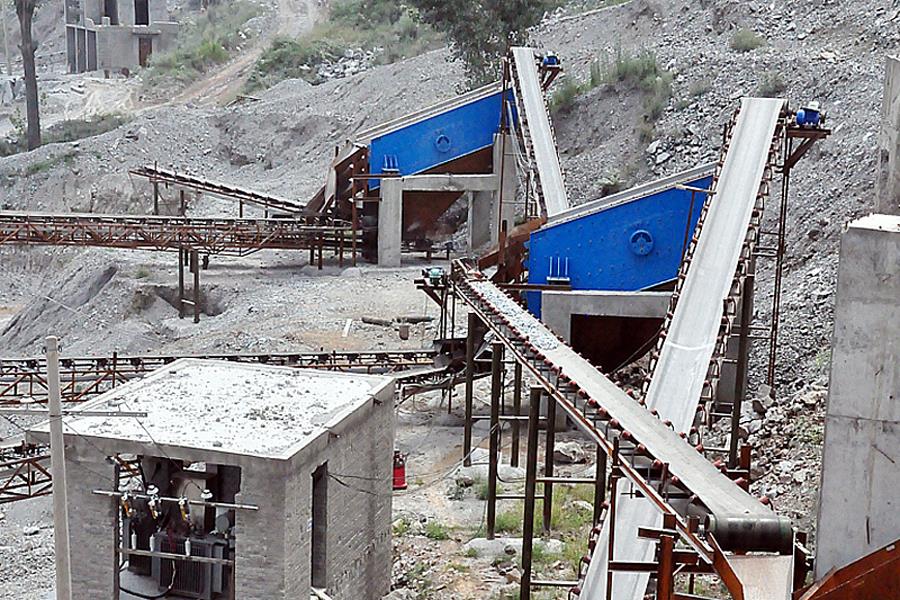
A recent 500 TPH river pebble project in Kyrgyzstan illustrates how that matching is done when the site conditions justify a fixed line. The flowsheet uses a jaw crusher for primary reduction, cone crushers for secondary crushing, and closed-circuit screening, with a VSI added only if manufactured sand is part of the product mix. The primary jaw is a 6CX125, accepting feed up to 720 mm and reducing it to 150–200 mm. Secondary crushing is handled by CS400 cone crushers, with the closed side setting adjusted to the target product. The screening circuit returns oversize material to the crusher, which keeps the flake content low and the gradation stable — the two variables that determine whether the finished aggregate sells at specification price or gets discounted.
That configuration works when the mine has a long licence, a flat site, and stable grid power. When those conditions are not present, the calculus shifts toward mobile equipment.
Why River Pebble Is Not a Soft Rock Problem
River pebble is often treated as an easy material because it is rounded and free-flowing. That assumption causes problems in the crushing circuit. Pebble from Kyrgyz rivers is predominantly hard rock — granite, basalt, and quartzite that has been rounded by water transport but not softened. Its compressive strength routinely exceeds 200 MPa, and its silica content makes it abrasive. An impact crusher running on this material will consume blow bars at a rate that shows up in the monthly parts bill. The correct circuit for hard river pebble is compression crushing: jaw for primary, cone for secondary and tertiary, with a VSI only for shaping and sand production.
The other characteristic that shapes equipment selection is feed variability. River pebble deposits change gradation over relatively short distances. A pit that produces 300 mm material in one section may produce 500 mm material a few hundred metres upstream. A fixed plant is designed around one feed condition. A mobile plant can be repositioned as the pit advances, which matters when the deposit is being worked in stages rather than as a single long-term quarry face.
Fixed or Mobile: The Three Questions That Decide
The selection between a fixed line and a mobile station comes down to three questions, and the Kyrgyz context answers them clearly. The first is licence duration. A fixed plant requires civil works, foundations, and a construction timeline. It makes sense when the mine has a ten-year or longer horizon. When the licence is shorter or the deposit is being worked in phases, a mobile station avoids the sunk cost.
The second is site conditions. A fixed line needs a flat, stable site with access for construction crews and equipment delivery. Kyrgyzstan‘s river valleys are not always flat, and access roads can be seasonal. A tracked mobile station can be driven onto compacted ground and start producing without poured foundations.
The third is power supply. A fixed plant draws from the grid. A mobile station can run on an onboard diesel generator, which matters in remote valleys where the grid does not reach or is unreliable. Kyrgyzstan‘s hydropower capacity is substantial, but distribution to remote quarry sites is not guaranteed.
Tracked vs Wheel-Mounted: A Four-Dimension Comparison
When the decision lands on mobile equipment, the next fork is the chassis type. Tracked and wheel-mounted stations are both mobile, but they are mobile in different ways and for different reasons.
Mobility pattern. A tracked station is self-propelled. It walks on its own tracks, navigates mud, slopes, and pit floors, and does not need a trailer or a crane to move. A wheel-mounted station is towed by a truck or tractor. It moves faster on sealed roads but cannot leave a prepared surface. The practical rule is straightforward: if the plant needs to follow an advancing face or work in unimproved ground, tracks are the right choice. If it stays on a compacted pad and relocates a few times a year by road, wheels are sufficient.
Deployment time. Tracked units are producing within minutes of arriving at the face. Wheel-mounted units need to be towed in, levelled, and supported on hydraulic legs before they can run. That setup takes hours, not minutes. For a contractor moving between short-duration sites, the cumulative time saved by tracked deployment can be significant.
Capacity ceiling. Wheel-mounted plants are not constrained by the same height and weight limits that apply to tracked chassis. A wheeled plant can carry a larger jaw crusher, a larger screen, and a larger feed hopper than a tracked unit of comparable transport weight. For operations targeting 200–300 TPH with a simple circuit, a wheeled plant may deliver more capacity per dollar. For 500 TPH or more, the tracked chassis becomes the constraint, and the fixed line becomes the more practical option.
Operating cost. Tracked stations consume more fuel because they carry their own power source and move on tracks that have higher rolling resistance. Track wear is a recurring maintenance item. Wheeled stations can run on shore power where available, which removes fuel cost and engine maintenance entirely. Over a multi-year campaign, the operating cost difference can outweigh the purchase price difference. The question is whether the mobility advantage of tracks is worth that premium for the specific project.
What This Means When You Are Buying
The Kyrgyz 500 TPH project shows what a well-matched fixed line looks like when the conditions support it. It also shows why mobile equipment is the more practical choice for a large share of the region‘s aggregate operations — shorter licences, variable feed, and sites that are not flat or grid-connected. The decision is not about which technology is better in the abstract. It is about which chassis matches the site, the licence, and the production schedule.
OCP Mechanical Company manufactures tracked and wheel-mounted mobile crushing stations, jaw crushers, cone crushers, impact crushers, VSI sand making machines, vibrating screens, feeders, and complete fixed crushing plants. Every machine is new. Because we sell direct from our factory, there is no distributor margin layered into the price, and our engineering team works with you on the configuration — primary crusher selection, screen decks, chassis type, and power arrangement — rather than handing over a catalogue. Our online customer service team is available 24 hours a day to discuss specifications, provide updated pricing, and help you work out whether a fixed line or a mobile station suits your project. If you are evaluating a river pebble or hard rock crushing circuit, click the chat button and start the conversation.
All price information provided is for reference only; final quotes depend on equipment configuration, shipping terms, optional features, and current exchange rates. Product specifications are continuously updated; please consult our online customer service for the latest parameters tailored to your application.
-
Modular Crushing Stations Cut Commissioning to 72 Hours Without Concrete Foundations
-
Weir Group Reports 8% Order Growth as HPGR Demand Accelerates
-
-