
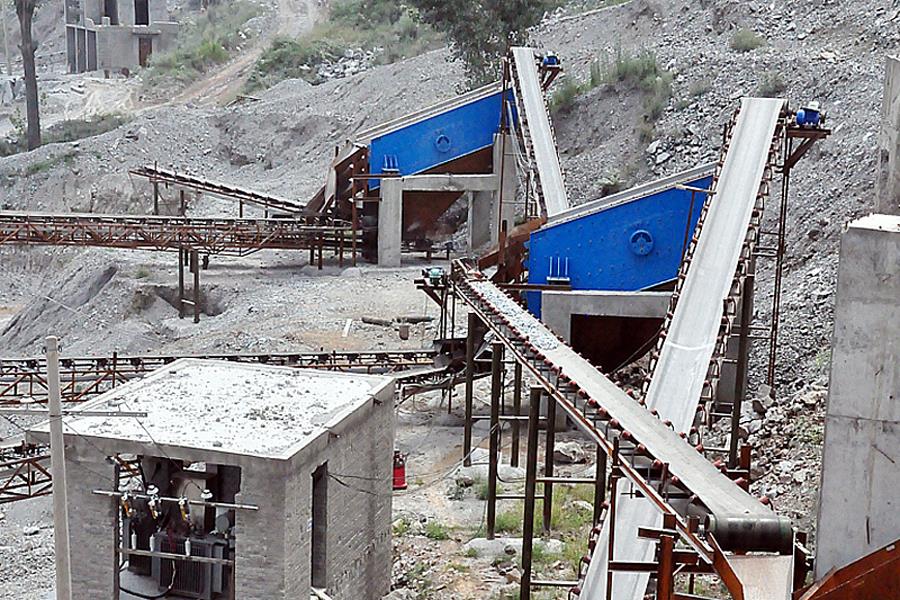
140 TPH Chromite Ore Cone Crusher Liner Life in Kazakhstan
Kazakhstan's Chromite Position Makes Liner Life a Strategic Cost
Kazakhstan holds approximately 30% of the world‘s chromite reserves and ranks third globally in proven chromite deposits. The Donskoy Ore Mining and Processing Plant in the Khromtau region of Aktobe has been operating since 1938 and sits atop reserves estimated at 320 million tonnes grading 50% Cr₂O₃. TNC Kazchrome, the country’s dominant producer, operates multiple mines across the region, and the Voskhod mine alone processes up to 1.5 million tonnes of raw ore annually. For a 140 TPH chromite ore cone crusher in Kazakhstan, the liner is the single most frequently replaced component and one of the largest contributors to operating cost per tonne. Chromite is not the hardest mineral a cone crusher will encounter, but its combination of high density, silica-associated gangue, and abrasive fracture characteristics means that liner life is shorter than it would be in limestone or even copper ore. Understanding what drives that wear rate is the first step in managing it.
What Chromite Actually Does to a Manganese Liner
Chromite ore sits at 5.5 to 6.5 on the Mohs scale, which places it in the hard category. The wear mechanism in a cone crusher is a combination of three forces. The first is compression abrasion, which occurs as ore is squeezed between the mantle and the concave under high pressure. The second is sliding abrasion, which occurs as material moves downward through the crushing chamber before being discharged. The third is impact loading, which occurs when the crusher receives surges of feed that force the mantle to compress material beyond the design load.
Kazakh chromite ore often contains significant silica content in the host rock, and that silica is the abrasive agent that wears the manganese surface. A liner running on a clean chromite deposit may last 1,200 to 1,800 hours. The same liner running on a deposit with high silica content may last 800 to 1,200 hours. The difference is not visible in the ore’s appearance. It shows up in the wear measurement, and the operator who tracks that measurement can plan replacement intervals rather than reacting to failures.
Mn18Cr2 or Mn22Cr2: Matching the Grade to the Ore
The standard liner material for cone crushers is austenitic manganese steel with 18% manganese and 2% chromium — commonly specified as Mn18Cr2. It work-hardens under impact and resists gouging, which makes it suitable for a wide range of hard rock applications. For chromite with high silica content, Mn22Cr2 — 22% manganese with 2% chromium — offers better wear resistance. The higher manganese content delays the transformation from austenite to martensite at the surface, which prevents the premature cracking that can occur in abrasive service.
The trade-off is brittleness. Mn22Cr2 is harder but less forgiving of tramp iron. A circuit running this grade should have a metal detector or tramp release system upstream of the cone crusher. The wrong combination — a high-abrasion ore and a lower-grade liner — produces exactly the premature wear pattern that drives up cost per tonne.
The table below gives reference parameters for liner selection in Kazakh chromite service.
| Parameter | Mn18Cr2 | Mn22Cr2 |
|---|---|---|
| Hardness (as-cast) | 200–230 HB | 210–240 HB |
| Work-Hardened Surface | 50–55 HRC | 52–58 HRC |
| Relative Wear Life | Baseline | 1.3–1.6x |
| Tramp Iron Tolerance | Good | Moderate |
| Typical Application | Clean chromite | High-silica chromite |
Reference figures only. Actual performance depends on ore characteristics and operating conditions. Please consult our online customer service for the latest parameters tailored to your application.
The Operating Variables That Decide How Long a Liner Lasts
Metallurgy sets the ceiling. Operation determines whether the liner reaches it. Four variables influence liner life more than any others in a 140 TPH chromite circuit.
The first is feed size distribution. A cone crusher performs best when the feed is well-graded and free of excessive fines. When the feed contains a high proportion of material already below the closed side setting, that material passes through the chamber without being crushed, but it still contributes to abrasive wear as it moves across the liner surface. A pre-screen ahead of the cone crusher removes fines before they enter the chamber and extends liner life.
The second is feed rate consistency. Surging feed causes the crusher to alternate between overload and starvation. During overload, the mantle compresses material beyond the design load, which accelerates wear on the lower zone of the liner. During starvation, the chamber does not fill properly, and the crushing action becomes uneven. A variable-frequency drive on the feeder allows the operator to maintain a steady amp draw, which keeps the crushing load uniform.
The third is closed side setting. A tighter CSS produces a finer product and a higher reduction ratio, but it also increases the load on the liner and accelerates wear. A wider CSS reduces the load but may leave the product coarser than the downstream process requires. The optimal setting is the one that delivers the required product gradation without pushing the crusher beyond its design load.
The fourth is choke feeding. A cone crusher is designed to be choke-fed — the chamber should be full, with the mantle covered by material. When the crusher is choke-fed, wear is distributed across the full height of the crushing chamber, and the cavity retains its designed profile as it wears. When the crusher is fed intermittently or run partially empty, the lower zone takes the brunt of the wear, and the cavity profile distorts.
Measuring Wear: The Discipline That Turns Guesswork Into a Schedule
A liner change should be a planned event, not a reaction to a failure. The operators who achieve the longest liner life are the ones who measure wear on a schedule and replace on condition rather than on the calendar.
The measurement itself is straightforward. A wear depth gauge or a laser profiling tool is used to measure the remaining liner thickness at fixed reference points around the crushing chamber. The readings are recorded and plotted over time. The trend is more useful than any single measurement. A liner that has worn 8 mm in 300 hours is on track for a predictable replacement interval. A liner that has worn 15 mm in the same period, or that shows uneven wear across the chamber, indicates a problem that should be investigated before the next liner is installed.
Uneven wear across the width of the chamber often points to feed segregation — the tendency of fine and coarse material to separate as they enter the crusher. Uneven wear along the height of the liner often points to a feed rate that is too low or a cavity that is too coarse for the feed size. Correcting these conditions extends the life of the next liner set.
The Cost Per Tonne Calculation That Justifies the Grade Choice
A liner set is not a commodity purchase. The price per set is the visible number, but the cost per tonne of chromite processed is the number that matters. A Mn22Cr2 liner set that costs more upfront but lasts twice as long as Mn18Cr2 delivers a lower cost per tonne, even before accounting for the downtime saved.
For a 140 TPH chromite operation, a liner change takes roughly eight to twelve hours including the cooling time, the mantle removal, the concave replacement, and the backing compound curing. During that window, the plant produces nothing. At 140 TPH, that is 1,120 to 1,680 tonnes of lost production. If the change happens four times a year instead of six, the production loss alone outweighs the price difference between liner grades. The calculation requires the operator to record the change intervals and the production lost during each change. Most plants do not track this, which is why they default to the cheaper liner and then wonder why the maintenance budget never holds.
Kazakhstan's Operating Environment: Heat, Dust, and Power Reliability
Kazakhstan‘s chromite operations face operating conditions that influence liner life in ways that do not appear in the manufacturer’s maintenance manual. The Aktobe region experiences extreme temperature variation, from summer highs above 35°C to winter lows below -30°C. Bearing temperatures that would be normal in a temperate climate are elevated in summer and depressed in winter, and the lubrication regime should be adjusted seasonally to match. Dust is a persistent problem in the crushing circuit, and dust ingress into the bearing housing accelerates wear on the eccentric assembly, which in turn affects the crushing stroke and the liner wear pattern.
Power supply reliability is another variable. The Kazakh grid is generally stable, but voltage fluctuations and planned outages occur. A cone crusher with a robust hydraulic power unit and reliable overload protection rides through short interruptions better than one that relies on sensitive electronics. The hydraulic system should be specified with a pressure accumulator that maintains clamping force during brief power dips, and the motor should be protected against voltage imbalance.
How OCP Mechanical Company Supports Kazakh Chromite Operations
OCP Mechanical Company has manufactured mining equipment for over 40 years. We supply cone crusher mantles and bowl liners in Mn18Cr2 and Mn22Cr2 grades, along with jaw plates, blow bars, and the full range of wear parts for chromite crushing circuits. Every part is new, and because we sell direct from our factory, there is no distributor margin in the price.
For a 140 TPH chromite ore cone crusher in Kazakhstan, our engineering team can review your ore characteristics, feed gradation, and operating history, and recommend a liner grade and cavity configuration that matches your specific deposit rather than a generic specification. We can also advise on the wear monitoring routine and the operating parameters that extend liner life between changes.
Our online customer service team is available 24 hours a day to discuss liner selection, provide updated pricing, and help you work out which grade suits your chromite. If you are managing a cone crusher in Kazakhstan and want to reduce your cost per tonne, click the chat button and start the conversation.
All price information provided is for reference only; final quotes depend on equipment configuration, shipping terms, optional features, and current exchange rates. Product specifications are continuously updated; please consult our online customer service for the latest parameters tailored to your application.



