
Global Crushing and Screening Market Reaches RMB 55.3 Billion, Projected to Hit RMB 76.4 Billion by 2033
The Numbers Behind a Market That Keeps Expanding
The global crushing and screening machinery market reached RMB 55.3 billion in 2026 and is projected to grow at a compound annual rate of 4.74% to RMB 76.4 billion by 2033, according to research by WenKeHui. That growth is not driven by a single region or a single application. It is the cumulative result of urbanisation projects that continue to break ground, mineral extraction operations that need ore reduced to a saleable size, and a construction materials industry that consumes aggregate by the billion tonnes. The equipment itself — jaw crushers, cone crushers, impact crushers, vibrating screens, and the conveyors that link them — has become more efficient, more automated, and more closely matched to the material it processes. But the fundamental demand driver has not changed. Every road, every building, and every tonne of ore processed requires rock to be broken and sorted.
Three Suppliers Hold 36% of the Global Market
The competitive landscape is moderately concentrated. Metso, Sandvik, and Astec Industries together account for approximately 36% of the global market, with Metso alone holding around 15%. The next tier includes Terex, Weir, Wirtgen Group, Komatsu, ThyssenKrupp, and a group of Chinese manufacturers including Liming Heavy Industry, Shanghai Shibang, and Nanchang Mineral Systems. The largest suppliers compete on full-plant solutions, global service networks, and long-term framework agreements with major mining houses. They are not selling a single jaw crusher. They are selling the confidence that a 50,000-tonne-per-day concentrator will stay running across a decade. The remaining 64% of the market is where the volume sits — regional contractors, mid-sized quarries, and project-based operators who need a machine that works, arrives on schedule, and can be serviced without a three-week wait for a part.
Asia Pacific Accounts for 53% of Global Demand
Regionally, Asia Pacific accounts for roughly 53% of global crushing and screening demand, a share driven by the sheer scale of aggregate consumption in China and India. China remains the largest single market, but its demand profile has shifted. The country's sand and gravel sector has contracted for five consecutive years, with production falling 9% in the first half of 2026 alone. The equipment demand that remains is concentrated in replacement and upgrade — operators are swapping ageing crushers for higher-efficiency models rather than building new capacity. India is growing faster, with a projected equipment CAGR of 6.2%, driven by its national highway programme and expanding cement capacity. Southeast Asia sits between the two: infrastructure investment is strong, but project timelines are longer and budgets tighter than in China's peak years. For a quarry operator in any of these markets, the regional data matters less than the local question: what feed are you processing, what product do you need to sell, and what equipment can deliver it at the lowest cost per tonne?
Mobile and Modular Configurations Are Taking a Larger Share
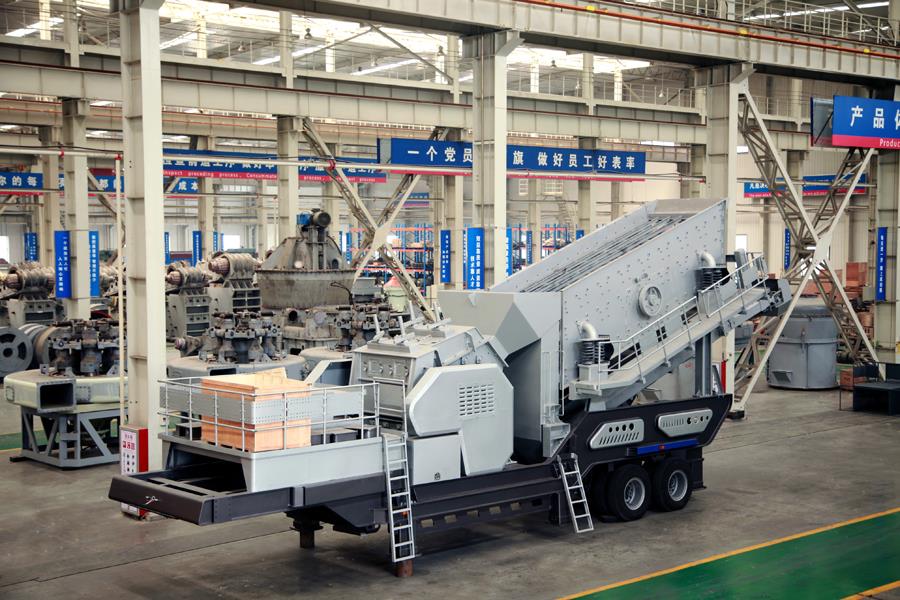
One of the clearest trends within the market is the shift toward mobile and modular crushing configurations, particularly in construction waste recycling and project-based aggregate supply. The global mobile crushers and screeners market is projected to expand from USD 5.49 billion in 2025 to USD 12.04 billion by 2031, registering a CAGR of nearly 14%. The logic is straightforward. A fixed plant requires foundations, permits, and a long-term site. A mobile unit requires compacted ground and a fuel supply. In markets where demolition activity is concentrated and landfill costs are rising, a tracked or wheel-mounted crushing station deployed directly at the demolition site eliminates haulage costs and converts waste into saleable recycled aggregate. The same flexibility applies to quarry operations where the working face advances and the plant needs to follow. For operators evaluating a new crushing investment, the question is no longer whether mobile is viable — it is whether the site conditions justify the additional cost of tracks and undercarriage maintenance.
Intelligent Control Is Becoming the Baseline, Not a Differentiator
The equipment itself is changing. Modern crushers are increasingly equipped with PLC-based monitoring systems that track motor load, bearing temperature, power draw, and liner wear in real time. Feeders respond to crusher load automatically. Screens report blinding before it reduces throughput. Maintenance is scheduled on condition rather than on the calendar. The industry's own analysis puts it plainly: customers no longer ask only "how many tonnes per hour?" They also ask about energy consumption, downtime rate, and service response time. That change in the buying question has pushed manufacturers to embed automation and remote monitoring into their products as standard features rather than optional extras. For an operator, the practical question is not whether the machine has a touchscreen. It is whether the control system can be operated and maintained by the people actually on site, and whether the equipment can be integrated with the plant's existing electrical and data infrastructure.
A Direct Factory Alternative for Operators Outside the Top Tier
The three largest suppliers built their position over a century. They have the engineering depth, the global parts network, and the balance sheet to support a 24/7 operation across multiple continents. But not every quarry needs a five-year framework agreement. Not every mine needs a supplier with offices on four continents. Some operations need a crusher that works, at a price that leaves room for the rest of the plant, supported by people who answer when you call.
OCP Mechanical Company operates in that segment. We manufacture jaw crushers, cone crushers, impact crushers, VSI sand making machines, vibrating screens, feeders, sand washers, and complete crushing and screening plants. Every machine is new. Our C6X series jaw crusher is engineered for primary reduction of hard, abrasive feed, with a deep symmetrical crushing chamber and hydraulic adjustment. Our HPT multi-cylinder hydraulic cone crusher delivers consistent product shape in secondary and tertiary applications. Our VSI6X series sand making machine produces specification-grade manufactured sand with adjustable cascade control. Because we sell direct from our factory, there is no distributor margin layered into the price. Our technical team works with you on the configuration rather than handing over a catalogue.
Our online customer service team is available 24 hours a day to discuss specifications, provide updated pricing, and help you work out what your plant actually needs. If you are evaluating a crushing circuit and want a direct quote, click the chat button and start the conversation.
All price information provided is for reference only; final quotes depend on equipment configuration, shipping terms, optional features, and current exchange rates. Product specifications are continuously updated; please consult our online customer service for the latest parameters tailored to your application.
-
China's Aggregate Equipment Market Grows to RMB 73–78 Billion as Manufactured Sand Exceeds 80%
-
How to Select a Vibrating Screen for Dry Limestone 180 TPH in Oman
-
500 TPH River Pebble Plant in Kyrgyzstan: Fixed Line Case and Mobile Crusher Selection Guide
-
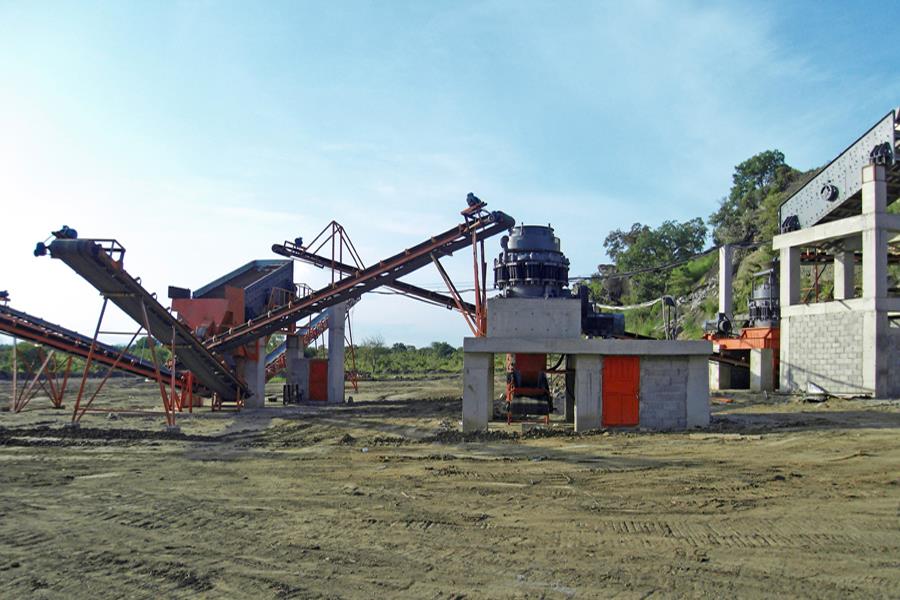
Modular Crushing Stations Cut Commissioning to 72 Hours Without Concrete Foundations
-
Weir Group Reports 8% Order Growth as HPGR Demand Accelerates



