Essential Knowledge: How the Hydraulic Protection Device of Jaw Crushers Works
The PE series jaw crusher features an integrated hydraulic station and automatic control system, offering high automation. Supported by the hydraulic station, a single hydraulic cylinder adjusts the discharge opening size while also unloading and expelling non-crushable objects. This provides reliable protection and automatically ejects non-crushable materials, effectively resolving the “steel jamming” issue in steel slag crushing. After iron discharge, it automatically resets, enabling continuous production without shutdown. This enhances operational convenience, significantly reduces downtime, and effectively improves work efficiency.
Numerous factors influence jaw crusher operation, but overload issues are particularly common. Due to uneven compressive strength within the same material—where some particles exhibit higher resistance—overloads frequently occur during operation. Moreover, the working load of jaw crushers fluctuates significantly, with peak loads typically reaching 3 to 4 times the normal operating state. In practical operation, non-crushable objects frequently enter the crushing chamber, causing severe instantaneous overloads. Without a safe and reliable overload protection device, the crusher may malfunction, potentially leading to component damage in severe cases. Therefore, to prevent overload conditions, jaw crushers must incorporate a robust self-protection system. This system ensures that components remain undamaged during overloads and enables rapid restoration to normal operation.
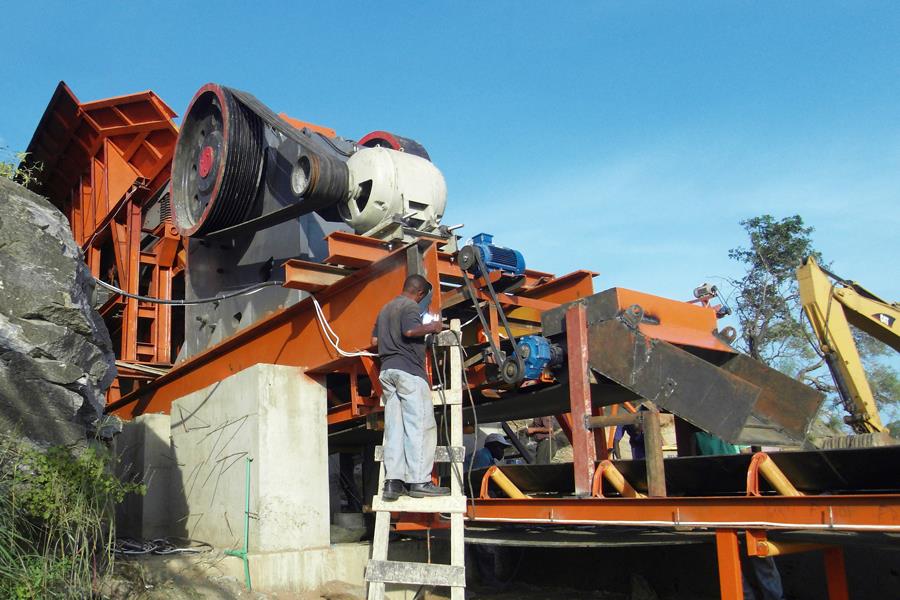
The hydraulic protection device of the jaw crusher serves to handle overloads and iron objects, effectively unloading and discharging non-crushable materials. The jaw crusher consists of a movable jaw, a fixed jaw, and an eccentric wheel. During operation, the fixed jaw remains stationary while the eccentric wheel, driven by an electric motor, rotates, causing the movable jaw to perform a reciprocating motion. This action crushes the material between the movable and fixed jaws. The piston rod of the hydraulic cylinder is hinged beneath the movable jaw. Its lateral position determines the size of the discharge opening beneath the crusher. During overload conditions, the piston and piston rod rapidly move to the right, widening the discharge gap between the jaws. allowing the overloaded material to discharge automatically under its own weight. Once the overload condition is eliminated, the oil pump supplies oil to the right chamber of the hydraulic cylinder. Under the pressure of the oil, the piston and piston rod move leftward to reset to their limit position, restoring the discharge opening between the moving and fixed jaws to its original size. The jaw crusher then resumes normal operation. Below, we examine the operational process of the hydraulic protection device.
1. Normal Operation
The pressure exerted by the crusher's thrust plate on the working hydraulic cylinder is less than the cylinder's thrust capacity. The directional valve remains at its upper limit position, preventing thrust plate movement. The crusher operates normally to process materials.
2. Overload Protection
When non-crushable objects enter the jaw crusher's crushing chamber, crushing force increases. At this point, the pressure exerted by the crusher's thrust plate on the working hydraulic cylinder exceeds the cylinder's maximum thrust capacity. The oil pressure in the high-pressure chamber of the working hydraulic cylinder rises instantaneously. The throttle valve activates the control valve, causing the system (hydraulic cylinder) to bleed oil. This limits the maximum thrust of the thrust plate (i.e., the maximum crushing force), thereby protecting the machine.
3. Troubleshooting
After non-crushable material enters the crushing chamber, the piston retracts to the right due to the maximum thrust limit of the working hydraulic cylinder. This action increases the crusher's discharge opening. Through the engagement of the crusher's movable jaw, the non-crushable material gradually moves downward and is ultimately discharged through the opening, automatically clearing the crushing chamber. If the “product” generated by non-crushable material in the chamber fails to meet specifications, it can be removed by auxiliary devices.
4. Automatic Recovery
After automatic ejection of non-crushable material, the piston remains retracted. With reduced crushing force and no transient high pressure in the upper chamber, the action valve's spool returns to its upper limit position, ceasing oil leakage into the system. Simultaneously, the plunger-type oil injection pump delivers maximum oil flow to the system under hydraulic pressure regulation until the working hydraulic cylinder piston moves leftward to its limit position. At this point, the crusher resumes normal operation.
Feel free to click for online consultation anytime. Our technical managers will provide detailed specifications tailored to your needs, assist with scientific model selection, and introduce related products. We also cordially invite you to visit our factory for an on-site inspection.