
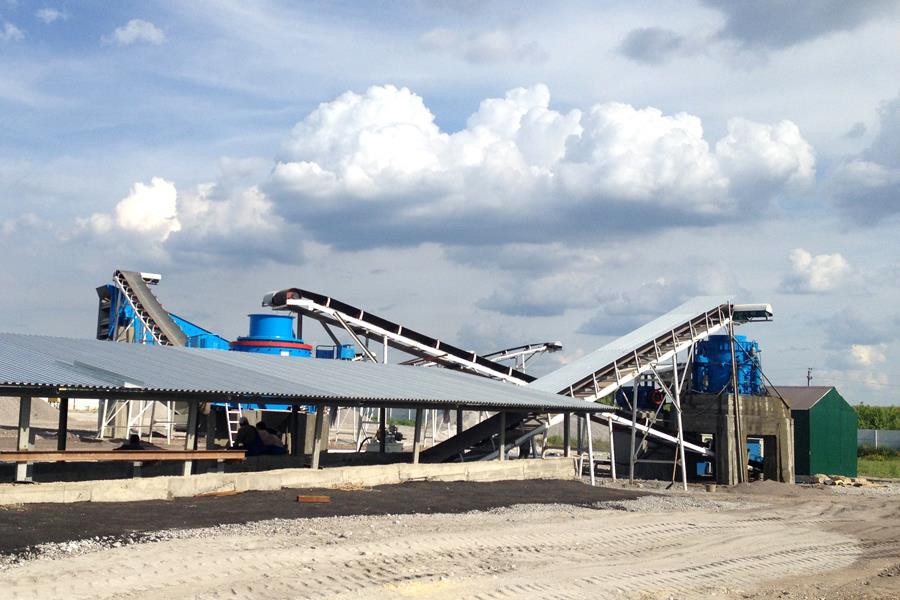
China's 2026 Environmental Rules Reshape Sand and Gravel Production Lines
From Cost Item to Survival Line: What the New Rules Actually Require
China's sand and gravel sector is adjusting to a regulatory framework that has changed faster in twelve months than in the previous decade. On August 15, 2026, the Ecological Environment Code took effect, replacing ten separate environmental laws with a single 1,242-article body of legislation. Five months later, in December, the new energy efficiency standards for mining crushing and screening equipment come into force. Between them, the two rules set a particulate emission limit of 10 mg/m³ for crushing and screening operations, tighten specific power consumption thresholds, and impose documentation requirements that extend from the permit application to the monthly operating log.
For operators, the practical effect is that dust control has moved from a line item that could be negotiated to a precondition for operating at all. A plant that cannot demonstrate compliance does not get a permit renewal.
What 10 mg/m³ Means for a Crushing Circuit
A 10 mg/m³ particulate limit is not a target that can be met with spray bars alone. It requires source capture, ducting, filtration, and monitoring as an integrated system. The Code's Article 241 addresses transport and loading specifically, requiring enclosed or sealed conveyance for sand and gravel, and spray or enclosure at loading points. Article 944 directs the building materials sector toward low-energy production technologies and equipment.
In practice, this translates into a specific equipment specification. Crusher discharge points need enclosed hoods connected to a collection system. Conveyor transfer points need covers. Screens need dust-tight enclosures. Stockpiles need either enclosure or continuous spray coverage. And the baghouse that collects all of it needs to be sized for the full air volume the circuit generates, not just the visible dust plumes.
Case studies from limestone processing operations show that meeting the 10 mg/m³ standard is achievable with a properly designed multi-module pulse-jet baghouse. One large-scale system handling 220,000 m³/h achieved consistent outlet concentration of 8–9 mg/m³, with 99.6% system availability since commissioning. That performance is not the result of a single piece of equipment. It comes from the hooding, ducting, airflow balance, and filter media all working together.
The Energy Standard Arriving in December
The second regulatory change is less visible but potentially more disruptive. The energy efficiency standards taking effect in December set specific power consumption limits for crushing equipment, with the average threshold raised by 15% to 18% compared to the 2020 standard. Low-efficiency crushers below Grade 3 are prohibited from market sale and project use.
For a plant that installed equipment five or six years ago, the December deadline is a compliance event. A crusher that was acceptable in 2020 may not be acceptable in 2026. The calculation is not just about the crusher motor. It includes the feeder, the screens, the conveyors, and the dust collection fan. Equipment that operates below Grade 3 energy efficiency cannot be legally used in new installations, and existing installations may face restricted operating hours during winter months as part of the performance grading system that provincial authorities are implementing.
The four-ministry Energy-Saving Equipment plan provides a counterweight to the cost of upgrading. Companies that install Grade 1 energy-efficient equipment can access green electricity pricing, tax reductions, and streamlined regulatory approvals. The超长期 special treasury bond programme covers 85–95% of eligible equipment renewal costs for qualifying projects. The regulatory push and the financial incentive are moving in the same direction.
Intelligent Monitoring: From Optional Upgrade to Permit Condition
The third piece of the regulatory framework is the monitoring requirement. The Code and its supporting regulations require sand and gravel enterprises to install automatic monitoring equipment for particulate emissions, maintain video surveillance of major dust-producing points for at least one year, and operate an integrated environmental management platform that records treatment facility operation, monitoring data, and transport documentation.
This is a different kind of requirement from the emission limit itself. It does not specify what technology to use. It specifies that the operator must be able to prove, continuously and verifiably, that the plant is performing within limits. A baghouse that is working but not instrumented is not compliant. A spray system that runs intermittently and is not logged is not compliant.
The practical configuration for a compliant plant includes particulate concentration monitors at the baghouse outlet, flow and pressure sensors on the dust collection system, and a data logger that records the readings. Equipment suppliers are increasingly offering these sensors as standard rather than optional, because the compliance documentation requires them.
What This Means for the Equipment You Buy Next
The regulatory environment has changed the economics of equipment selection. A crusher that costs less upfront but requires frequent maintenance, produces excessive fines that overwhelm the dust collection system, or operates at energy consumption above the Grade 3 threshold is not a cheaper option. It is a compliance liability.
Three specification decisions matter more than they did a year ago. First, the crusher's energy efficiency rating. Equipment that meets Grade 1 or 2 is not just lower cost to run; it is eligible for the incentives that offset the cost of upgrading. Second, the dust generation characteristics of the crushing chamber. A cavity that produces more fines creates a larger burden on the baghouse and the material handling system. A well-designed chamber that produces a consistent, well-graded product reduces the fines load before the material reaches the screen. Third, compatibility with monitoring systems. A crusher that can report its operating parameters—motor load, power draw, throughput—integrates with the environmental management platform that the Code requires.
OCP Mechanical Company has manufactured crushing and screening equipment for over 40 years. Our jaw crushers, cone crushers, impact crushers, VSI sand making machines, vibrating screens, and feeders are engineered with the energy efficiency and dust control requirements of the current regulatory framework in mind. We work with each customer on the circuit configuration rather than supplying a standard catalogue item, because a plant that meets the 10 mg/m³ limit and the December energy standard is not a generic installation. It is a system designed around the specific feed material, product specification, and site conditions.
Our online customer service team is available 24 hours a day to discuss equipment selection, provide updated pricing, and help you work out which configuration suits your operation. If you are evaluating a crushing circuit under the new rules, click the chat button and start the conversation.
All price information provided is for reference only; final quotes depend on equipment configuration, shipping terms, optional features, and current exchange rates. Product specifications are continuously updated; please consult our online customer service for the latest parameters tailored to your application.
-

Mobile Crushing Stations Add 3D Vision, Digital Twins and Blockchain in 2026
-
Ten Chinese Impact Crusher Manufacturers Named in 2026 CE-Certified Guide
-
-
Jaw Crushers Hold 46% of the Crushing Equipment Market as Mining Drives 56% of Demand
-
90 TPH Quartz Sand Screw Washer for Dewatering in Da Nang Vietnam



