Four Trends Reshaping Quarries Worldwide in 2026
Sustainability Has Moved From a Slide in the Boardroom to a Line in the Budget
For years, environmental performance in quarrying was treated as a cost to be managed, a box to be ticked for permitting. That framing has collapsed. Highways.Today‘s September 2026 editorial roadmap identifies environmental sustainability as a commercial necessity rather than an optional virtue, and the evidence sits in how operators are actually spending money. Renewable energy integration is no longer a pilot project at a handful of showcase sites. It is appearing in tender documents as a scored criterion. Circular economy practices — recycled aggregates, water recirculation, waste-derived fuels — are being evaluated against virgin material costs, not against a sustainability target. The shift matters because it changes what a quarry buys. A crushing circuit that produces excessive fines is no longer just inefficient. It is a waste stream that has to be managed, and management has a price. Equipment that can deliver a tighter product gradation with less over-crushing reduces the volume of material that never becomes saleable product. That is a sustainability argument and a margin argument at the same time, which is why it tends to survive budget reviews.
Urban Quarrying Is Changing Where Aggregate Comes From and How Far It Travels
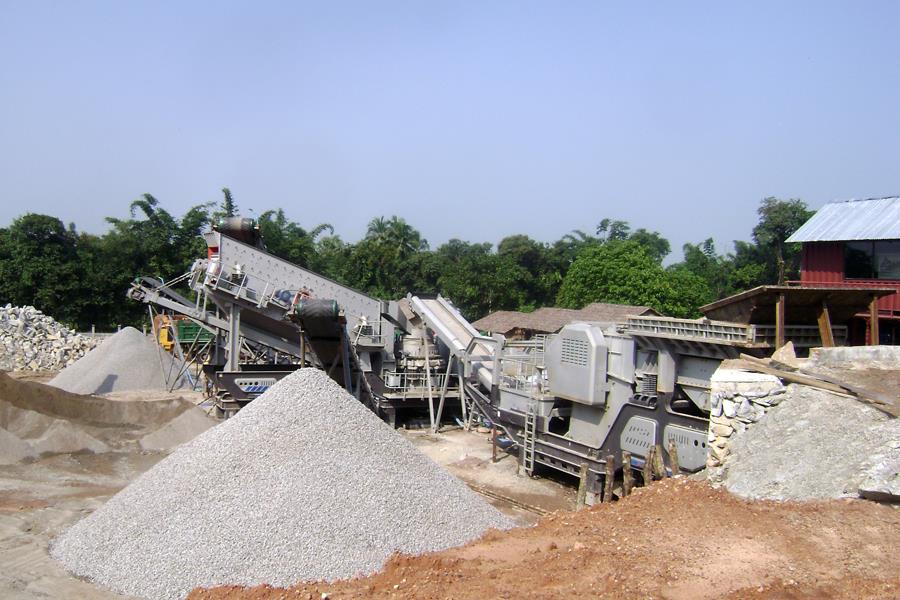
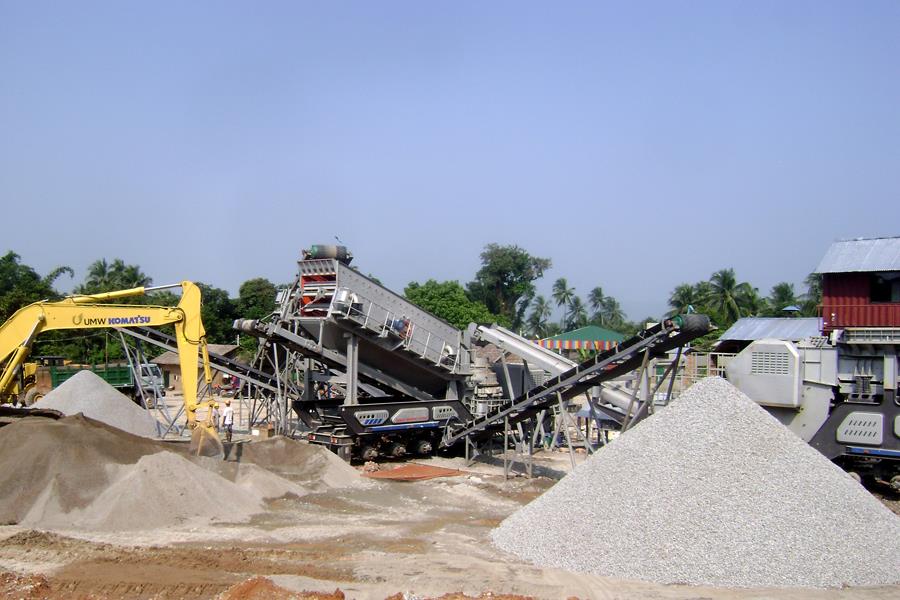
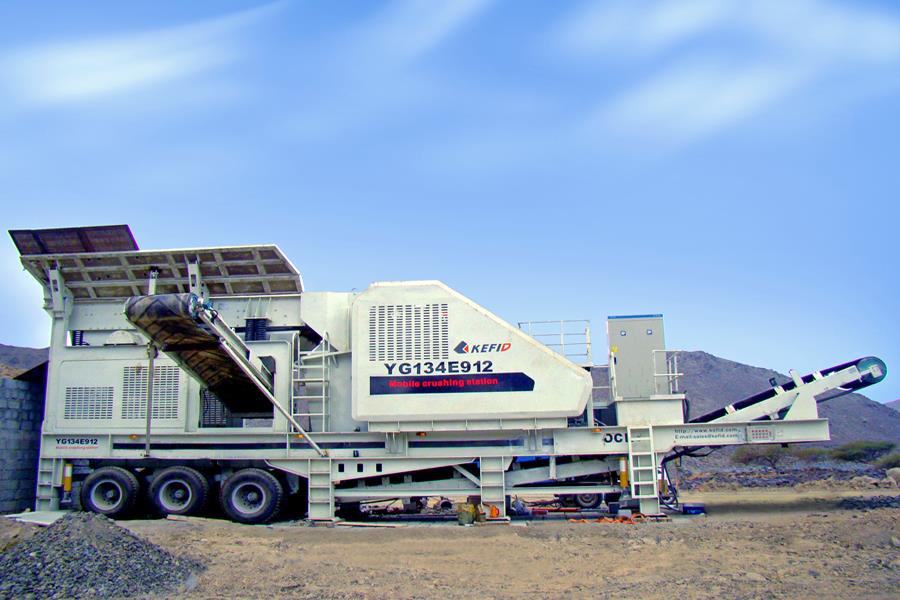
The second trend is geographic. Urban quarrying — processing construction and demolition waste within city boundaries rather than hauling virgin aggregate from distant pits — is gaining ground because the logistics arithmetic has changed. Transport emissions from aggregate movement typically outweigh extraction emissions by a factor of two to three. In dense urban markets, that imbalance is impossible to ignore. A facility like Plateforme La Plaine in Switzerland, which processes 150,000 tonnes per year within a 50-kilometre collection radius, demonstrates the model: materials are recovered from nearby deconstruction projects, processed on site, and delivered back to customers in the same region, with a rail connection and photovoltaic-powered belt feeders reducing diesel use further. The equipment implication is straightforward. Urban quarrying requires mobile or modular crushing and screening plants that can be deployed on constrained sites, handle mixed C&D feed, and operate within noise and dust limits that would be unthinkable at a rural quarry. A fixed plant designed for run-of-mine limestone is the wrong machine for this work.
Strategic Minerals Are Pulling Investment Into Crushing Circuits That Did Not Exist Five Years Ago
The third trend is demand-side, and it is reshaping the equipment market from the top down. The International Energy Agency projects that demand for lithium will grow fivefold by 2040, with cobalt and rare earth demand rising 50% to 60%, and copper and lithium supply gaps potentially reaching 30% and 40% by 2035. Governments are not treating this as a forecast to be monitored. They are treating it as a supply security problem to be solved. The United States has taken equity positions in rare earth and lithium producers, the European Union‘s Critical Raw Materials Act explicitly aims to secure and diversify supply, and the language around mining has shifted from “commodity cycle” to “national resilience”. For equipment buyers, this means that crushing circuits are being built for ores that were marginal a decade ago: lithium pegmatite, cobalt oxide, rare earth-bearing minerals, and battery-grade nickel. Each of these materials has specific crushing characteristics. A circuit designed for iron ore will not necessarily suit spodumene. The demand is real, but the equipment has to be matched to the ore, not the other way around.
Data-Driven Operations Have Become the Default Expectation, Not a Differentiator
The fourth trend is the one that will determine which quarries remain competitive over the next decade. Highways.Today notes that traditional quarries currently use less than 1% of the data they generate. The tools to close that gap are no longer experimental. AI-enabled machine vision is being used to correlate fragmentation size with shovel bucket payload, identifying the particle size range that maximises loading efficiency. Autonomous haulage systems have moved more than two million tonnes of limestone at a single Texas quarry in eight months, and the operator is expanding the programme to more than a dozen sites across three continents. The common thread is not the technology itself but what it enables: decisions made on measured data rather than operator intuition, and adjustments made in real time rather than at the end of the shift. For a crushing circuit, that means feeders that respond to crusher load, screens that report blinding before it reduces throughput, and maintenance scheduled on condition rather than on the calendar.
What These Four Trends Mean When You Buy Crushing Equipment
The four trends converge on a single practical question: does the equipment you are buying today make it easier or harder to operate the way the industry is moving? A crusher that cannot accept variable feed will struggle in urban C&D recycling. A plant without instrumentation will struggle to demonstrate compliance with tightening emissions rules. A circuit designed for one ore type will struggle when the deposit changes or when the market shifts toward a different product specification.
OCP Mechanical Company has manufactured crushing and screening equipment for over 40 years. Our jaw crushers, cone crushers, impact crushers, VSI sand making machines, vibrating screens, feeders, and complete crushing and screening plants are built for the operating conditions that these trends are creating: variable feed materials, tighter product specifications, and the need for equipment that can be monitored and adjusted rather than simply run. We sell direct from our factory, which means no distributor margin is layered into the price, and our technical team works with you on the circuit configuration rather than handing over a catalogue.
Our online customer service team is available 24 hours a day to discuss equipment selection, provide updated pricing, and help you work out which configuration suits your site. If you are evaluating a crushing project and want to understand how these trends affect your equipment choices, click the chat button and start the conversation.
All price information provided is for reference only; final quotes depend on equipment configuration, shipping terms, optional features, and current exchange rates. Product specifications are continuously updated; please consult our online customer service for the latest parameters tailored to your application.
-
Jaw Crushers Hold 46% of the Crushing Equipment Market as Mining Drives 56% of Demand
-
90 TPH Quartz Sand Screw Washer for Dewatering in Da Nang Vietnam
-
Which Mobile Crusher Is Best for Construction Waste 80 TPH in Kenya
-
260 TPH Limestone Impact Crusher Blow Bar Replacement in Saudi Arabia
-