
Causes of Material Blockage in Sand Making Machines
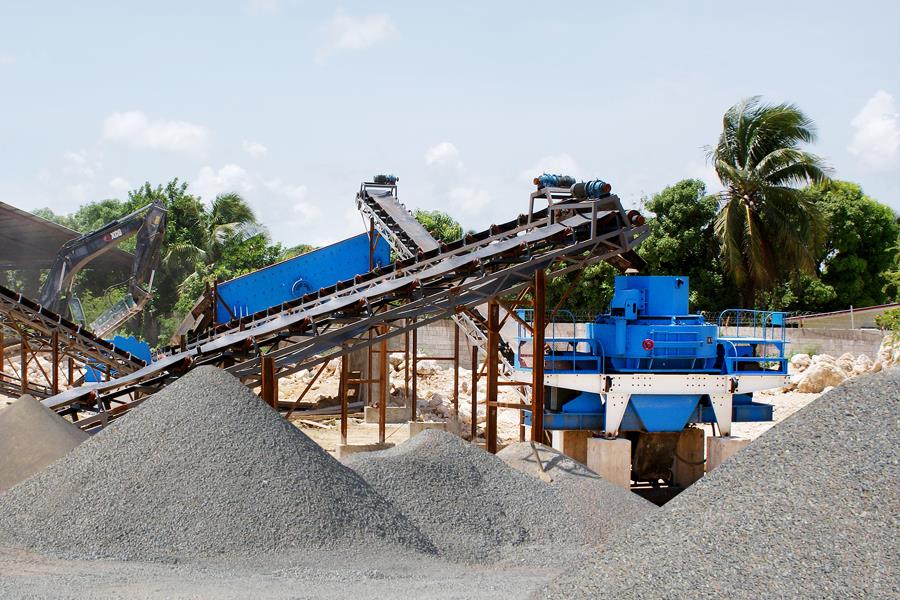
Sand making machines play an irreplaceable role in sand and gravel crushing production lines, representing the most effective, practical, and reliable sand production equipment currently available.
Suitable for crushing and shaping soft, medium-hard, and extremely hard materials, these machines are extensively employed in various industries. These include metal and non-metal mining, refractory materials, abrasive ceramic raw materials, building materials, high-speed rail construction, hydraulic and hydroelectric projects, and private sand and gravel aggregate production. They excel in the fine crushing and shaping of minerals and rocks, particularly medium-hard, extremely hard, or abrasive materials such as sandstone, granite, basalt, silicon carbide, emery, bauxite, and magnesia.
When sand-making machines experience material blockages during operation, it significantly impedes the crushing efficiency of the sand production line. What are the causes of material blockages in sand-making machines?
1. Conveyor throughput exceeds crushing capacity: When the conveyor's throughput does not match the crusher's crushing capacity, material accumulates without being crushed while subsequent material rapidly enters the crusher, causing delayed crushing and blockages.
2. Severe wear of vulnerable components: The machine primarily relies on hammers for crushing, which are also its most susceptible parts. After prolonged use, these hammers become worn. If this wear is not promptly detected, encountering harder materials prevents the hammers from fully crushing them. Consequently, the crushed material cannot be discharged in time, and as new material enters, blockages occur.
3. Inappropriate tension of the V-belt: The equipment relies on a V-belt to transmit power to the pulley for crushing operations. A loose V-belt causes slippage, where the belt rotates with the pulley rather than driving it. This prevents materials from receiving adequate crushing force, hindering proper pulverisation within the crushing chamber and ultimately causing blockages.
4. Insufficient Voltage: Voltage instability causes uneven and discontinuous feeding into the sand-making machine. If feeding is uneven and exceeds discharge rates, blockages form at the crushing chamber and discharge port. Crushed products cannot be expelled promptly while new material continuously enters the equipment, ultimately causing blockages. Severe cases may result in equipment shutdown under load.
5. Improper discharge opening adjustment: During operation, either excessively slow discharge rates or a blocked discharge opening may impede material expulsion from the sand-making machine. This results in substantial material accumulation within the crushing chamber.
Obtaining precise quotations for sand-making machines requires consideration of your production volume, operational scale, and feed material to determine suitable equipment configuration. For detailed pricing information, please feel free to contact our online customer service team at any time!
-
What models of impact sand-making machines are available? What distinguishes them
-
Preventive Measures Against Material Blockage in Sand Making Machines
-
-
Why are impact crushers more commonly used in sand and gravel aggregate production lines
-
What is the price of a 300-tonne-per-hour tracked mobile impact crusher