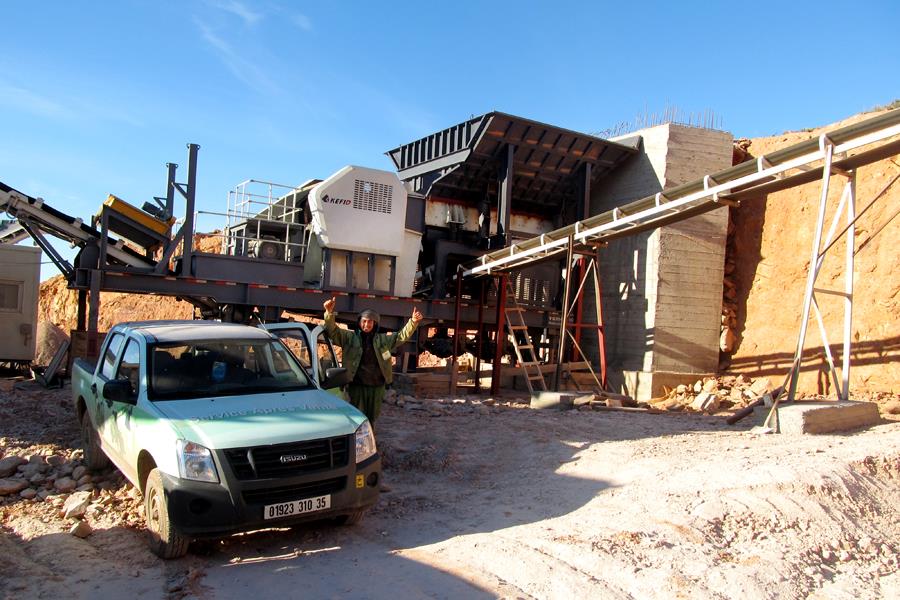
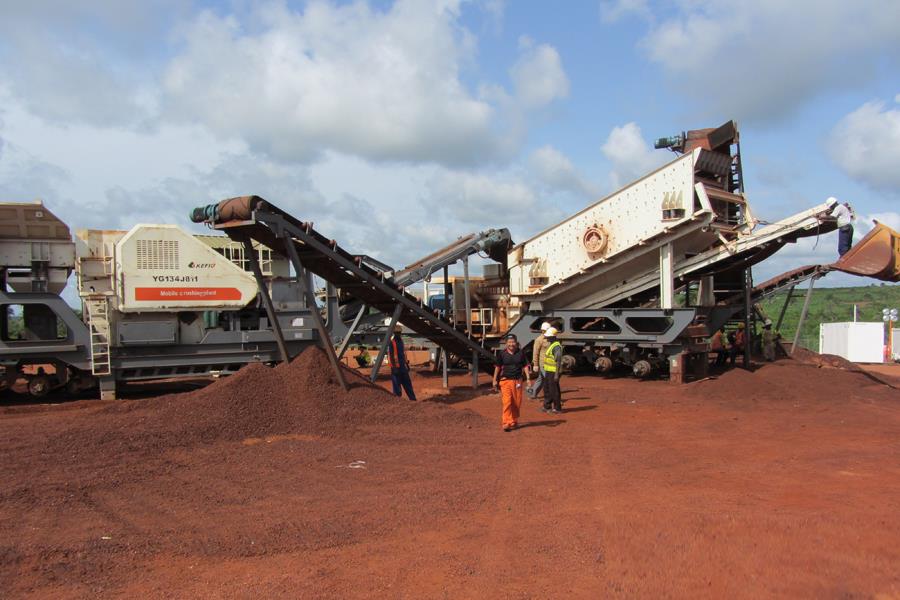
What are the commonly referred to two-stage and three-stage crushing systems in sand production lines
In recent years, manufactured sand and gravel have assumed an increasingly vital role in infrastructure projects, gradually becoming the primary source of construction sand. This has significantly driven the development of manufactured sand and gravel production equipment. As the low-carbon environmental concept, based on low energy consumption, low pollution, and low emissions, continues to gain traction, the government has intensified macro-control measures across various industries, particularly within the manufactured sand and gravel sector. Against this backdrop, how should the design of sand production lines be approached?
Mechanical sand production processes primarily fall into two categories: two-stage crushing and three-stage crushing. Smaller production lines typically employ a two-stage crushing and screening process, while larger operations handling bulkier materials often utilise a three-stage approach. Four-stage crushing and screening configurations are comparatively rare.
The two-stage crushing process primarily involves two equipment configurations:
1. Jaw crusher + impact crusher;
2. Jaw crusher + cone crusher.
The crushing ratio for the secondary stage typically ranges between 15 and 25. Given the modest overall crushing ratio and relatively low ore throughput (often below 1,000 tonnes per day, except when employing large-scale crushers), most sand and gravel plants adopt a closed-circuit two-stage process. This involves the secondary crusher operating in a closed circuit with a check screening device, ensuring the final product meets the required particle size specifications for aggregate applications.
The equipment for the three-stage crushing process primarily features four configuration options:
1. Jaw crusher + impact crusher + impact-type shaping sand-making machine;
2. Jaw crusher + hydraulic cone crusher + impact-type shaping sand-making machine;
3. Medium cone crusher + fine cone crusher + high-efficiency sand-making machine;
4. Primary impact crusher + secondary impact crusher + impact-type shaping sand maker.
The three-stage closed-circuit process, wherein the third stage employs a check screen to form a closed circuit, represents the most prevalent crushing and screening workflow. This production process features a substantial total crushing ratio, typically ranging from 25 to 200, with a maximum feed size of approximately 1000 millimetres. The crushed product can achieve a particle size of 12 millimetres or finer, making it suitable for large and medium-scale sand and aggregate production lines.
(Technical parameters and data mentioned herein are subject to updates with product upgrades. Please contact our website customer service for the latest equipment specification sheets.)
The complete mechanised sand and aggregate production equipment primarily comprises feeding apparatus, crushing machinery, screening units, and conveying systems. To meet specific requirements for output particle size and shape, supplementary sand-shaping equipment such as impact-type shaping sand makers may be incorporated. Furthermore, to safeguard the environment and align with low-carbon, eco-friendly initiatives, certain mechanised sand and aggregate production lines are equipped with auxiliary dust extraction and noise reduction systems. Click to contact our website customer service for an immediate complimentary consultation.
-
Why are impact crushers more commonly used in sand and gravel aggregate production lines
-
What is the price of a 300-tonne-per-hour tracked mobile impact crusher
-
-
Detailed Case Study of a 200-Ton-Per-Hour Bluestone Crushing Production Line
-