
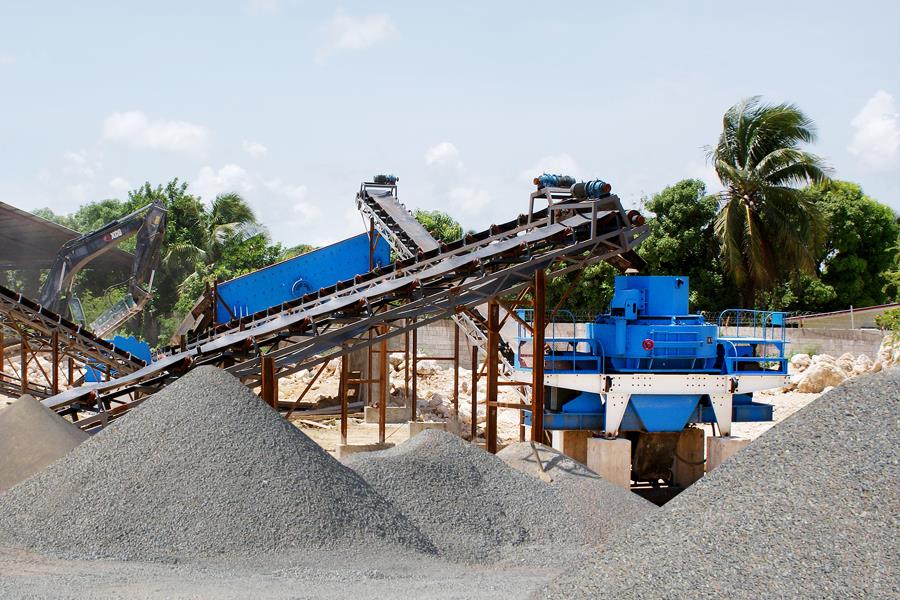
Why are impact crushers more commonly used in sand and gravel aggregate production lines
Regarding crushing and sand-making equipment, many enquirers ask which type performs best. Ordinary hammer crushers are inexpensive and feature straightforward processes. Can hammer crushers be used for sand production? Historically, constrained by process limitations and cost considerations, many small-scale production lines would opt for hammer crushers when sand particle shape and quality were not critical requirements. However, standard sand production lines typically integrate coarse crushers, medium crushers, fine crushers, and sand makers for optimal output particle size and quality.
Simply put, hammer crushers are rarely employed in aggregate production lines for two primary reasons:
1. Poor output particle shape (though suitable for coarse and medium-sized crushed stone)
While the hammer crusher offers a straightforward sand-making process, it suffers from low yield rates, excessive over-crushing, and a high proportion of powdery material. Furthermore, the resulting aggregate develops micro-cracks, leading to low compressive strength. This compromises aggregate quality and marketability, making hammer crushers primarily suitable for crushing applications.
2. Significant wear and tear
Hammer crushers are suitable for processing medium-hardness and soft ores such as limestone, coal gangue, dolomite, and shale. They cannot handle high-hardness materials, as this causes rapid hammer head wear, necessitating frequent replacements. This increases costs and disrupts production.
Why are impact crushers more commonly employed in sand and aggregate production lines?
1. Material Processing Capabilities
Due to differences in technical structure and operating principles, impact crushers can process not only softer materials but also those of greater hardness. Hammer crushers, conversely, are limited to processing softer materials. As impact crushers lack a bottom screen, product size is determined by the gap between the impact plate and hammers. This design effectively prevents screen clogging when processing wet materials with high moisture content. Hammer crushers, constrained by their bottom screens, face increased clogging risks and thus cannot handle highly moist materials. Consequently, impact crushers offer a broader operational scope.
2. Maintenance Costs
Initially, impact crushers typically command a higher purchase price than hammer crushers. However, structural and operational differences between the two types result in distinct maintenance requirements. Wear on impact crusher hammers occurs only on the material-facing surface, yielding higher metal utilisation rates. Additionally, the impact crusher's frame features a three-part structure. Maintenance tasks such as replacing impact plates, counter plates, and liners can be performed simply by opening the rear casing. Furthermore, impact crusher components exhibit strong interchangeability, with fewer types of wear parts, facilitating spare parts procurement and management. In contrast, hammer crushers feature numerous hammers, with replacing a full set demanding significant time and labour, resulting in higher maintenance costs. Components such as the rotor, bottom screen plate, and grating may also suffer wear during operation, and their replacement is comparatively complex.
Here, we refer primarily to conventional hammer crushers. Newer hammer crusher models exhibit significantly enhanced performance, though naturally commanding higher prices than their standard counterparts. Based on the above comparison, it is evident that aggregate plants processing highly abrasive or softer materials would favour impact crushers, while hammer crushers remain suitable for other applications. This choice also reduces long-term operational costs and enhances economic efficiency. In practical production scenarios, whether selecting a hammer crusher or impact crusher, detailed consultation with the manufacturer is essential. Click for online consultation – available 24 hours a day!
-
What is the price of a 300-tonne-per-hour tracked mobile impact crusher
-
-
Detailed Case Study of a 200-Ton-Per-Hour Bluestone Crushing Production Line
-
-
What is the investment cost for a complete sand-making equipment set