What models of impact sand-making machines are available? What distinguishes them
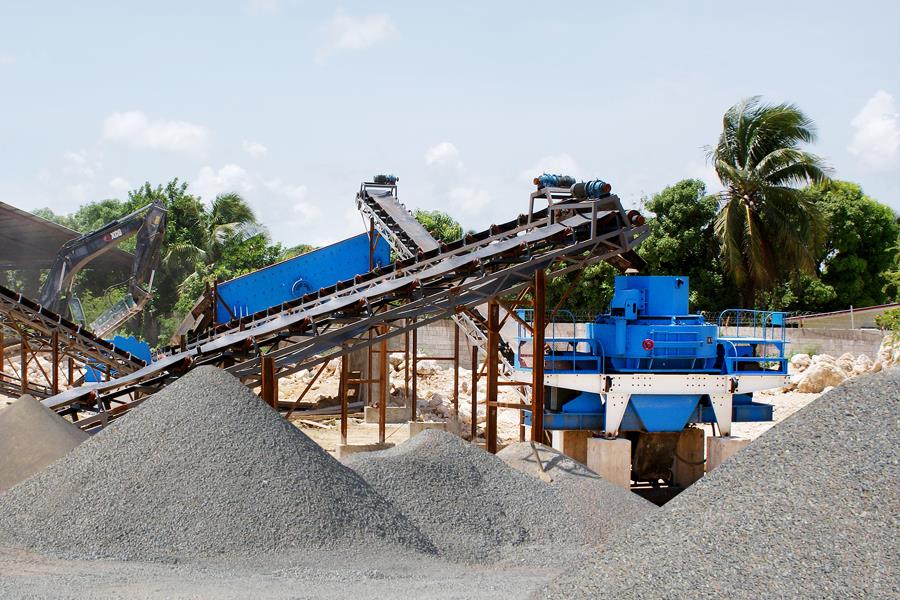
Impact sand-making machines, as the name suggests, are sand-making machines that crush materials through impact. As demands for sand and gravel quality continue to rise, higher standards are placed on sand-making machinery, leading to the development of sand-making and shaping machines. Unlike conventional sand and gravel processing equipment, this machine not only crushes stone but also incorporates shaping capabilities. The fine aggregates produced exhibit superior quality, meeting construction sand standards.
The crushing chambers of sand-making machines and shaping machines differ, resulting in distinct functionalities. The sand-making machine features a more compact cavity design, whereas the shaping machine has a relatively wider configuration. Both machines also exhibit differences in internal liner plates, peripheral guard plate shapes, and vortex crushing chamber dimensions. Operationally, sand-making machines employ two distinct modes: stone-on-stone and stone-on-iron. Typically, the stone-on-stone method is primarily used for shaping, while stone-on-iron is employed for sand production. Below, we shall illustrate the performance advantages and application distinctions between two impact sand-making machine models—the vertical impact crusher and the vertical compound crusher—using OCP Heavy Industry's sand-making machine as an example.
The vertical impact crusher can operate at high rotational speeds exceeding 80 metres per second. It is employed in the sand and gravel aggregate processing industry for the secondary fine crushing and shaping of coarse sand particles, thereby optimising and adjusting the particle size distribution of the finished sand. This process enables a reduction in the sand's fineness modulus. This equipment features both ‘stone-on-stone’ and ‘stone-on-iron’ crushing modes, which can share a single crushing chamber. A simple component swap enables seamless conversion between these modes, accommodating diverse operational conditions and material processing requirements.
The vertical compound crusher employs both impact and grinding crushing mechanisms, achieving multiple crushing stages with minimal grinding. As an energy-efficient, consumption-reducing fine crushing solution, it is extensively employed in cement raw material and clinker crushing operations. It is also widely applicable for fine crushing diverse ores across metallurgy, mining, aggregate production, and cement quarrying sectors. Capable of processing limestone, dolomite, lime, sandstone, medium-soft iron ore, and other dry, non-sticky materials below 160MPa. Under special circumstances, it can also be employed for the fine crushing of high-hardness brittle materials. Equipped with a water-cooled chassis cooling system, high-temperature resistant bearings, and high-temperature grease rated above 260°C, it can crush materials below 150°C, making it widely applicable for cement raw material and clinker crushing.
(Technical parameters and data mentioned herein may be updated with product upgrades. Please contact our website customer service for the latest equipment specification sheet.)
Regarding the selection of a sand-making machine, the appropriate model must be configured based on actual production conditions (material hardness and moisture content, output requirements, feed particle size, and discharge particle size specifications). For further details on sand-making machine configurations, please click for online consultation. OCP Heavy Industry offers direct factory sales, complimentary production line design, quality assurance, and competitive pricing!
-
Preventive Measures Against Material Blockage in Sand Making Machines
-
-
Why are impact crushers more commonly used in sand and gravel aggregate production lines
-
What is the price of a 300-tonne-per-hour tracked mobile impact crusher
-