Causes and Solutions for Poor Screening Quality in Vibrating Screens
Vibrating screens are commonly used screening equipment in mining production, characterised by their compact size, lightweight design, high efficiency, and multi-layer structure. During production, it is often observed that vibrating screens exhibit poor screening quality, which significantly impacts production efficiency. Several factors influence screening performance, including feed material properties, equipment conditions, and operational practices.
Causes and Solutions for Poor Screening Quality:
1. Screen Hole Blockage
When the feed material contains high levels of clay or moisture, it can cause the material to adhere to the screen holes, leading to blockage. In such cases, the screen holes should first be cleaned, followed by appropriate adjustments to the water spray volume and screen surface angle.
2. Severe Screen Hole Wear
When the screen mesh has been in use for an extended period, it can result in severe wear of the screen holes, significantly impacting screening performance. In such cases, repair the worn screen holes. If the wear is severe, consider replacing the screen mesh.
3. Uneven feed distribution
If the feed chute is too narrow, the material cannot be evenly distributed across the entire screen surface, resulting in inefficient use of the screen surface and impaired screening performance. Adjust the feed chute width to ensure even feed distribution.
4. Excessively thick material on the screen
Excessively thick material on the screen may be caused by increased feed rate, screen hole blockage, or insufficient screen surface inclination. In such cases, adjustments should be made based on the specific circumstances.
5. Insufficient screen surface angle
For circular vibrating screens, the most common cause of poor screening performance is an insufficient screen surface angle. To address this, the rear support seat should be raised. In practical applications, a screen surface angle of 20° is optimal. The typical angle range for circular vibrating screens is 16–20°. If the angle is below 16°, material flow on the screen may become obstructed or material may roll upward.
6. Eccentric blocks moving in different phases
For linear vibrating screens and high-frequency vibrating screens, poor screening quality may be related to the movement direction of the eccentric blocks. Two sets of identical eccentric blocks must rotate in opposite directions to achieve self-synchronisation, generating a single vibrating force along the vibration direction at each instant, forming a fixed angle with the horizontal direction, causing the screen box to move in a reciprocating linear motion. If the phases are not synchronised, the direction of the vibrating force will not align with the vibration direction, resulting in inefficient screening performance.
We are a mining machinery company integrating R&D, production, sales, and service. Our main products include jaw crushers, cone crushers, impact crushers, sand makers, mobile crushing stations, ball mills, and vibrating screens, among related equipment. We welcome all customers to visit our factory for on-site inspections. Click on the website customer service for free consultation, available 24/7.
-
-
Introduction to the Process Flow of Quartz Sand Beneficiation
-
-
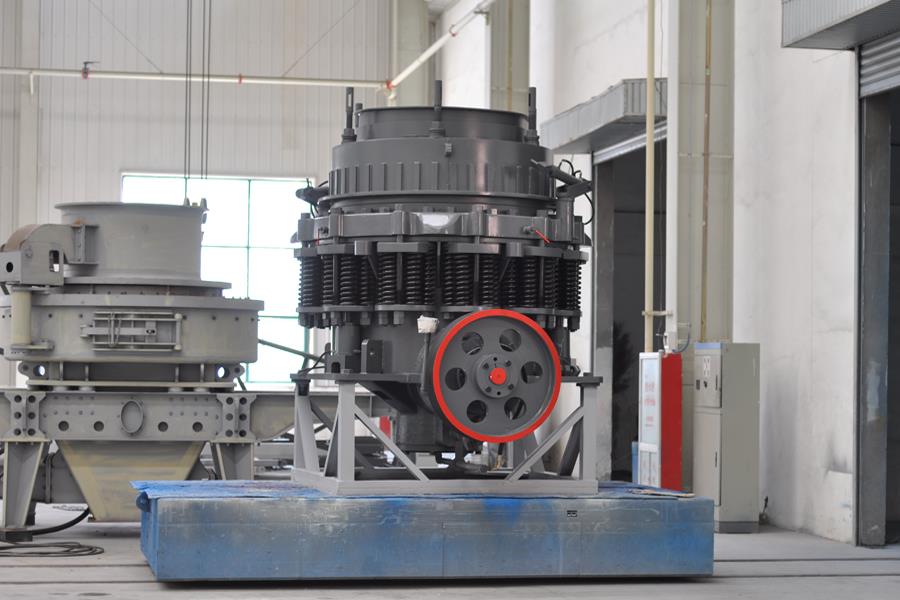
Structure and Features of Single-Cylinder Hydraulic Cone Crusher
-