
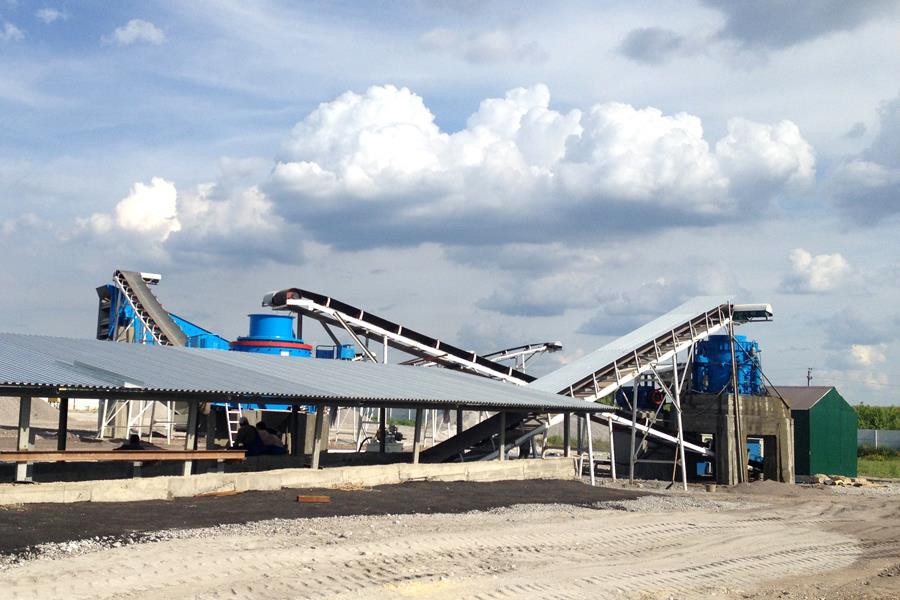
Production Process and Quality Control Requirements for High-Quality Manufactured Sand
The rapid expansion of infrastructure development, including motorways, buildings, and elevated bridges, has led to a growing demand for sand and gravel aggregates. However, trends such as the scarcity of natural sand and gravel resources and rising prices make it challenging to meet the substantial market demand for these materials. Currently, in response to the escalating demand for sand and gravel across various industries, the emergence of manufactured sand has alleviated the market shortage while offering a more economical alternative to natural aggregates. High-quality manufactured sand can meet the requirements of diverse construction projects. What, then, are the production processes and quality control requirements for high-quality manufactured sand? The following aspects provide an overview.
1. Optimising Parent Rock Quality The quality of the parent rock at the quarry source fundamentally determines the quality of manufactured sand. Thorough geological surveys are essential when selecting quarries. Prioritise sites with thin overburden layers, minimal clay interlayers, high parent rock strength, and good rock integrity. The bedrock should not exhibit potential alkali-aggregate reaction activity. Clean, hard-textured limestone, dolomite, granite, or basalt free from weak particles and weathered rock is preferable.
2. Three-stage crushing and two-stage shaping
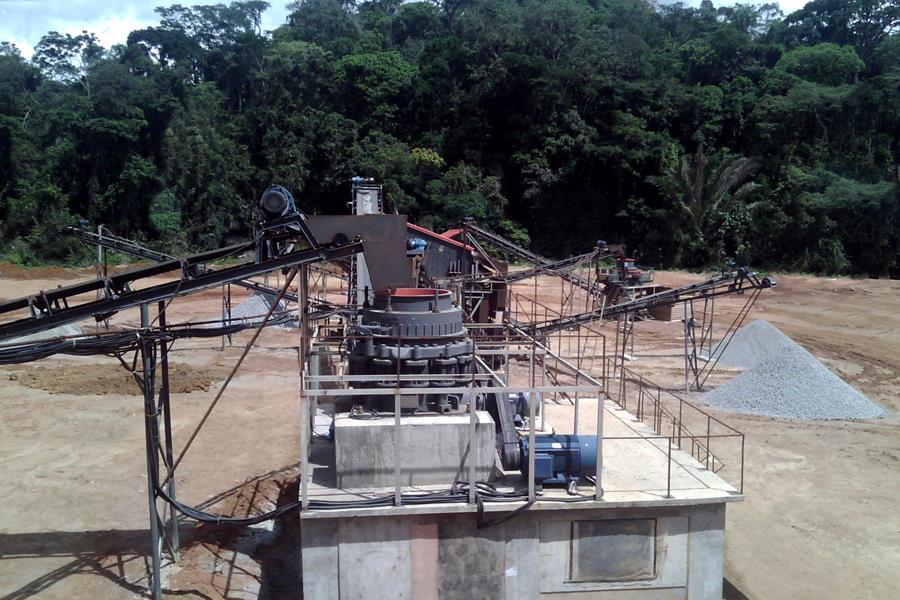
Initially, a jaw crusher employs compression to perform primary crushing (coarse crushing) of the bedrock, reducing its diameter and alleviating production pressure on the impact crusher. Subsequently, a secondary crushing (medium crushing) is performed using an impact crusher employing a stone-on-stone impact mechanism. This further develops micro-fractures in the aggregate produced by the jaw crusher, ultimately causing the aggregate to fracture again along these micro-fractures, completing the secondary crushing and initial shaping of the aggregate. Finally, a vertical shaft impact crusher is employed to perform tertiary crushing (fine crushing) and secondary shaping of the aggregate using either a stone-on-stone or stone-on-iron mechanism.
3. Secondary Desliming
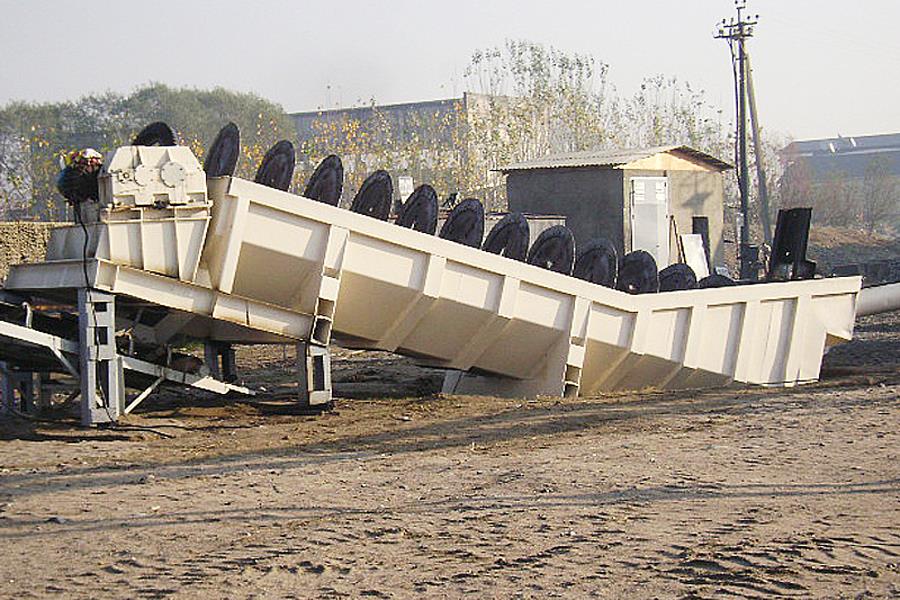
Prior to coarse crushing, a vibrating feeder coupled with a desliming screen performs initial desliming on bedrock and soil particles smaller than 30mm. A second desliming stage, conducted before medium crushing, treats aggregates smaller than 10mm to remove soil and stone dust, ensuring the aggregate's MB value remains below 0.5.
4. Gradation Adjustment Circulating screening systems are installed during both medium and fine crushing stages. By adjusting the feed hoppers, portions of aggregate can be returned via the circulation system for re-crushing into finer particles. This allows production ratios of different particle sizes to be tailored as required. Subsequently, air classification controls the content of fine particles, addressing the issue of gradation where ‘the ends are abundant while the middle is deficient’.
5. Air-Classification Powder Control: Post-fine crushing, aggregates undergo primary gravity air-classification to control stone powder content around 10%. Before finished sand enters storage bins, air pressure in the classifier is adjusted to refine powder content, meeting specific requirements for manufactured sand stone powder content in concrete of varying strengths.
6. Automatic Humidification: Following air classification, the finished manufactured sand undergoes automatic humidification to maintain a moisture content between 2.5% and 3.5%. This stable moisture level facilitates concrete production and quality control, effectively preventing dust generation during production and transportation while mitigating aggregate segregation during handling and transit.
7. Environmental Protection In quarrying operations, environmental protection, restoration and remediation, revegetation and reclamation, energy conservation and emission reduction, soil and water conservation, and geological hazard prevention are implemented in accordance with green mining standards. Dust control during blasting employs mist spraying or water bag covering. Production equipment selection prioritises crushing and screening machinery with superior noise reduction and minimal dust generation. Regarding dust extraction process design and layout, extraction systems shall be installed at all dust-generating points. Semi-finished and finished product silos shall be fully enclosed with colour-coated steel sheeting. Regarding waste material reuse, the separated silt and stone from the two-stage extraction process undergo further processing. The stone is reprocessed for use as roadbed fill material and raw material for concrete bricks, while the silt is stored separately for subsequent vegetation restoration. This approach enhances material utilisation, increases economic benefits, reduces land occupied by waste residue storage, and minimises safety hazards associated with waste residue stockpiling.
Given the high costs of natural sand and its transportation, it is more advantageous to source high-quality manufactured sand locally from mines along railway lines or utilise tunnel spoil. This substitute for scarce river sand in construction projects significantly reduces development costs while minimising environmental impact from spoil disposal, offering substantial economic and environmental benefits. Zhengzhou OCP Heavy Industry can tailor sand and gravel production line solutions to your specific requirements, providing comprehensive equipment selection, installation, and commissioning services. For further details, please click for online consultation or leave your enquiry!
-
What factors influence the hourly output capacity of a small jaw crusher
-
What is the hourly output capacity of a common small jaw crusher in tonnes
-
-
What models of impact sand-making machines are available? What distinguishes them
-
Preventive Measures Against Material Blockage in Sand Making Machines