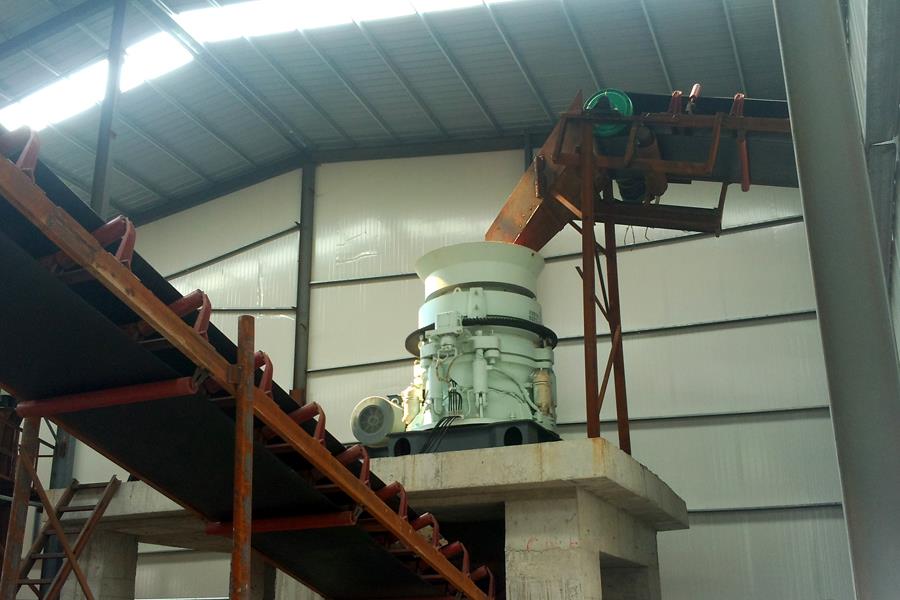
Important Notes for the Use of Multi-Cylinder Hydraulic Cone Crushers
(1) The feed particle size must not exceed the maximum feed size.
Excessively large feed particle sizes can cause material slippage within the crushing chamber, severely impairing material crushing efficiency and significantly reducing output. Additionally, overly large feed particle sizes can exert excessive impact on the crusher, affecting normal equipment operation and potentially causing the main unit to shut down.
(2) The discharge opening must not be smaller than the minimum discharge opening size corresponding to the cavity type.
A discharge opening that is too small can cause high load current, damaging the equipment, such as burning of the bronze bushings, premature wear of parts, and in severe cases, causing the machine to stall and shut down.
(3) Uniform feeding must be maintained throughout the cavity.
Uneven feeding or failure to maintain full cavity feeding can cause significant fluctuations in the main unit's load current, reduced output, uneven wear of liners, and shortened component lifespan.
(4) Operating load should generally be maintained between 75% and 90%.
Based on material crushing conditions, the main unit's load should generally be controlled between 75% and 90%, preferably not exceeding 90%. If the load is too low, layer crushing cannot be achieved, and the equipment cannot perform optimally; if the load is too high, it will impose excessive stress on the main machine's bronze bushings, shortening the service life of components such as the bushings.
(5) Strictly control moisture content
When the feed contains sticky materials, it can cause crushed material to become stuck in the crushing chamber, leading to increased load current and machine shutdown. Therefore, when crushing sticky materials, moisture content must be strictly controlled, typically not exceeding 5%.
(6) Avoid support sleeve vibration
Support sleeve vibration can damage the bronze seat lining and also cause varying degrees of damage to the main machine frame. The primary causes of support sleeve vibration are: ① insufficient pressure in the safety cylinder; ② uneven feed material distribution, with one side having more material than the other, resulting in uneven load distribution; ③ excessive feed material volume, causing increased load and affecting normal crushing; ④ too small discharge opening, leading to increased load.
(7) Controlling lubricating oil temperature
Multi-cylinder hydraulic cone crushers generate significant heat due to their large eccentricity and high power, making lubricating oil viscosity a critical factor in ensuring effective lubrication. The cooler in the lubrication system reduces the oil temperature to an appropriate level, enabling the lubricating oil to provide optimal lubrication and cooling performance.
Through years of product development and practical application in multiple mining crushing systems, it has been proven that multi-cylinder hydraulic cone crushers feature high production capacity, large crushing ratio, good product particle shape, low energy consumption, high automation, high production efficiency, convenient operation and maintenance, and low maintenance costs and wear part expenses. The system's energy consumption is reduced by approximately 15% on average, achieving excellent application results and receiving high recognition from users. Our company manufactures various models of multi-cylinder hydraulic cone crushers. Please click on the website customer service for free consultation, available 24/7.
-
Structural and Technical Analysis of Multi-Cylinder Hydraulic Cone Crushers
-
Advantages and Disadvantages of Multi-Cylinder Hydraulic Cone Crushers
-
Important Considerations for Installing the Eccentric Sleeve of a Cone Crusher
-
-