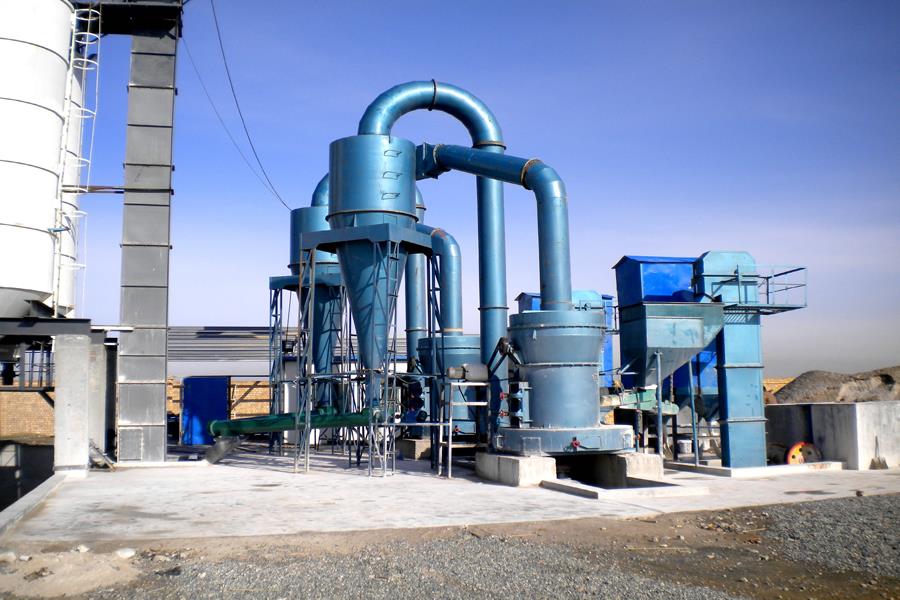
Global Crushing and Screening Market Hits USD 55.3 Billion as Top Three Suppliers Hold 36%
The Market Number and What Sits Behind It
The global crushing and screening machinery market reached RMB 55.3 billion in 2026, and it is projected to grow at a compound annual rate of 4.74% to RMB 76.4 billion by 2033. Those figures come from a research report that also notes the top three manufacturers together hold roughly 36% of the market. The remaining share is divided among a long tail of regional players, mid-sized specialists, and direct factory suppliers.
The headline number is useful, but it hides more than it reveals. A growing market does not mean every operator is buying. It means the installed base is expanding, replacement cycles are running, and equipment demand is being driven by factors that vary significantly by region.
Who the Top Three Are, and What Their Concentration Means
The three largest suppliers are Metso Outotec, Sandvik, and Astec Industries, with Metso Outotec alone accounting for approximately 15% of global revenue. The next tier includes Terex, Weir, FLSmidth, Wirtgen Group, Komatsu, and ThyssenKrupp, along with Chinese manufacturers like Liming Heavy Industry, Shanghai Shibang, and Nanchang Mineral Systems.
That level of concentration — 36% among three players — tells you something about how the global market works. The largest suppliers compete primarily on full-plant solutions, global service networks, and long-term framework agreements with major mining houses. They are not competing on the price of a single jaw crusher. They are competing on the ability to keep a 50,000-tonne-per-day concentrator running across a decade.
The remaining 64% of the market is where the volume sits. Regional contractors, mid-sized quarries, and project-based operators buy equipment on a different logic. They need a machine that works, arrives on schedule, and can be serviced without waiting three weeks for a part. That segment is served by a mix of regional manufacturers and direct factory suppliers.
Asia Pacific Holds the Largest Share, but the Growth Map Is Uneven
Asia Pacific accounts for roughly 42% of global crushing and screening demand, with China contributing more than a third of that regional figure. The region’s share is driven by the sheer scale of aggregate consumption in China and India, where infrastructure programmes and housing construction generate continuous demand for crushed stone and manufactured sand.
But the regional picture is not uniform. China’s aggregate market has been contracting — production fell 8.9% in 2025 and another 9% in the first half of 2026 — even as its equipment manufacturing capacity remains the largest in the world. India is growing faster, with a projected equipment CAGR of 6.2% , driven by its national highway programme and expanding cement capacity. Southeast Asia sits in between: infrastructure investment is strong, but project timelines are longer and budgets tighter than in China’s peak years.
For equipment buyers in these markets, the implication is straightforward. The largest suppliers price for scale and service depth. The direct factory segment prices for capital efficiency. The right choice depends on which of those two things matters more to your operation.
The Intelligence Layer Is Becoming Standard, Not Optional
One trend that cuts across every region and every equipment class is the shift toward intelligent control. The industry’s own analysis puts it plainly: customers no longer ask only “how many tonnes per hour?” They also ask about energy consumption, downtime rate, and service response time. That change in the buying question has pushed manufacturers to embed automation, remote monitoring, and predictive maintenance into their products as standard features rather than optional extras.
The practical form this takes varies. On a cone crusher, it might be an automated closed side setting system that compensates for liner wear without operator input. On a screening plant, it might be a load-sensing feeder that adjusts throughput to match the crusher’s capacity. On a mobile crushing train, it might be a telematics platform that reports fuel consumption and fault codes to a central dashboard.
What matters for a buyer is not the brand of the control system. It is whether the equipment can be operated and maintained by the people you actually have on site. A plant with advanced automation that nobody knows how to use is not more efficient than a plant with a good operator and a simple control panel.
The Equipment Itself Is Changing Shape
The product mix within the market is shifting as well. Mobile and semi-mobile crushing configurations are gaining share relative to stationary plants, particularly in construction waste recycling and project-based aggregate supply. The logic is the same one that has driven the shift in other heavy equipment categories: fixed installations require foundations, permits, and a long-term site. Mobile units require compacted ground and a fuel supply.
Electrification is following the same trajectory. Dual-power and all-electric drive systems are moving from pilot projects to commercial orders, driven by fuel cost, noise restrictions, and emissions regulations. The largest suppliers are leading this transition, but the technology is spreading down the market as component costs fall and operators recognise the operating savings.
For a quarry or mine evaluating a new plant, the question is not whether to buy electric. It is whether the site infrastructure can support it. A diesel-electric plant that can run from the grid when power is available and switch to the onboard generator when it is not is often the more practical choice than a pure electric system that stops when the grid does.
What the 36% Concentration Means for Buyers Outside the Top Three
If you are a major mining house signing a five-year framework agreement, the top three suppliers are the natural counterparties. They have the engineering depth, the global parts network, and the balance sheet to support a 24/7 operation across multiple continents.
If you are a quarry operator in West Africa, a gold mine in Ghana, or a construction waste processor in Southeast Asia, the calculus is different. You are not buying a global service agreement. You are buying a machine that needs to work, at a price that leaves room for the rest of the plant. The 64% of the market outside the top three exists because that demand is real and it is not going away.
OCP Mechanical Company operates in that segment. We manufacture jaw crushers, cone crushers, impact crushers, VSI sand making machines, vibrating screens, feeders, sand washers, and complete crushing and screening plants. Every machine is new. Because we sell direct from our factory, there is no distributor margin layered into the price. Our technical team works with you on the equipment selection and the circuit configuration rather than handing over a catalogue. And our online customer service is available 24 hours a day to discuss specifications, provide updated pricing, and help you work out what your plant actually needs.
The top three suppliers built their position over a century. The rest of the market exists because not every operation needs a century of service history. Some need a crusher that works, at a price that makes sense, supported by people who answer when you call.
If that is the kind of supplier you are looking for, click the chat button and start the conversation.
All price information provided is for reference only; final quotes depend on equipment configuration, shipping terms, optional features, and current exchange rates. Product specifications are continuously updated; please consult our online customer service for the latest parameters tailored to your application.
-
Weir HPGR Cuts Comminution Energy by Up to 40%, With 18–24 Month Payback
-
China's 2026 Environmental Rules Reshape Sand and Gravel Production Lines
-
Mobile Crushing Stations Add 3D Vision, Digital Twins and Blockchain in 2026
-
Ten Chinese Impact Crusher Manufacturers Named in 2026 CE-Certified Guide
-