Do you know the two feeding methods and the differences in output of vertical shaft impact crushers (VHS)
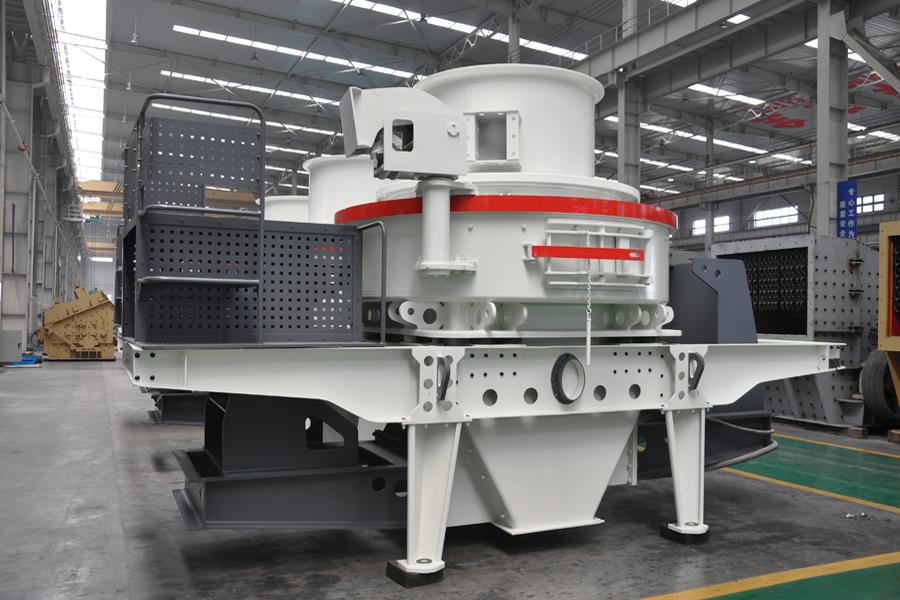
Vertical shaft impact crushers (VHS) generally have two feeding methods: cascade and center feeding, and full center feeding. Which of these two feeding methods is better? What impact do they have on the quality of the manufactured sand? Today, we'll take OCP Heavy Industry's P-series VHS as an example to understand the differences in the two feeding methods and output of VHS.
The P-series VHS, depending on the working conditions or the material being crushed, controls the feeding method and employs two crushing mechanisms: "stone-on-stone" and "stone-on-iron."
"Stone-on-stone" crushing uses a combination of cascading and central feeding. The feed is divided into two streams at a controllable rate. One stream is introduced into the horizontally rotating impeller cavity through a central feed pipe, while the other stream falls into the equipment cavity from multiple overflow ports around the feed hopper. The material entering the impeller cavity is accelerated by the impeller's high-speed rotation and ejected from three or more discharge ports, where it undergoes a strong self-impact collision with the material falling from the overflow ports, resulting in stone-on-stone crushing.
"Stone-on-iron" crushing uses a fully central feeding method. The feed is entirely introduced into the high-speed rotating impeller cavity through a central feed pipe. After being accelerated by the impeller's high-speed rotation, it is ejected from three or more discharge ports, violently impacting the metal impact plates installed on the inner wall of the crushing chamber, resulting in stone-on-iron crushing. First, we should understand the working principles of each method.
After understanding the principles of the two feeding methods, how do these two feeding methods affect the output?
Waterfall and center feed: Primarily used for sand making, with higher capacity, but the output particle shape is relatively worse compared to center feed.
Center feed: Primarily used for shaping, with lower capacity compared to waterfall and center feed, but better finished product.
"Stone-on-stone" crushing is suitable for materials with medium to high hardness and high abrasiveness, such as basalt. During crushing, the material ejected from the sling impacts the material lining without direct contact with the metal components of the equipment, reducing iron loss and thus reducing maintenance time. "Stone-on-iron" crushing is suitable for materials with lower hardness and low abrasiveness, such as limestone. "Stone-on-iron" operation has higher crushing efficiency.
After understanding the characteristics of the finished product from the two feeding methods, we can choose the appropriate feeding method according to our needs. There is no single "better" feeding method. If your requirement is high output and you don't have high requirements for the particle shape of the finished product, choose waterfall and center feed; if you require a good particle shape, choose center feed.
OCP Heavy Industry, with 40 years of experience in the production and R&D of large-scale mining equipment, mainly produces jaw crushers, impact crushers, cone crushers, sand making machines, washing and beneficiation equipment, conveying equipment, etc. We will configure reasonable production line solutions according to customer needs, and provide free installation and training. You are welcome to visit our company! Click on the website customer service for immediate free consultation, available 24 hours a day.
-
Several Aspects to Consider When Configuring Crushing Equipment for a Stone Production Line
-
-
What is the typical configuration of a stone crushing production line
-
How to Configure a Large-Scale, Green Sand and Gravel Aggregate Production Line
-