
What type of crushed stone is required for infrastructure projects? Which crushing equipment is best suited for stone processing?
Infrastructure projects demand crushed stone in various specifications. For roadbed construction, lower-grade materials suffice—such as recycled construction waste, sandstone aggregates, or reclaimed quarry waste. For higher-quality gravel requirements, small stones made from minerals like bluestone, basalt, granite, or diabase are typically used for road construction. The finished gravel must be uniformly sized and meet the standard dimensions for infrastructure sand.
Common specification reference table:
0-5 Sand — Represents 0-5mm sand
5-1 aggregate — represents 5-10mm crushed stone
1-2 aggregate — represents 10-20mm crushed stone
1-3 aggregate — represents 16-31.5mm crushed stone
2-4 aggregate — represents 10-15mm crushed stone
4-6 aggregate — represents 15-20mm crushed stone
Which crushing equipment is suitable for stone crushing? With diverse equipment types and comprehensive models, we recommend jaw crushers, impact crushers, hydraulic cone crushers, and heavy hammer crushers. These can break large stones into various sizes of crushed stone. Typically categorized by working principle, feed size, and discharge size into primary, secondary, and tertiary crushing, detailed introductions follow below. Users can select appropriately based on actual conditions.
1. Jaw Crusher
Feed Size: ≤1360mm
Capacity: 50-1500 t/h
Features:
- Large feed size for primary coarse crushing of raw materials
- Integrated host-motor structure ensures robust reliability with compact footprint
- Wedge-type discharge adjustment enables infinite adjustment, reducing labor intensity and downtime
- High-angle elbow plate design maximizes lower chamber stroke for increased output Wedge-type discharge opening adjustment enables stepless regulation, reducing labor intensity and downtime; the steeply inclined elbow plate design increases the lower stroke of the crushing chamber, boosting output.
2. Impact Crusher
Feed Size: <1000mm
Processing Capacity: 50-1200 t/h
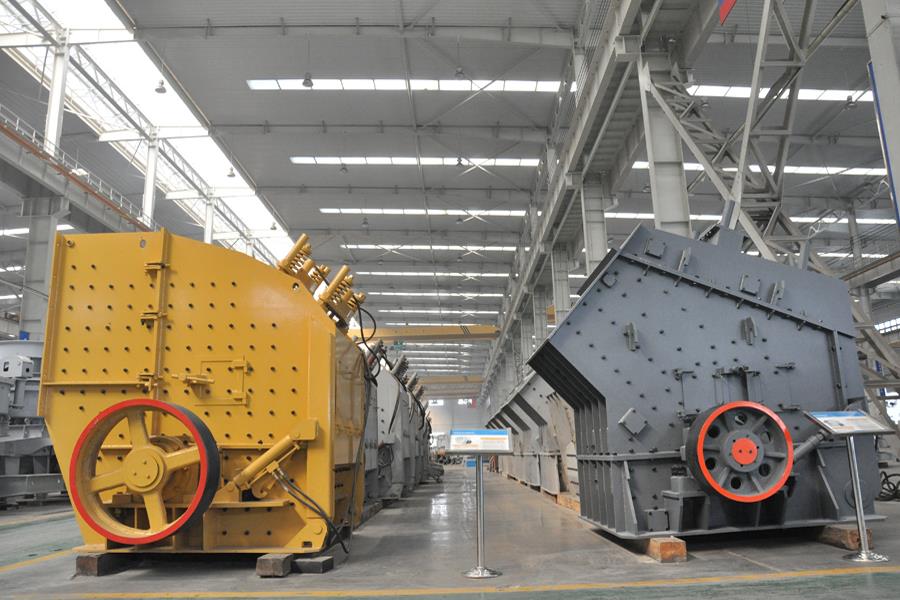
Performance Features: Designed for crushing soft ores (e.g., limestone), producing well-shaped particles with minimal fines. Primarily used in small-to-medium-sized quarries but unsuitable for sand making. Users can adjust the gap between impact plates and hammers to control output particle size. Extensive use of new high-wear-resistant materials combined with multiple safety locking devices extends service life, enhances safety, and reduces costs.
3. Hydraulic Cone Crusher
Feed Size: ≤560mm
Processing Capacity: 45-2176 t/h
Performance Features: Primarily used for crushing hard materials, offering high production capacity and crushing efficiency, suitable for large-scale quarries. Features iron overload protection and automatic cavity cleaning for stable, reliable operation. All components can be disassembled from the top and sides for easy inspection and maintenance. While slightly more expensive, it offers a long service life and a fully automatic control system enabling effortless remote operation.
4. Hammer Crusher
Feed Size: ≤1500mm
Processing Capacity: 250-2000 t/h
Performance Features: Suitable for crushing limestone and medium-hard minerals with compressive strength below 200 MPa. Large hammerheads and dual-power design accommodate high production demands; single-stage crushing eliminates secondary processing, ideal for compact worksites while reducing investment costs by minimizing additional crushing equipment purchases.
5. Impact Crusher (Sand Maker)
Feed size: ≤240mm
Processing capacity: 8-500 t/h
Performance features: Used for fine crushing and shaping of minerals and rocks in various industries including metal and non-metal mining, refractory materials, abrasive ceramic raw materials, building materials, high-speed rail construction, water conservancy and hydropower projects, and private sand and gravel aggregate production. Particularly superior to other equipment for medium-hard, ultra-hard, or abrasive materials such as sandstone, granite, basalt, silicon carbide, emery, bauxite, and magnesia. Features dual crushing principles—“stone-on-stone” and “stone-on-iron”—within a shared crushing chamber. Equipped with a hydraulic roof-lifting opening device and manual/electric hoist for easy maintenance. Incorporates a PLC automatic control and monitoring system for high safety performance and convenient oversight.
(Technical parameters and data mentioned herein are subject to updates with product upgrades. Click website customer service for the latest equipment specifications.)
Obtaining specific quotations for various crusher types requires determining equipment configuration based on your production volume, scale, and material to be crushed. For detailed pricing, please feel free to contact our online customer service at any time!
-
-
Which sand-making machine is best as the core equipment for a sand production line
-
Key Equipment Selection for an Efficient Sand Production Line
-
-
Factors Affecting the Service Life of Cone Crusher Crushing and Bearing Surfaces