
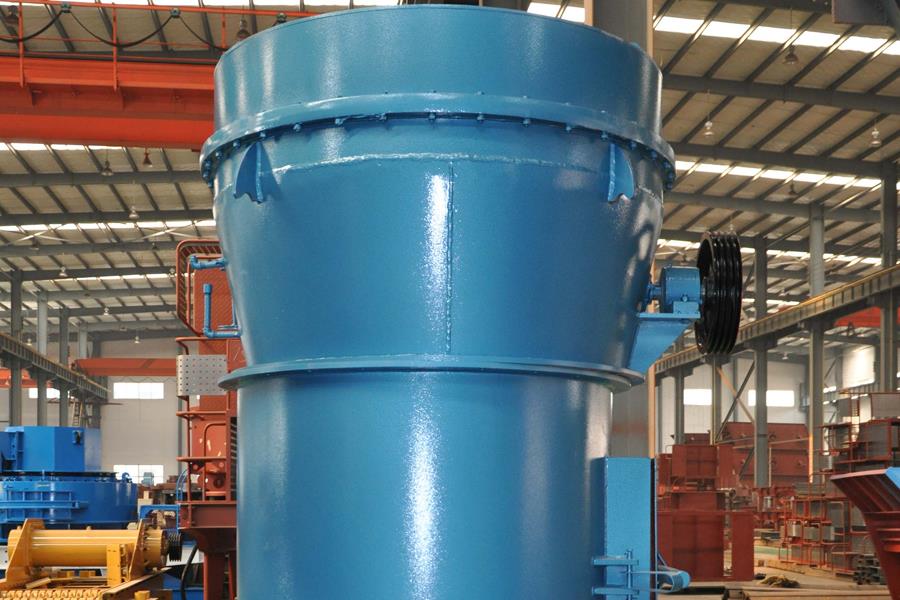
How much does a 300tph multi-cylinder hydraulic cone crusher cost? How to choose between the standard and short-head types?
Multi-cylinder hydraulic cone crushers feature high production capacity, large crushing ratio, excellent product particle shape, low energy consumption, high automation, high reliability, simple operation and maintenance, and low operating costs. They are widely applicable for medium and fine crushing in metallurgy, mining, sand and gravel aggregate, cement, and other industries, effectively processing river pebbles, granite, basalt, limestone, dolomite, non-ferrous metal ores, and ferrous metal ores.
Capable of efficiently crushing high-hardness materials, multi-cylinder hydraulic cone crushers have become the preferred choice for most sand plants, gaining increasing prominence in the sand and gravel industry. The cone crusher performs medium and fine crushing of high-hardness materials while producing well-shaped final products. Its crushing chamber configuration can be flexibly adjusted from standard super-coarse to short-head super-fine types to meet diverse product size requirements.
Many customers inquire: “What distinguishes the standard and short-head types? Which suits my needs?”
1. Differing crushing chamber shapes. Short-head cone crushers feature a longer parallel zone compared to the shorter parallel zone in standard models.
2. Different final product particle sizes.
Short-head cone crushers with a longer parallel zone produce finer crushed material. These models are typically used after medium crushing. Standard cone crushers, however, produce coarser final particle sizes with higher throughput, making the crushed material suitable for medium crushing.
3. Different discharge opening widths. Compared to short-head cone crushers, standard cone crushers offer a wider range of discharge opening widths, resulting in higher processing capacity per unit time.
Standard types are used for secondary and tertiary crushing, with finished particle sizes generally exceeding 14mm. Short-head types are used for tertiary crushing, producing finished particles smaller than 13mm. For multi-cylinder hydraulic cone crushers, the tight-side feed opening must not be smaller than the maximum feed particle size. The feed opening should neither be excessively large nor too small.
If the feed opening is too large:
① Material primarily concentrates in the lower crushing chamber, causing excessive wear on lower liners and reducing liner utilization.
② Crushing ratio decreases, resulting in low crushing efficiency and increased risk of cone rotation.
If the feed opening is too small: ① Material cannot enter the crushing chamber, causing severe capacity reduction and intense wear or even destruction of the feed opening liner. ② It causes significant fluctuations in crushing force and adjustment ring vibration, damaging the frame seat gasket, accelerating wear on the locking cylinder seals, and affecting equipment stability.
Cone crushers with a 300-ton-per-hour capacity come in various models and specifications, differing in technical parameters such as feed size, discharge particle size, and installed power. Equipment prices vary based on model selection. For detailed pricing information, consult the manufacturer directly. Click the online consultation link on the webpage!
-
Factors Affecting the Service Life of Cone Crusher Crushing and Bearing Surfaces
-
Which crusher equipment is best suited for commonly used 12 and 13 aggregate
-
-
What principles should a well-designed sand production line process follow
-
Which crusher is best suited for crushing and sand-making of diabase