
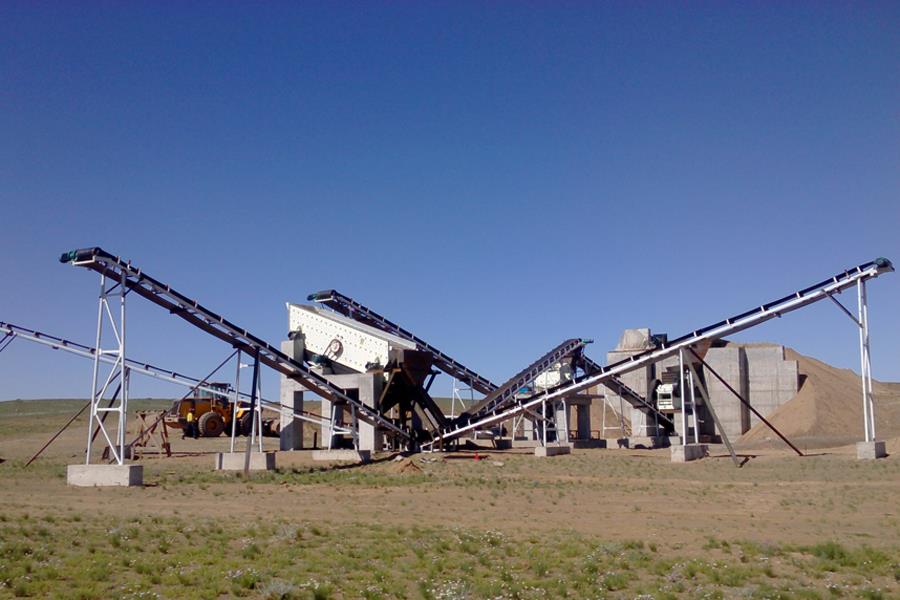
Key Equipment Selection for an Efficient Sand Production Line
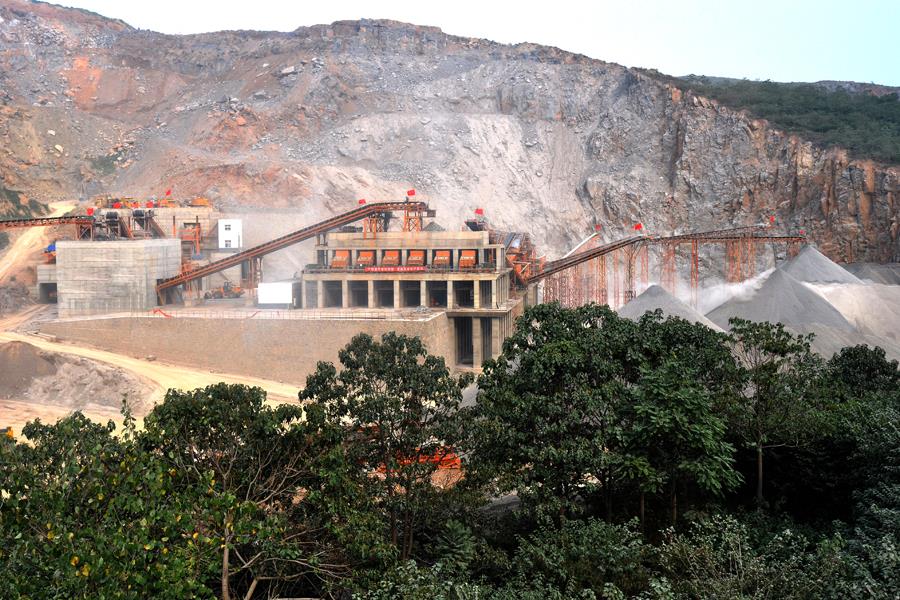
A sand and gravel production line refers to specialized equipment that processes stone materials through crushing, screening, and other procedures to produce sand and gravel. Manufactured sand produced via such lines offers distinct advantages over natural sand and gravel. Firstly, manufactured sand sources include construction waste, pebbles, granite, and other materials, enabling effective resource recycling. Second, manufactured sand exhibits more uniform particle shapes than natural sand and gravel, better meeting industry process requirements. So how should a sand and gravel production line be reasonably configured?
Key Equipment Selection:
1. Primary Crushing
Primary crushing typically operates in an open-circuit system to process incoming materials from the quarry. Common primary crushing equipment includes gyratory crushers and jaw crushers.
(1) Gyratory crushers handle large feed sizes and high throughput, suitable for crushing any rock type. They operate smoothly with consistent feeding. However, their elevated process flow requires significant initial investment. For large-scale processing, gyratory crushers reduce equipment quantity and simplify workflow. Overall, their advantages become more pronounced in larger processing systems.
(2) Jaw crushers can handle any rock type. Due to their structural design, they have idle strokes, resulting in relatively lower processing capacity and poorer product shape with high needle and flake content. However, when aggregate quality requirements are less stringent and processing capacity is modest, selecting jaw crushers can save investment. Due to its low crushing ratio, it increases the load on subsequent crushing stages. Additionally, its poor product shape necessitates additional shaping steps to obtain qualified finished material, making it the preferred equipment for small and medium-sized sand and gravel plants.
2. Medium and Fine Crushing
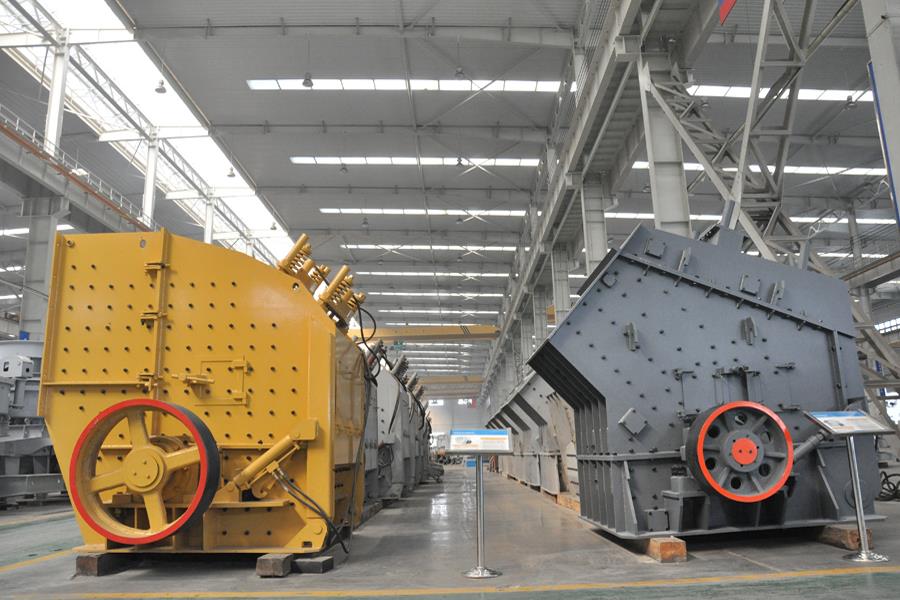
Medium and fine crushing typically employ a closed-circuit process. Common equipment includes impact crushers and cone crushers, with the latter further divided into single-cylinder hydraulic cone crushers and multi-cylinder hydraulic cone crushers.
(1) Impact crushers produce well-shaped particles with lower initial investment and are widely used. However, they are only suitable for crushing medium-hardness rocks with low abrasiveness. Otherwise, operating costs increase significantly, reducing economic viability. Although hard-rock impact crushers are available on the market, their operating costs remain relatively high. For hard rock crushing, cone crushers are still the preferred choice.
(2) Cone crushers vary in crushing force and reduction ratio depending on the model. The current trend is toward hydraulic cone crushers. Comparing multi-cylinder and single-cylinder types, the former generally offers superior overall performance. However, selecting single-cylinder or multi-cylinder models within a process flow depends on the overall layout. For high crushing ratios, multi-cylinder hydraulic cone crushers can reduce the number of crushing stages and lower system investment, typically keeping needle and flake content below 18%. Multi-cylinder hydraulic cone crushers are also suitable for hard rock crushing, while single-cylinder hydraulic cone crushers are adequate for general rock crushing.
3. The preferred crusher for sand production is the vertical impact crusher.
Vertical impact crushers are currently the most widely used sand-making equipment. They offer high production efficiency, excellent particle shape, low operating costs, and perform shaping functions. Operating at high speeds exceeding 80 m/s, they are ideal for re-crushing and shaping coarse sand particles in the aggregate processing industry. This optimizes the gradation of finished sand, enabling a finer modulus of fineness.
4. Common sand washing and recovery equipment includes bucket wheel sand washers, spiral sand washers, fine sand recovery machines, and integrated sand washing and recovery units.
5. Auxiliary Equipment Selection: Auxiliary equipment encompasses feeding, screening, storage silos, conveying, and automated control systems.
OCP Heavy Industry offers comprehensive turnkey production solutions with complimentary installation. We provide flexible customization based on user requirements and ensure timely project completion. OCP Heavy Industry extends complimentary factory tours, consultations, and on-site visits with exclusive factory discounts. For appointments, discounted equipment quotes, model specifications, or design proposals, contact our customer service team for free consultation or leave us a message. We will respond promptly.
-
-
Factors Affecting the Service Life of Cone Crusher Crushing and Bearing Surfaces
-
Which crusher equipment is best suited for commonly used 12 and 13 aggregate
-
-
What principles should a well-designed sand production line process follow