What Is the Optimal Reduction Ratio for Secondary Crushing
For secondary crushing stages in hard rock mining and aggregate production – common in Peru and Chile’s copper, gold, and andesite operations – selecting the right reduction ratio directly affects circuit efficiency, liner wear, and energy consumption. The question what is the optimal reduction ratio for secondary crushing does not have a single number, but a well‑proven range helps engineers design economical circuits. For most secondary cone crushers (Type C), a reduction ratio between 3:1 and 5:1 is widely considered a practical target. Below we explain why this range works and how OCP Mechanical Company supports your crushing optimization.
Why 3:1 to 5:1 Is a Practical Target
When answering what is the optimal reduction ratio for secondary crushing, consider that a secondary crusher typically receives feed from a primary jaw crusher (F80 of 100‑200 mm) and must produce a product suitable for tertiary crushing or ball milling. A reduction ratio below 3:1 leaves too much work for the tertiary stage, increasing recirculating loads. A ratio above 5:1 in a single cone crusher often leads to excessive liner wear, higher power draw, and risk of packing – especially in hard, abrasive rock like the granodiorite and andesite found in the Andes.
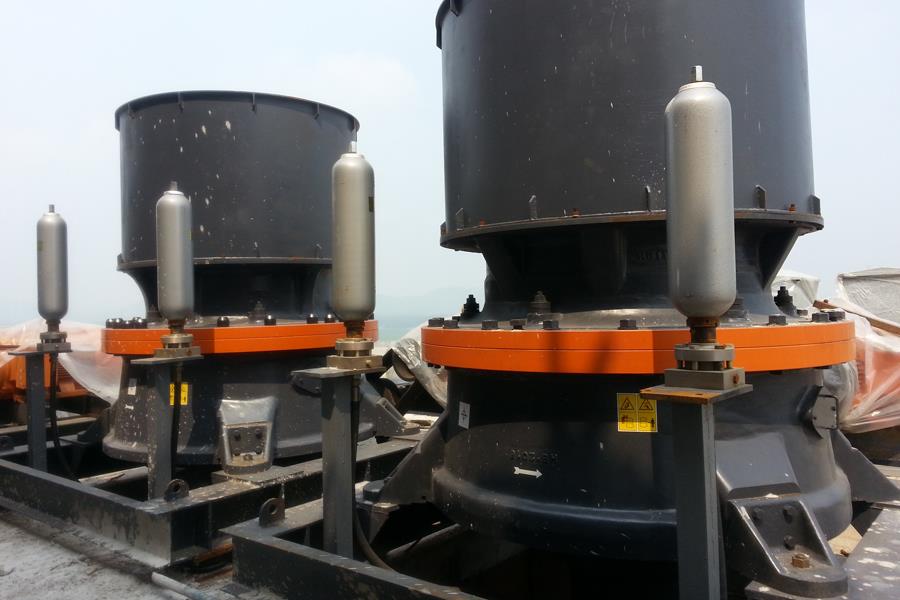
OCP’s Type C cone crusher is engineered for a reduction ratio of 3:1 to 5:1 in secondary applications. Note: Product data are constantly updated; for the latest specifications, please contact our online customer service.
Many mines in the Antofagasta region (Chile) and the Arequipa region (Peru) operate their secondary cone crushers at a reduction ratio of 4:1, balancing throughput, wear, and product size.
How Reduction Ratio Affects Operating Costs
Understanding what is the optimal reduction ratio for secondary crushing allows you to predict liner life and energy use. For a typical copper ore with a Bond work index of 12‑15 kWh/t, a cone crusher operating at a 4:1 ratio produces a P80 of 25‑35 mm. Liner life (Mn18%+Cr) often reaches 1,500‑2,000 hours, and power consumption stays in the range of 0.8‑1.2 kWh per ton. If you push the ratio to 6:1, liner life may drop by 30‑40%, and energy consumption can increase by 20‑25% due to higher circulating loads.
To optimize what is the optimal reduction ratio for secondary crushing for your ore, we recommend:
Starting with a CSS (closed side setting) that yields a 4:1 ratio.
Measuring recirculating load – keep it below 250% for efficient operation.
If product is too coarse, consider adding a tertiary crusher rather than tightening the CSS beyond the recommended range.
The above values are for illustration only. OCP continuously improves its products. Contact our online team for the most current data sheet.
Practical Guidelines for Chilean and Peruvian Conditions
In the high‑altitude, dry climates of the Andes, crusher efficiency can be affected by reduced ambient pressure. When determining what is the optimal reduction ratio for secondary crushing at sites above 3,000 meters, note that motors derate (lose 10‑15% power). A conservative reduction ratio of 3.5:1 is often chosen to avoid overload. Additionally, finer feed (pre‑screened) allows a slightly higher ratio without packing.
OCP’s engineers provide site‑specific calculations that include altitude correction. Our Type C cone crushers are offered with high‑altitude motor options and hydraulic CSS adjustment for precise setting changes.
As a direct‑selling manufacturer, OCP supplies crushers with factory‑direct pricing and keeps common wear parts in regional warehouses (e.g., Lima and Santiago) for fast delivery.
Why OCP Is Your Partner for Secondary Crushing
Understanding what is the optimal reduction ratio for secondary crushing is key to designing a profitable circuit. OCP Mechanical Company has over 40 years of history in cone crusher technology. We offer:
Free pre‑sale reduction ratio analysis based on your feed size and ore hardness.
A customized CSS recommendation and liner selection.
24/7 online technical support for operation and optimization.
For a no‑obligation consultation and personalized advice on what is the optimal reduction ratio for secondary crushing for your mine, simply click the live chat icon on this page. Our online customer service team is available 24 hours a day, 7 days a week, to answer your technical questions, provide free recommendations, and help you lower your cost per ton.