
What crushing equipment is needed to produce 12mm and 13mm aggregates
12mm and 13mm aggregates are commonly used construction materials in the building industry and are highly popular in the market. Selecting the right crushing equipment is crucial for producing these construction aggregates. So, what equipment is required? First, let's understand the difference between 12mm and 13mm aggregates.
The primary difference between 12mm and 13mm aggregates lies in their diameter specifications. 12mm aggregate refers to crushed stone ranging from 10-20mm, while 13mm aggregate denotes crushed stone between 16-31.5mm. The construction industry utilizes a wide variety of aggregate specifications, with the above sizes being particularly common. Due to variations in rock type, hardness, block size, and other properties, different equipment is employed during crushing processes, resulting in distinct final particle sizes. Cone crushers and impact crushers are commonly used machines for producing 12mm and 13mm gravel. What distinguishes an impact crusher from a cone crusher? How should we choose between them? Let's first understand their working principles:
Cone Crusher: The movable cone of the cone crusher performs a swinging motion driven by an eccentric sleeve. This motion drives the crushing wall to squeeze and grind materials between the crushing wall and the bowl liner. Based on the theory of layer compression, materials are subjected to forces from multiple directions. They fracture along their natural grain and are polished, forming stable aggregate particles. Material meeting the discharge requirements falls through the swinging gap between the crushing walls, while the rest continues to be crushed until the desired size is achieved.
Impact Crusher: The material progresses through the first, second, and third impact chambers, being crushed repeatedly from large to small sizes until it reaches the desired particle size and is discharged through the outlet. Adjusting the gap between the impact frame and the rotor allows for controlling the final particle size and shape of the output material.
Secondly, we should understand the difference in suitable materials for the two crushers. The impact crusher is primarily suitable for materials of medium hardness or below, such as limestone, coal gangue, bentonite, kaolin, etc. The cone crusher is primarily suitable for materials of medium hardness or above, such as granite, basalt, iron ore, bauxite, copper ore, etc. Additionally, both cone crushers and impact crushers are commonly employed in secondary crushing operations. Secondary crushing addresses materials that cannot be adequately processed in primary crushing—for instance, when raw material exceeds 100cm in size, a jaw crusher is required upfront for coarse crushing. Jaw crushers primarily perform primary crushing. They feature a large feed opening, adjustable discharge particle size, and a discharge opening size that fully meets the requirements for producing 12mm and 13mm aggregates. Their deep crushing chamber with no dead zones ensures strong processing capacity. Of course, if the original material is smaller than 30cm, we can directly use an impact crusher or cone crusher for crushing.
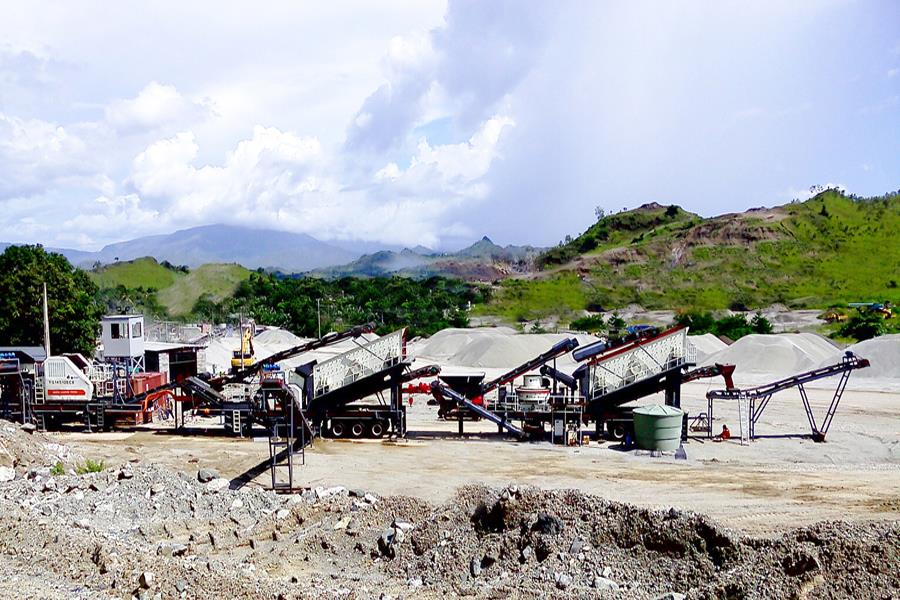
For production lines requiring frequent relocation, mobile crushers (track-mounted or wheel-mounted mobile crushing plants) are suitable. Both types can be customized to specific needs. Their output particle size depends on the main crushing equipment installed—they can be equipped with jaw crushers, impact crushers, cone crushers, etc.—and can meet the output requirements for 12mm and 13mm aggregates. They offer mobility and ease of relocation.
(Technical parameters and data mentioned herein are subject to updates with product upgrades. Click website customer service for the latest equipment specifications.)
How much does crushing equipment for producing 12mm and 13mm aggregate for construction cost? The type and model of production equipment vary based on the processed material, leading to different pricing. Significant quality differences exist among manufacturers due to variations in technology, processes, and production workflows. Sales channels also impact equipment pricing. With over 40 years of experience in R&D, manufacturing, and production of crushing equipment, OCP Heavy Industry possesses mature manufacturing expertise and technology. All crushing equipment is factory-direct, offering competitive pricing. For more information on crushing equipment quotes and details, click the website customer service for a free consultation now.
-
-
-
How does the composite crusher perform in sand making? What types of stone is it suitable for?
-
What type of crusher is suitable for processing hard ores such as granite and iron ore
-
How does a hammer crusher perform? What types of rock can it crush?