
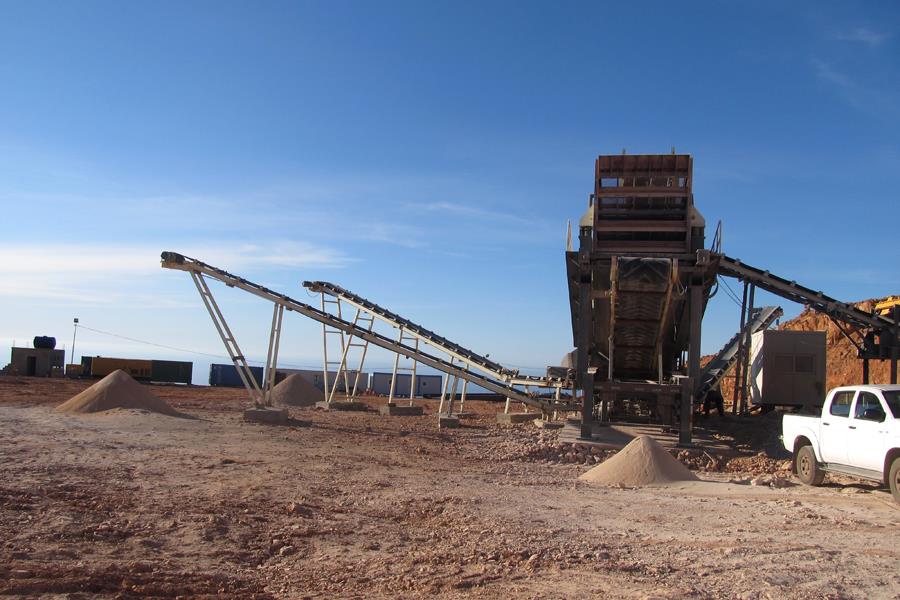
What are the differences between split-type and welded-type frame structures for jaw crushers
OCP Heavy Industry's jaw crushers feature two frame types: welded and split. Smaller and medium-sized models typically use welded frames, while larger models employ split frames. The welded design incorporates large-radius transition corners and low-stress zone welding techniques, significantly reducing stress concentration. This ensures uniform strength in all directions, delivering impact resistance, even force distribution, and low failure rates. The split frame employs an advanced modular, weld-free frame structure design, offering high fatigue strength and reliability. Its fully assembled design facilitates transportation and installation, making it particularly suitable for confined spaces with challenging logistics, such as underground mines and high-altitude mining sites. So, what are the specific differences between welded and split frame jaw crushers?
1. Frame Construction
(1) Integral Frame
Traditional monolithic frames are cast or welded. Due to manufacturing, installation, and transportation challenges, they are unsuitable for large jaw crushers and are primarily used in small to medium-sized units.
(2) Split Frame
The modular frame employs a weld-free, bolted structure. Two side plates are securely fastened to the front and rear wall plates (cast steel components) via precision-machined bolts. Crushing forces are absorbed through pins embedded in the side walls of the front and rear plates. Integral bearing housings on both sides are tightly connected to the side plates with bolts.
2. Split Frame Requires Relatively Higher Initial Investment
The split frame can be divided into major components—front wall plate, rear wall plate, and side plates—for separate machining. Individual parts are lighter, requiring cranes with lower tonnage capacity. Although the split-type frame incurs lower factory investment costs than the monolithic frame—due to reduced crane capacity requirements and less stringent demands on factory columns, support beams, and ceiling height—its manufacturing process is more complex and technically demanding. Consequently, the split-type frame entails relatively higher investment costs.
3. Longer production cycles and higher manufacturing costs.
Components of a split frame can be machined simultaneously on different equipment without being constrained by preceding process timelines. Once machined, these parts can be assembled immediately. In contrast, an integral frame requires all components to be fully machined before assembly and welding can commence.
4. Easier repair.
Since split frames consist of individual components, damaged parts can be repaired or replaced based on the extent of damage without requiring the entire frame to be replaced. In contrast, for monolithic frames, aside from repairing stiffeners, tears in front/rear wall plates or side plates, or deformation of bearing housings, are typically irreparable. This is because side plate tears inevitably cause bearing housing displacement, resulting in misaligned bearing bores. Once this occurs, welding cannot restore the bearing housing to its original positional accuracy. The only solution is to replace the entire frame.
5. Facilitates Underground Installation.
Each major component of the split frame can be transported separately to the mine shaft and assembled underground. This feature significantly reduces construction time and lowers costs. Underground installation requires only standard lifting equipment and can be completed in a short timeframe.
How should one choose between these two jaw crushers? Users should select the appropriate jaw crusher based on their production requirements and the surrounding environment of the production line location. We welcome everyone to visit OCP Heavy Industry for an on-site inspection of our facilities and crushers, and to consult on production line selection and design. Our professionals will configure suitable crushers and design appropriate production lines based on the properties of your material and the characteristics of your production region! Click the website customer service for an immediate free consultation, available 24/7.
-
What Should Be Considered When Investing in a Granite Production Line
-
Mobile construction waste crushers are a product of our times
-
What factors influence the output capacity of a hydraulic cone crusher
-
What exactly is the laminar crushing action of a hydraulic cone crusher
-
What crushing equipment is required for granite sand production? What is the sand-making process?