Should one opt for a stationary or mobile crusher for concrete crushing and reuse
In recent years, whether from building demolition, road resurfacing, or estate redevelopment, the volume of leftover concrete rubble has steadily increased. Commonly referred to as concrete, this material serves as a fundamental building block for road construction, bridge building, and architectural projects. It is essentially formed by mixing sand, aggregate, cement, and chemical binders with water. So, what purpose can this post-demolition concrete rubble serve? What purpose does crushing them into aggregate serve? Can they be used as new sand and gravel aggregate?
What is the purpose of crushing concrete blocks into aggregate? Typically, concrete blocks range from approximately 50 centimetres in size for larger pieces to around 5 centimetres for smaller ones. After crushing, they can be processed into aggregate of varying particle sizes. Material larger than 4.75mm is termed coarse aggregate, essentially serving as aggregate, while particles smaller than 4.75mm are classified as fine aggregate, essentially sand. Aggregates play a vital role in concrete, serving as the fundamental framework that transmits stress and provides compressive strength. Even without cement paste, they can support loads. Sand primarily fills voids between aggregates, increasing density while inhibiting shrinkage and preventing cracking. High-quality concrete aggregates should exhibit well-defined edges and a three-dimensional particle shape. This allows the materials within the concrete to interlock effectively, enhancing structural strength and improving construction quality. So, what constitutes excellent aggregate crushing equipment?
Fixed Crushing Production Lines:
Jaw Crusher + Impact Crusher
Construction Waste Shear + Impact Crusher
The ‘jaw crusher + impact crusher’ combination represents a common crushing configuration. Given that concrete blocks possess moderate hardness but contain embedded reinforcing bars, soil clods, and other contaminants, the process typically commences with a vibrating feeder to screen out soil particles. The material is then crushed by the jaw crusher, followed by removal of embedded steel segments via a magnetic separator. The resulting material undergoes medium-fine crushing in the impact crusher to achieve the required specifications. The second approach, ‘Construction Waste Shear + Impact Crusher’, employs a construction waste shear alongside a jaw crusher to effectively strip out reinforcing steel for subsequent processing. Its unique tooth configuration prevents clogging at the inlet and outlet due to materials containing steel, timber, or rags. The impact crusher then performs medium and fine crushing to produce the required output.
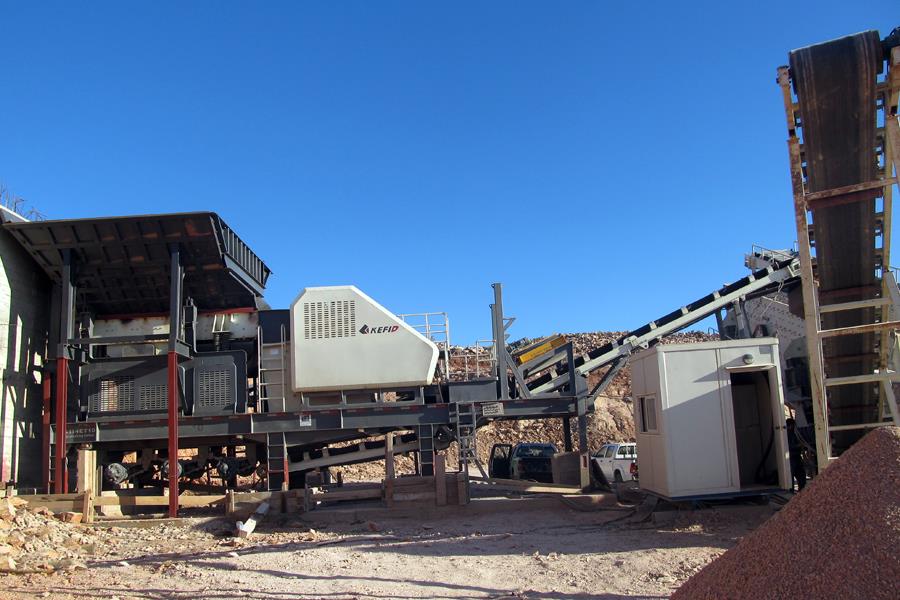
Mobile Crushing Production Line: Mobile Crushing Station (Tyre-mounted + Track-mounted)
Mobile production lines are based on fixed-line processes, with the entire line mounted on a mobile chassis. This facilitates easier relocation and greater operational flexibility, aligning with contemporary working models. To optimise the utilisation of recycled aggregates and address construction waste challenges, the prevailing approach adheres to the principle of ‘localised processing’. This involves sorting, removing, or crushing waste materials within construction debris to enable the reuse of recycled resources. Coupled with its flexible configuration, the tracked mobile crushing plant ensures minimal waste throughout the construction waste crushing and recycling process, whether employing a ‘crush-then-screen’ or ‘screen-then-crush’ sequence. Furthermore, their high mobility significantly reduces infrastructure and relocation costs. After processing construction waste, tracked mobile crushing plants enable circular reuse, transforming waste into valuable resources. This approach not only lowers disposal expenses but also conserves energy, aligning with environmental principles while enhancing both economic and social benefits.
(Technical specifications and related data mentioned herein are subject to updates with product upgrades. Please contact our website customer service for the latest equipment parameter sheets.)
Whether fixed production lines or mobile equipment, the diverse range of types and models results in varying quotations. Therefore, obtaining specific pricing requires determining the equipment configuration based on your production volume, scale, and material to be crushed. For detailed pricing information, please feel free to contact our online customer service at any time!
-
What distinguishes single-cylinder from multi-cylinder hydraulic cone crushers
-
How much construction sand can be produced from one tonne of river pebbles
-
-
-