
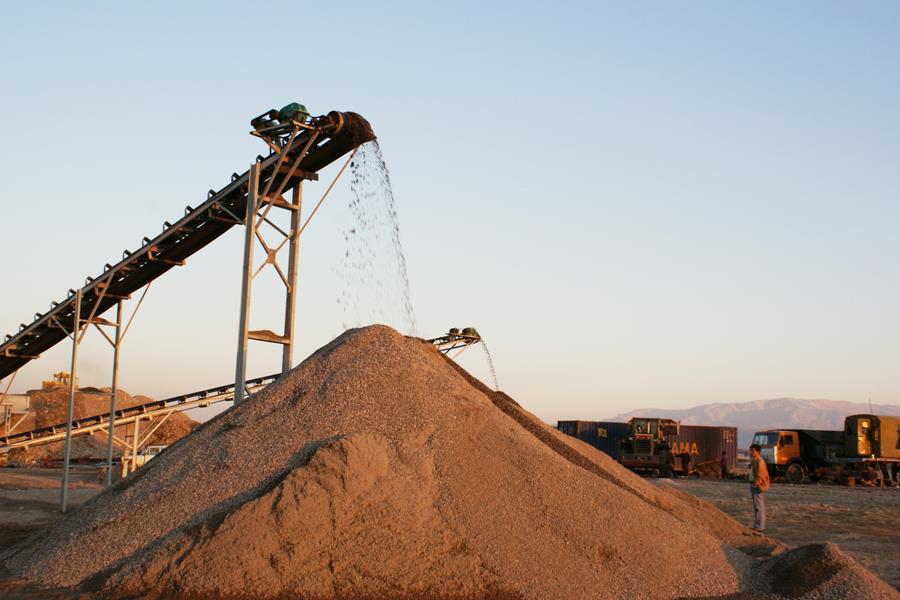
Sand screw washer capacity calculation for dewatering 60 tph
Why sand screw washer capacity calculation for dewatering 60 tph is essential for plant design
Accurate capacity calculation is the foundation of any successful sand processing operation. Whether you are setting up a new washing plant or upgrading an existing one, knowing the exact throughput capability of your sand screw washer is critical for matching production targets and avoiding costly bottlenecks. For a dewatering application targeting 60 tonnes per hour, the calculation must consider not only the solid throughput but also the water handling capacity, as dewatering efficiency directly affects the moisture content of the final product. This is particularly important when processing manufactured sand or natural sand with high fines content, where the washer must separate water from solids efficiently to achieve a saleable product. Understanding the sand screw washer capacity calculation for dewatering 60 tph ensures that the equipment selected can achieve the required output while delivering the desired product quality. At OCP Mechanical Company, with over 40 years of manufacturing experience, we engineer sand screw washers such as the P Series (comparable to industry-standard models like XSD or LSX designs) with proven dewatering performance and provide transparent capacity data to support accurate plant design.
Understanding the dewatering process in a sand screw washer
Before performing a sand screw washer capacity calculation for dewatering 60 tph, it is important to understand how the dewatering process works in practice. A sand screw washer uses a helical screw rotating in a trough to convey sand upward while water and fine particles overflow at the feed end. As the sand moves up the inclined screw, it drains and is discharged with a moisture content typically between 10 and 20 per cent, depending on the feed characteristics and the design of the screw. The dewatering efficiency is influenced by the screw design, the inclination angle, the rotational speed, and the residence time of the material in the screw. For a 60 tph dewatering application, the key is to achieve a balance between throughput and dewatering performance. A higher throughput may reduce dewatering efficiency, while a slower screw speed improves dewatering but reduces capacity. Our P Series sand screw washer is engineered with optimised screw geometry and variable speed drive options, allowing operators to fine-tune the balance between throughput and product moisture. Understanding this trade-off is essential for any sand screw washer capacity calculation for dewatering 60 tph.
Key data required for capacity calculation
To perform a reliable sand screw washer capacity calculation for dewatering 60 tph, several pieces of data are required. The most critical is the bulk density of the sand, which typically ranges from 1.4 to 1.6 tonnes per cubic metre for dry sand and 1.8 to 2.0 tonnes per cubic metre for wet sand. The particle size distribution is also important, as finer sands require longer residence times and may reduce the effective capacity of the washer. The feed moisture content and the desired final moisture content of the discharged sand influence the dewatering performance and, consequently, the capacity. Additionally, the specific gravity of the solids and the water-to-solids ratio in the feed are needed to calculate the volume of slurry that the screw must handle. For a 60 tph dewatering application, these parameters must be carefully evaluated to ensure that the selected screw washer can achieve the required throughput while meeting product specifications. Our engineering team can assist with data collection and analysis as part of a comprehensive sand screw washer capacity calculation for dewatering 60 tph, ensuring that all relevant variables are considered.
Step-by-step capacity calculation method
The practical approach to a sand screw washer capacity calculation for dewatering 60 tph involves several steps. First, determine the desired solid throughput – 60 tonnes per hour. Based on the bulk density of the sand, calculate the volumetric throughput. For example, with a bulk density of 1.6 tonnes per cubic metre, the volumetric throughput is 37.5 cubic metres per hour. Next, consider the water flow required for washing and dewatering. This is typically 2 to 5 times the solid flow by volume, depending on the feed and product specifications. The total slurry flow is then the sum of the solid and water volumes. Using the slurry flow, you can determine the required screw diameter and pitch. The screw must be sized to handle the total slurry volume while providing adequate residence time for dewatering. The inclination angle of the screw, typically 15 to 25 degrees, also affects the capacity; a higher angle improves dewatering but reduces the material transport rate. By performing these calculations iteratively, you can select a screw washer that meets the 60 tph target while achieving the desired moisture content. Our P Series sand screw washer is available in multiple sizes, with screw diameters ranging from 24 to 48 inches, providing flexibility to match the calculated capacity requirements. All specifications, including capacity figures and power ratings, are continuously updated; for the latest parameters, please consult our online customer service.
Factors that influence the final capacity
The sand screw washer capacity calculation for dewatering 60 tph is not a fixed number; it depends on several variables. The feed characteristics, including particle size, shape, and moisture content, directly affect the dewatering efficiency and therefore the capacity. The screw wear condition also plays a role – worn flights reduce the conveying capacity and may require more power. The type of drive system and the rotational speed are adjustable parameters that can be fine-tuned to achieve the desired throughput and dewatering performance. In practice, the actual capacity may vary by 10 to 15 per cent from the calculated value due to these factors. Therefore, it is recommended to add a safety margin of 10 per cent to the required capacity to accommodate variations in feed and wear. This is a standard practice in a robust sand screw washer capacity calculation for dewatering 60 tph. Our P Series washer is designed with replaceable wear shoes and a variable frequency drive, allowing operators to maintain consistent performance as wear progresses and feed conditions change. By understanding these variables, operators can make informed decisions about equipment selection and operational settings.
Selecting the right screw washer for 60 tph dewatering
Based on a thorough sand screw washer capacity calculation for dewatering 60 tph, the selection of the appropriate screw washer can be made. For a 60 tph dewatering application, a screw diameter of 36 inches (914 mm) and a tank length of 20 to 25 feet (6 to 7.6 metres) is typically suitable, corresponding to our P Series model with a 36-inch diameter configuration. The screw should be equipped with a variable frequency drive to allow adjustment of the rotational speed, enabling fine-tuning of both throughput and dewatering efficiency. The screw flighting should be made from high-strength steel with replaceable wear shoes to extend service life. Optional features, such as a dewatering screen or hydrocyclone for fines recovery, can be added to improve product quality and water recovery. Our P Series sand screw washer is engineered for reliable dewatering performance and is available in a range of configurations to meet the specific requirements of your 60 tph application. The selection process is supported by detailed capacity data and engineering analysis, ensuring that the chosen washer meets the target capacity while delivering the required product quality. All product specifications, including capacity and dimensional data, are continuously updated; for the latest parameters, please consult our online customer service.
Sample capacity calculation table (For reference only)
The table below provides an example of a sand screw washer capacity calculation for dewatering 60 tph for a typical P Series 36-inch screw washer. Actual values depend on feed characteristics and product requirements; please request the latest data from our customer service, as all parameters are continuously updated.
| Parameter | Value |
|---|---|
| Target solid throughput | 60 tph * |
| Bulk density (wet sand) | 1.8 t/m³ * |
| Volumetric solid flow | 33.3 m³/h * |
| Water-to-solids ratio | 3:1 * |
| Slurry flow | 133 m³/h * |
| Recommended screw diameter | 36 in (914 mm) * |
| Recommended screw length | 24 ft (7.3 m) * |
| Inclination angle | 20° * |
| Motor power | 30-40 HP (22-30 kW) * |
All specifications, including capacity, power consumption, and dewatering performance, are continuously updated. For the latest parameters, please consult our online customer service. Prices are for reference only and are subject to change based on configuration and market conditions. Actual results may vary depending on feed characteristics, operating conditions, and maintenance practices. OCP Mechanical reserves the right to update technical data and pricing without prior notice.
Why OCP Mechanical is your trusted partner for sand washing solutions
With over 40 years of manufacturing experience, OCP Mechanical combines engineering excellence with practical, field-tested knowledge of sand processing equipment. We are a factory-direct supplier, meaning you avoid the markups charged by dealers and intermediaries. Our P Series sand screw washer is built with high-quality components and is designed for easy maintenance, reducing downtime and operating costs. We provide comprehensive after-sales support, including spare parts availability, technical assistance, and on-site training. Our engineering team can assist with a detailed sand screw washer capacity calculation for dewatering 60 tph, ensuring that you select the right equipment for your specific application. We are committed to helping you achieve reliable, cost-effective sand processing that meets your production targets.
Conclusion – Use a reliable capacity calculation to select the right screw washer
Accurate capacity calculation is the key to selecting the right sand screw washer for your dewatering application. By understanding the factors that influence capacity and following a systematic calculation method, you can ensure that your 60 tph target is achievable and sustainable. OCP Mechanical offers the equipment, expertise, and factory-direct pricing you need to succeed. Our online customer service team is available 24/7 to provide free consultation, technical data, and a customised quotation for your operation. Prices and specifications are for reference only and are subject to change based on your specific requirements and market conditions. Actual results may vary depending on material characteristics, operating conditions, and maintenance practices. OCP Mechanical reserves the right to update technical data and pricing without prior notice. Click the chat button now – let us help you perform a sand screw washer capacity calculation for dewatering 60 tph and select the right equipment for your sand processing needs.
-
How to reduce liner wear in cone crusher for serpentinite 85 tph
-
Mobile crusher fuel consumption per hour for limestone 110 tph in Kenya
-
-
-
Case study of 180 tph andesite crushing line in Mindanao Philippines



