
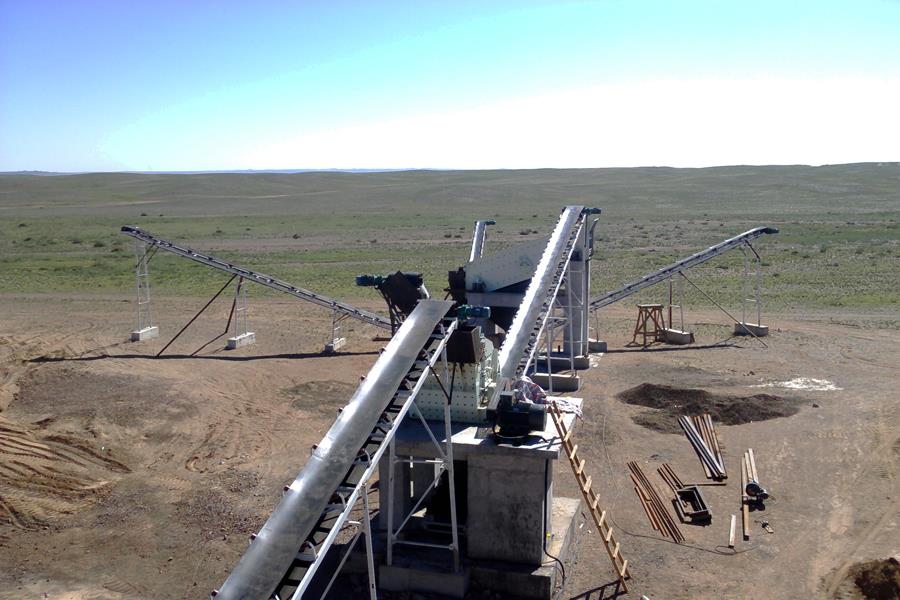
Process Design and Equipment Configuration for a 50tph Premium Manufactured Sand Production Line at a Dry-Mix Mortar Plant
Taking a specific dry-mix mortar manufactured sand production line as an example, this article focuses on introducing the process flow design and equipment configuration plan for a premium manufactured sand aggregate production line at a dry-mix mortar plant.
A. Process Flow Design
This dry-mix mortar manufactured sand production line is primarily designed to produce fine sand for ready-mix mortar, with a rated capacity of 50t/h. using crushed stone under 30mm as raw material. The finished sand's fineness modulus is adjustable between 2.4-3.0, with stone powder content controlled at 5%-15%. The core equipment in the system configuration is one specialized premium sand-making machine produced by OCP. This equipment delivers excellent finished particle shape, stable particle size, low operating costs, and simple maintenance. Additional supporting equipment includes one Y-series multi-layer fine-grain screening machine, one high-efficiency classifier, one environmental dust collection system, three bucket elevators, one powder storage tank, and other related metering and conveying equipment.
This production line employs a sand-making machine for fine crushing and material reshaping. Crushed materials undergo screening via the multi-layer fine-grain screening machine. Non-compliant materials are re-crushed by the sand-making machine, while qualified finished particle sizes are adjusted through the high-efficiency classifier to regulate stone powder content and particle size distribution in the manufactured sand. This ensures continuous and stable finished product gradation, meeting all customer requirements for dry-mixed mortar production. Additionally, to achieve a dust-free, clean production environment, the system incorporates a pulse-jet baghouse dust collector.
B. Equipment Configuration
The specialized premium sand-making machine employs either “stone-on-stone” or “stone-on-iron” crushing mechanisms based on operational conditions or material type, controlled through feed methods. The “stone-on-stone” mechanism utilizes a cascade flow distribution system, splitting incoming material into two controlled streams. One stream enters the horizontal high-speed rotating impeller cavity via the central feed pipe, while the other stream enters the equipment cavity through multiple overflow ports around the feed hopper's circumference. Material entering the impeller cavity is accelerated by the impeller's high rotation and ejected through three or more discharge ports. This material collides violently with material falling from the overflow ports in the impeller's peripheral zone, achieving stone-on-stone crushing.
“Stone-on-Iron” crushing occurs when all feed material enters the high-speed rotating impeller cavity through the central feed pipe. Accelerated by the impeller's rotation, the material is ejected through three or more discharge ports and violently impacts the metal impact plates mounted on the inner wall of the crushing chamber. This process achieves stone-on-iron crushing. The equipment produces well-shaped, stable-sized particles, features low operating costs, and requires simple maintenance.
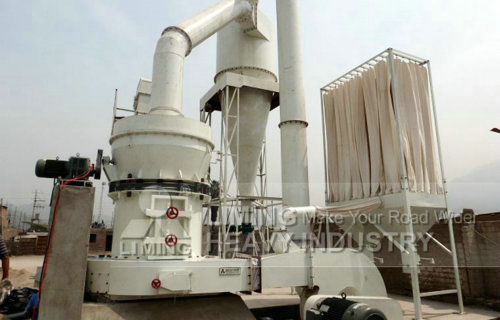
The classifier is the key equipment ensuring sand quality in dry sand-making processes. It primarily consists of a variable-speed motor, fan, cyclone, classification chamber, feed distributor, and main air inlet duct. This machine adjusts the proportion of fine particles in the sand through speed regulation. Higher rotational speeds yield more fine particles, reducing powder content in the sand. Conversely, lower speeds increase powder content. This allows convenient control of stone powder levels in manufactured sand to meet diverse customer requirements.
The pulse jet baghouse dust collector is an optimized design developed by our company. It integrates domestic and international dust collection technologies and addresses the current state of dry-process sand and gravel aggregate production. After repeated comparisons of the advantages and disadvantages of various baghouse types, this high-efficiency dust collector is widely adopted in sand and gravel aggregate systems. It is also extensively applicable for ventilation and dust removal in other building materials, machinery, light industry, rubber, and mining enterprises. It effectively improves the environment and prevents atmospheric pollution. This dust collector has made significant progress in both dust-laden gas purification efficiency and structural design. It primarily consists of components such as an air storage tank, filter bags, upper housing, lower housing, and screw conveyor. It is suitable for dust removal in high-concentration dust environments, capable of direct processing in environments with dust concentrations below 1000g/m³. It is also particularly suitable for dust removal in high-temperature, high-humidity dust-laden gas environments.
The tower-type sand-making system offers distinct advantages in environmental protection, space utilization, and energy efficiency. During operation, two critical issues must be addressed: First, grading and classification—simultaneously sorting and regulating materials screened from the crushed product. Failure to effectively grade and screen this portion will reduce production capacity and compromise control over the fineness modulus. Second, recirculation crushing, where non-compliant material is returned to the sand maker for reprocessing. This constitutes a core step in gradation adjustment.
Premium artificial sand makers should avoid large-scale, low-level duplication. They must feature appropriate scale, superior product quality, rigorous process control, high automation, and energy efficiency with environmental protection. This represents the future development trend for aggregate project construction. For further inquiries regarding premium artificial sand production lines and equipment configurations, click the website customer service for immediate free consultation.
-
What are the equipment configurations and crushing processes for steel slag recycling
-
Performance Characteristics and Maintenance Methods of Impact Crushers
-
-
Requirements for Raw Materials in Manufactured Sand Production
-
How to Build a Mechanically Produced Sand Production Line Meeting Green Mine Standards