
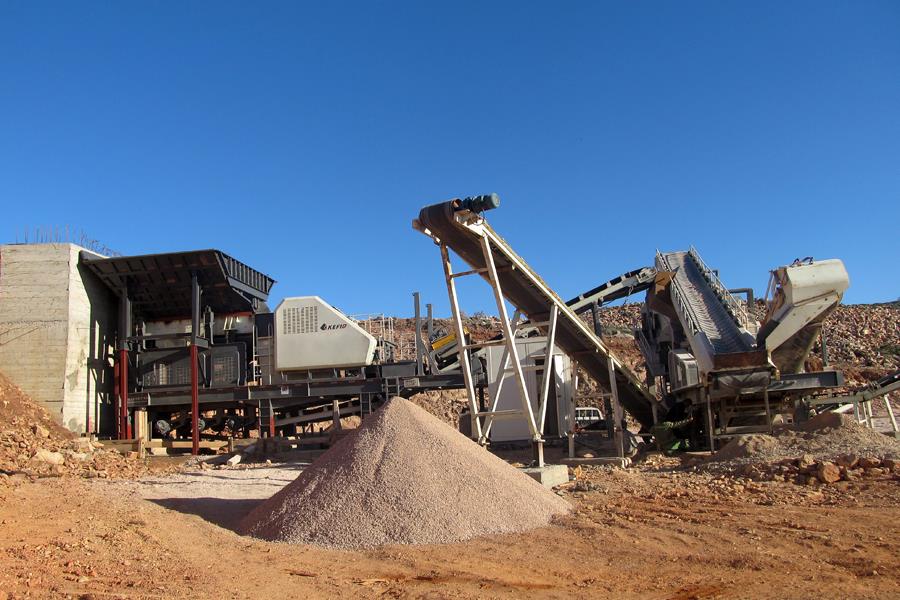
Operator training guide for cone crusher for manganese ore 135 tph in South Africa
Why an operator training guide for cone crusher for manganese ore 135 tph in South Africa is essential for your operation
South Africa holds approximately 80 per cent of the world's manganese resources and is the world's top exporter, accounting for 42 per cent of global shipments of the metal. In 2025, manganese ore production is expected to come in slightly above the record set in 2024, with output projected at approximately 20.3 million tonnes. Manganese ore was the largest positive contributor to South Africa's mining production, with output expanding by 17 per cent in late 2025. Export volumes reached record levels, with an estimated 26.2 million tons exported in 2025. This sustained growth places significant demands on processing equipment, particularly cone crushers which are critical for secondary and tertiary crushing of manganese ore. For operators running a 135 TPH cone crusher, proper training is not optional – it is essential for maximising throughput, extending liner life, and maintaining safety. This operator training guide for cone crusher for manganese ore 135 tph in South Africa provides a practical framework to help your team achieve consistent, efficient production while minimising downtime and wear-related costs. At OCP Mechanical Company, with over 40 years of manufacturing expertise, we supply cone crushers engineered for manganese ore applications and offer comprehensive training support tailored to the South African mining environment.
Why manganese ore demands specialised crusher operation
Manganese ore is typically a medium-hard to hard material with varying abrasiveness depending on the deposit. In South Africa, manganese deposits are concentrated in the Northern Cape Province, with major operations including the Mamatwan mine, which produced 2.15 million tonnes in FY25, and the Hotazel Manganese Mines, which are among the world's largest manganese operations. Manganese ore often contains significant fines and can have variable moisture content, which affects crusher performance. When developing an operator training guide for cone crusher for manganese ore 135 tph in South Africa, it is important to recognise that manganese ore crushing typically follows a three-stage process: jaw crusher for coarse crushing, cone crusher for medium crushing, and sometimes additional fine crushing stages. The cone crusher in a 135 TPH circuit is typically operating in the secondary or tertiary position, reducing feed from the primary jaw crusher to a product size suitable for downstream processing. Operators must understand the specific characteristics of the ore they are processing – its hardness, moisture content, and the presence of tramp material – as these factors directly influence crusher settings, liner wear, and throughput. Our Type C cone crusher is engineered for medium-hard to hard ores and features hydraulic adjustment and tramp release systems that simplify operation in challenging manganese applications. All product specifications, including capacity and power ratings, are continuously updated; for the latest parameters, please consult our online customer service.
Pre-start inspection – the foundation of safe and efficient operation
Every shift should begin with a systematic pre-start inspection. This is a critical component of any operator training guide for cone crusher for manganese ore 135 tph in South Africa. The operator should walk around the crusher to visually confirm the soundness of the unit, checking for any signs of oil leaks, loose bolts, or visible damage to the frame and liners. The oil level and condition should be checked; manganese ore crushing generates significant dust, which can contaminate oil if seals are worn. The hydraulic system pressure should be verified, and the lubrication system should be confirmed to be circulating oil correctly. The closed side setting should be measured using a lead ball test or laser measurement to confirm it is within the specified range. The feed hopper should be inspected for any blockages or material build-up. We recommend using a pre-start checklist, which we provide with every crusher. Operators should be trained to perform these checks thoroughly and consistently, as they are the first line of defence against breakdowns and safety incidents.
Understanding and adjusting the closed side setting (CSS)
The closed side setting is the most critical operational parameter in a cone crusher. In this operator training guide for cone crusher for manganese ore 135 tph in South Africa, we emphasise that a properly set CSS ensures consistent product size, reduces recirculation loads, and optimises throughput. For manganese ore, a typical CSS for secondary crushing is 20‑40 mm, while tertiary crushing may use 10‑20 mm. The CSS should be checked daily and adjusted as the liners wear. Hydraulic adjustment systems make this process simpler and safer; however, operators must be trained to use them correctly. Overly tight settings increase power draw and reduce capacity, while overly loose settings produce a coarser product and may require recirculation. We recommend using a power draw curve to help operators understand the relationship between CSS, power consumption, and throughput. Our Type C crusher features a hydraulic setting adjustment system that allows the operator to change the CSS remotely, maintaining consistency without requiring manual intervention. This is a valuable feature in the South African context, where operator safety is paramount.
Monitoring key performance indicators during operation
A well-trained operator continuously monitors several key performance indicators. This is a central theme in any effective operator training guide for cone crusher for manganese ore 135 tph in South Africa. The most critical indicator is the crusher's power draw, which should be monitored in real time. A sudden drop in power draw often indicates a loss of feed, while a sustained high power draw may signal a CSS that is too tight or a feed that is too hard. Oil temperature is another critical parameter; manganese ore crushing can generate significant heat, and temperatures above 50‑60°C should be investigated. Hydraulic pressure should also be monitored; a sudden increase may indicate tramp material or a blocked crushing chamber. Operators should be trained to respond to these indicators: adjusting the feeder speed to maintain a consistent power draw, or stopping the crusher if a critical parameter is exceeded. We recommend that operators use a control panel with visual indicators and alarms, and that they are trained to interpret the data and respond appropriately.
Maintaining liner life and managing wear
Liners are the most significant consumable cost in cone crusher operation. This operator training guide for cone crusher for manganese ore 135 tph in South Africa provides practical advice on extending liner life. For manganese ore, the abrasiveness varies; some deposits are more abrasive than others, and this must be factored into liner selection and replacement scheduling. Operators should be trained to monitor liner wear visually, using a wear gauge, and to record measurements regularly. Rotating liners to even out wear can extend their life by 10‑20 per cent. The CSS should be adjusted to compensate for wear, maintaining product quality and throughput. Operators should also avoid feeding the crusher with a constant stream of very fine material, as this can accelerate wear on the lower part of the chamber. The use of a well‑graded feed is essential. Our Type C crusher is designed with a liner wear compensation feature that automatically adjusts the CSS as the liners wear, reducing the need for manual intervention and extending liner life. By following these guidelines, operators can achieve liner life of 800‑1,500 hours, depending on the ore's abrasiveness.
South African operating environment – climate, power, and remote sites
South Africa's mining operations are often located in remote regions with variable power supply. The Northern Cape, where many manganese mines are located, experiences high temperatures in summer and can be dusty. When developing an operator training guide for cone crusher for manganese ore 135 tph in South Africa, it is important to address these conditions. Operators should be trained to monitor oil temperatures closely, as high ambient temperatures can cause oil to thin and lose its lubricating properties. They should also ensure that the crusher's cooling system is functioning correctly and that air filters are cleaned or replaced regularly, as dust can clog them and affect engine performance. In areas with intermittent power supply, operators should be trained on the proper shut‑down and start‑up procedures to avoid damage from power surges or outages. Our Type C crusher is equipped with a control system that includes a battery backup to maintain settings during short power interruptions. We also provide training on safe operation during load shedding events.
Safety protocols and emergency procedures
Safety is paramount in any mining operation, and this operator training guide for cone crusher for manganese ore 135 tph in South Africa devotes a section to emergency procedures. Operators must be trained on lock‑out/tag‑out procedures before any maintenance activity. They must understand how to use the crusher's emergency stop system and know the location of fire extinguishers and first‑aid equipment. In the event of a tramp iron event – where uncrushable material enters the crusher – the operator should know how to activate the tramp release system. They should also be trained on the procedure for clearing a blocked chamber safely. We provide a comprehensive safety manual with every crusher, and we offer on‑site training to ensure that operators are familiar with all safety procedures.
Sample parameter table for Type C cone crusher (For reference only)
The table below provides indicative specifications for our Type C cone crusher, suitable for 135 TPH manganese ore applications. Actual values depend on feed characteristics and product requirements; please request the latest data from our customer service, as all parameters are continuously updated.
| Parameter | Value (approximate) |
|---|---|
| Model | Type C |
| Capacity (manganese ore) | 130‑145 TPH |
| Feed opening | 36 in (914 mm) |
| CSS range | 0.5‑2 in (12‑50 mm) |
| Motor power | 200 HP (150 kW) |
| Chamber options | Medium, Fine |
| Hydraulic system | Multi-cylinder with tramp release |
| Weight (approx.) | 48,000‑55,000 lbs (21,800‑24,900 kg) |
This table is for illustrative purposes only. For precise engineering data and process guarantees, please consult our technical team with your specific manganese ore sample.
Why OCP Mechanical is your trusted partner for cone crushers and training in South Africa
With over 40 years of manufacturing experience, OCP Mechanical combines engineering excellence with a strong commitment to operator training and support. We are a factory‑direct supplier, offering competitive pricing and customised solutions. Our Type C cone crusher is built with high‑quality components and is available with a range of automation and training support options. We provide comprehensive training materials, including visual aids and practical exercises, to ensure that operators are confident and competent. Our training is delivered by experienced instructors who understand the local mining environment. We also offer on‑site support and refresher training to keep skills up to date.
Conclusion – Invest in training to unlock the full potential of your cone crusher
A well‑trained operator is the most valuable asset in any crushing operation. By following this operator training guide for cone crusher for manganese ore 135 tph in South Africa, you can ensure that your team operates the crusher safely, efficiently, and with maximum productivity. OCP Mechanical offers the equipment, expertise, and training support you need to succeed. Our online customer service team is available 24/7 to discuss your specific requirements and provide a detailed quotation and training plan. Click the chat button now – let us help you build a safer, more productive manganese ore crushing operation in South Africa.
-
Payback period of sand washing plant 50 tph for manufactured sand in Vietnam
-
How to reduce downtime of jaw crusher for river pebble 145 tph in Brazil
-
Best maintenance schedule for cone crusher for nickel ore 85 tph in New Caledonia
-
Crusher plant noise reduction for urban quarry 70 tph in Tokyo Japan
-
How to choose wear materials for impact crusher for high silica granite



