
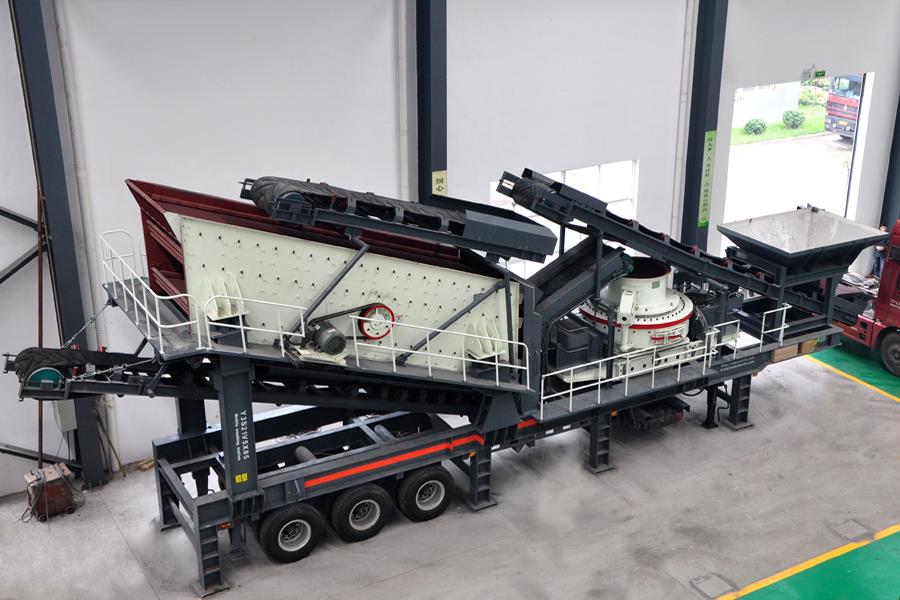
How to troubleshoot a vibrating screen for sticky limestone
For aggregate producers in Saudi Arabia and the UAE processing sticky limestone – often containing clay, moisture, or fine particles – vibrating screen blinding is a common and costly problem. Sticky limestone can reduce screening efficiency by 50% or more, leading to increased recirculating loads, higher energy consumption, and product quality issues. Knowing how to troubleshoot a vibrating screen for sticky limestone helps you restore throughput, minimize downtime, and keep your plant running profitably. OCP Mechanical Company, a factory‑direct manufacturer with over 40 years of experience, supplies Type S vibrating screens with anti‑blinding media and high‑force exciters, backed by 24/7 online support.
Note: Product data are constantly updated; the latest specifications should be confirmed with our online customer service.
Identify the root causes of blinding
Before fixing the problem, you must understand why limestone is sticking. Common causes include:
High moisture – Limestone with moisture above 5‑6% causes fines to adhere to wire or polyurethane surfaces.
Clay content – Clay minerals act as glue, binding particles together and to the screen deck.
Fine particle size – A high percentage of material below 2‑3 mm increases surface contact and adhesion.
Improper screen slope – Too flat a slope reduces material velocity, allowing more time for adhesion.
Worn or incorrect screen media – Blinded wire mesh or worn polyurethane panels lose their self‑cleaning properties.
When you learn how to troubleshoot a vibrating screen for sticky limestone, you systematically check each of these factors.
Check screen media type and condition
The first step in troubleshooting is inspecting the screen media. For sticky limestone, polyurethane panels with tapered or slotted openings are a widely used choice because the flexible material allows particles to “pop out” under vibration. If you are using woven wire, consider switching to polyurethane. Signs of worn media include:
Rounded or enlarged apertures.
Cracks or tears in polyurethane panels.
Loose tensioning rails causing panels to sag.
Replace damaged panels immediately. Polyurethane panels typically last 1,500‑3,000 hours in sticky limestone, while woven wire may last only 200‑500 hours. Many Saudi and UAE quarries have reduced blinding by 80% after switching to polyurethane with tapered openings.
All price information in this article is for reference only; contact our team for current, site‑specific data.
Adjust screen slope and stroke
A flat screen slope slows material movement, increasing the chance of adhesion. For sticky limestone, increase the slope to 20‑25° (compared to 15‑18° for dry material). This increases material velocity, reducing residence time on the deck. Also, check the stroke (amplitude). A higher stroke (8‑12 mm) helps “throw” sticky particles loose. If your screen has a variable frequency drive (VFD), increase the exciter speed by 10‑15%. However, avoid excessive amplitude, which can damage the screen box. Measure the stroke with a strobe light or vibration meter. Many quarries in Riyadh and Dubai have solved blinding by simply increasing the slope by 3‑5 degrees.
Inspect feed distribution and feed rate
Uneven feed distribution causes material to pile on one side of the screen, leading to local blinding and reduced open area. When troubleshooting, observe the feed box. If material is loading onto only one‑third of the screen width, install a spreading chute or adjust the feeder discharge. Also, reduce the feed rate temporarily. Overloading the screen forces fines into the apertures, accelerating blinding. For a 200‑300 tph screen, reduce feed by 20‑30% and observe if blinding decreases. Once the issue is resolved, gradually increase feed to the design rate.
Use water sprays or air knives
For extremely sticky limestone, mechanical adjustments alone may not be enough. Water sprays installed above the feed end and along the screen deck wash fines through the apertures. Use low‑pressure, high‑volume nozzles (1‑2 bar, 5‑10 L/min per nozzle). Water can increase product moisture, but for limestone going to a crusher or stockpile, a small addition (1‑2%) is usually acceptable. For plants where water is restricted, air knives (compressed air jets) can blow material off the screen surface. However, air is less effective than water for clay‑based stickiness.
Check screen drive and vibration pattern
A misaligned or damaged exciter can produce uneven vibration, causing material to accumulate in low‑amplitude zones. Check the exciter bearings for wear (unusual noise). Verify that both exciter motors rotate in opposite directions (on twin‑motor screens) to produce linear throw. If the throw is elliptical or circular, correct the motor rotation. Measure the vibration at four corners of the screen box; the amplitude should be within 1‑2 mm across all points. A difference of more than 20% indicates a mechanical issue.
How to prevent future blinding
Once you have resolved the current issue, implement preventive measures. Schedule weekly cleaning of the screen deck with a water lance. Keep a spare set of polyurethane panels for the fine deck (where blinding is worst). Train operators to recognize early signs of blinding – reduced material flow, increased fines in product, or higher motor current on the crusher. Use a VFD to reduce screen speed when processing drier material and increase speed when moisture rises. For plants processing limestone with seasonal moisture, consider installing a heated screen deck (electric or hot water) to evaporate surface moisture. OCP offers all these options.
Why OCP is your trusted partner for sticky limestone screening in Saudi and the UAE
Mastering how to troubleshoot a vibrating screen for sticky limestone is essential for maintaining plant productivity. OCP Mechanical Company has four decades of experience in screening equipment for Gulf hard rock and sticky materials. Our 24/7 online team helps with slope adjustment, media selection, and troubleshooting. We keep common polyurethane panels, vibrator motors, and springs in our Jeddah and Dammam warehouses for fast delivery. We invite you to request a no‑obligation consultation.
For a no‑obligation consultation on how to troubleshoot a vibrating screen for sticky limestone, simply click the live chat icon on this page. Our online customer service team is available 24 hours a day, 7 days a week, to provide free technical advice, equipment recommendations, and spare parts – helping you keep your screening line running efficiently.
-
-
Buy a used sand screw washer for silica sand 75 tph in Malaysia
-
-
Which VSI for manufactured sand from gneiss 135 tph in Norway
-
Get quote for complete sand making plant 115 tph from andesite in Philippines