
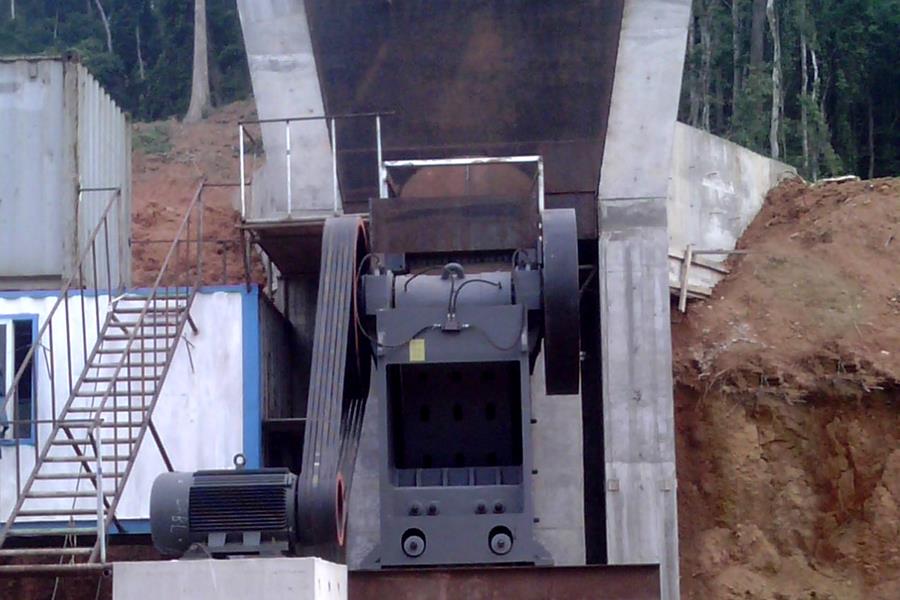
How to Choose the Right Track-Mounted Mobile Crushing Station
Our tracked mobile crushing plant is a robust, high-efficiency integrated crushing workstation developed by our company using advanced technology. Featuring a heavy-duty tracked chassis with self-contained power, its ingenious design offers comprehensive functionality. This modular system integrates feeding, crushing, sand-making, screening, and conveying equipment into one unit. By combining different modular units, it forms a truly mobile crushing workflow, with the entire crushing operation conducted on the tracked chassis. The plant incorporates an advanced intelligent control system enabling one-button start-up operation, delivering high crushing efficiency and controllability. Its compact structure ensures easy installation, convenient transportation, and agile mobility, making it suitable for diverse complex site conditions. It supports both open-circuit and closed-circuit production, producing high-quality sand and aggregate products in multiple specifications. So, how do you select the appropriate tracked mobile crushing plant? The key lies in understanding the material's characteristics. Knowing the fundamental properties of the rock allows for more targeted selection of crushing equipment and subsequent efficient processing.
A. Material Characteristics
1. Crushability
The crushability index is generally used to reference how the mechanical strength of rock and minerals affects crushing. Rock crushability influences the discharge particle size of crushing equipment, thereby affecting the selection of supporting processing equipment like tracked mobile crushers. Based on professional indices, rock crushability is categorized into three levels: moderately crushable, difficult to crush, and extremely difficult to crush. According to rock properties, limestone used in civil construction falls under the moderately crushable category; while greywacke and basalt commonly found in hydropower projects belong to the difficult-to-crush category.
2. Abrasiveness
Rock abrasiveness primarily affects the service life and wear costs of equipment components during operation, making it a critical parameter for equipment selection. Professional indices classify rock abrasiveness into three levels: high abrasiveness, very high abrasiveness, and extremely high abrasiveness. Common granite falls under high abrasiveness, while quartzite exhibits very high abrasiveness.
B. How to Select Equipment?
1. Track-mounted Mobile Cone Crushing Plant
Quarries processing sand and aggregate often handle highly abrasive materials like river pebbles, granite, and greywacke. The track-mounted cone crushing plant is recommended for such applications. This mobile crushing station excels in crushing for sand production and pre-ball milling of iron ore in large mineral processing plants, offering targeted performance and higher crushing efficiency.
OCP Heavy Industry's tracked mobile cone crushers are specifically designed for secondary and tertiary crushing. Utilizing the layer compression crushing principle, materials are thoroughly crushed with high efficiency, minimal wear, large throughput, and excellent finished particle shape. Optional single-layer or multi-layer removable vibrating screens enable integrated crushing and screening operations. The compact transport dimensions facilitate long-distance relocation and transportation.
2. Track-mounted Mobile Impact Crusher Station
During subgrade construction for roads and bridges, or foundation bedding operations, medium-crushable materials like limestone predominate. In construction waste crushing, while feed composition is complex, the material itself is medium-hardness crushable. The track-mounted impact crusher station is recommended. The impact crusher mobile station employs impact crushing principles, where materials undergo repeated collisions between impact plates and counter plates until reduced to the desired discharge size.
OCP Heavy Industry's tracked mobile impact crusher utilizes a hybrid electric-hydraulic drive system on a tracked vehicle chassis. It features a specially optimized impact crusher integrated with a pre-screening vibrating screen, enabling secondary crushing operations. It is widely applicable for crushing construction waste and various medium-to-hard rock and ore materials. The compact and efficient modular design enables rapid on-site deployment and swift relocation between job sites.
The above outlines recommendations for selecting a tracked mobile crushing plant. For any further inquiries, please consult our online customer service available 24/7 for free assistance.
-
-
-
Ten Key Comparisons Between Single-Cylinder and Multi-Cylinder Hydraulic Cone Crushers
-
Why is the hydraulic cone crusher more recommended for crushing sand and gravel
-
What are the common types of crushers? Which manufacturers are reliable?