
Distinguishing Between Impact Crushers and Hammer Crushers When Selecting Medium Crushers
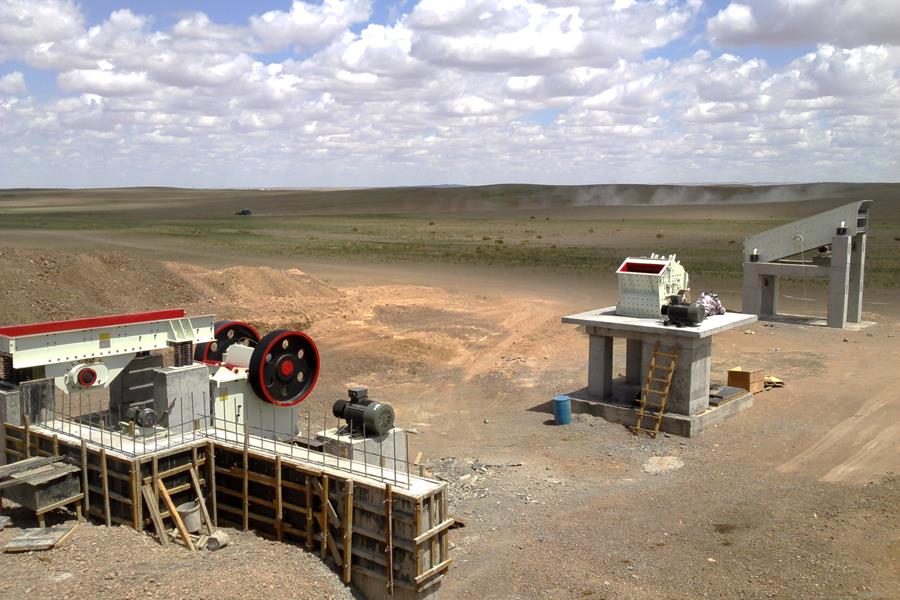
Both impact crushers and hammer crushers are employed in the medium crushing stage of production lines. Their external structures are similar, and both can be utilised in ore crushing, motorway construction, railway projects, and other industries. However, they differ significantly in structure and operating principles. So, what are the specific distinctions?
A. Different Working Principles
The impact crusher is a crushing machine that utilises impact energy to break materials. During operation, driven by an electric motor, the rotor spins at high speed. When material enters the impact plate zone, it collides with the impact plates on the rotor, breaking into smaller pieces. It is then thrown onto the counter-impact device for further crushing, before rebounding off the counter-impact liner back into the impact plate zone for repeated crushing. This process continues, The material progresses through the first, second, and third impact chambers, undergoing repeated crushing from larger to smaller sizes until it reaches the required particle size, after which it is discharged through the outlet.
The hammer crusher primarily relies on impact energy to accomplish material crushing. During operation, the motor drives the rotor to rotate at high speed. Material is uniformly fed into the crushing chamber, where the high-speed rotating hammers impact, shear, and tear the material, causing it to break. Simultaneously, the material's own gravitational force propels it from the high-speed rotating hammers towards the frame's inner baffles and screen bars. Material larger than the screen aperture size is retained on the screen plate, where it continues to be struck and ground by the hammers until crushed to the required discharge particle size, finally passing through the screen plate and being discharged from the machine.
B. Structural Differences
Key components of the impact crusher include springs, guard rails, front impact frame, rear impact frame, impact liners, square steel bars, impact liner bolts, cover-flipping mechanism, main shaft, plate hammers, rotor frame, liners, locking blocks, and clamping blocks.
The hammer crusher comprises the housing (casing), rotor, hammer heads, main shaft, impact liners, and screen plates.
C. Differences in Crushable Materials
Due to their structural and operational principles, impact crushers and hammer crushers exhibit distinct material processing capabilities. Hammer crushers are only suitable for processing softer materials such as coal, gypsum, bricks, tiles, and limestone.
Impact crushers can process not only soft materials but also medium-hard materials. Furthermore, lacking grate bars, they prevent blockages when handling materials with high moisture content. Conversely, hammer crushers are prone to clogging when processing damp materials due to their grate bar configuration.
D. Production Cost Differences
Regarding initial purchase costs, impact crushers command a higher price than hammer crushers. However, long-term maintenance expenses are higher for hammer crushers. This disparity largely stems from the materials used in their components. In impact crushers, plate hammers typically wear on the side facing the material, whereas hammer crushers have larger contact surfaces on their plate hammers, leading to accelerated wear. Furthermore, replacing components in an impact crusher requires only opening the rear casing, minimising time and labour expenditure. Conversely, hammer crushers possess numerous hammers. Replacing a full set demands considerable time and manpower, resulting in relatively higher costs. Overall, maintenance expenses for hammer crushers substantially exceed those of impact crushers.
We are an integrated mining machinery company specialising in R&D, production, sales, and service. Our core offerings include jaw crushers, cone crushers, impact crushers, sand makers, mobile crushing plants, ball mills, and vibrating screens, alongside complementary equipment. We warmly welcome all clients to visit our factory for on-site inspections. Click our website chat for immediate complimentary consultation – available 24 hours online.
-
-
How effective is the vertical impact crusher for processing pebbles
-
-
-
Analysis of the Advantages and Disadvantages of Track-Mounted Mobile Crushers