Structure of the Impact Crusher
The primary components of an impact crusher include springs, guard rails, front impact frame, rear impact frame, impact liners, square steel bars, impact liner bolts, cover-flipping mechanism, main shaft, impact plates, rotor frame, liners, locking blocks, and clamping blocks.
1. Plate Hammers
The configuration of plate hammers is intrinsically linked to their fastening methods and operational loads. Their design must ensure reliable performance, straightforward installation and removal, and maximise metal utilisation efficiency. Plate hammers are typically fabricated from high-chromium cast iron, high-manganese steel, or other wear-resistant alloy steels. They exhibit diverse configurations including elongated, T-shaped, S-shaped, I-shaped, axe-shaped, and grooved designs, with the elongated form being most prevalent.
2. Clamping Blocks
This component finds extensive application across various mining machinery. Crafted from superior materials with stable performance characteristics, it can be customised to meet diverse requirements. Following load testing, necessary adjustments to the clamping blocks must be undertaken. These blocks exhibit outstanding characteristics including stable chemical composition, rational heat treatment processes, excellent wear resistance, and high strength. The clamping block automatic clamping mechanism employs a cylinder-driven system with connecting rod mechanisms and linear guides, enabling sequential operations such as clamping, feeding, opposite-end clamping, simultaneous release, and retraction.
3. Impact Plate
The impact plate functions to absorb the force of material ejected by the hammer plates, causing the material to fracture upon impact. It then redirects the fractured material back into the impact zone for repeated crushing until the desired particle size is achieved.
Impact plates come in various forms, primarily divided into angular and curved types. Angular impact surfaces ensure material strikes the plate at near-vertical angles across all points, yielding optimal crushing efficiency. Curved impact surfaces create an intense impact crushing zone at the centre after material rebounds, enhancing free impact fragmentation.
Impact plates are typically fabricated from welded steel plates. Their impact surfaces are fitted with wear-resistant liners, though they may also incorporate impact rollers or grate bars. Impact surfaces with grate openings produce fewer fine particles, enhancing equipment throughput while reducing power consumption. However, this design presents drawbacks including structural complexity, difficulty in replacing worn impact surfaces, and accelerated wear rates.
The rotor of an impact crusher is predominantly manufactured from solid cast steel, offering robust durability and ease of hammer plate installation. Its substantial mass ensures satisfactory crushing performance. For small and lightweight impact crushers, the rotor may alternatively be fabricated from welded steel plates.
4. Square Steel
Square steel exhibits a rectangular cross-section and is categorised as either welded or seamless. Welded square steel is formed by joining steel plates to create square tubular sections. Seamless square steel is produced by cold drawing seamless steel tubes. Its compressive strength significantly exceeds that of welded square tubes. In impact crushers, square steel prevents material discharge from the front. Strict adherence to heat treatment processes ensures high strength in wear-resistant components, delivering high returns on initial equipment investment. Theoretical weight calculation formula for square steel: Side length × Side length × 0.00785 = kg/m (for reference only; actual weight prevails).
We are an integrated enterprise specialising in the research, development, production, sales, and service of stone crushing equipment. Our workshop maintains stock for immediate supply, bypassing intermediaries to offer wholesale prices directly. We welcome visits to our factory for on-site inspections, where our specialists can provide tailored selection services. For further details, please contact our website customer service, available 24 hours online.
-
-
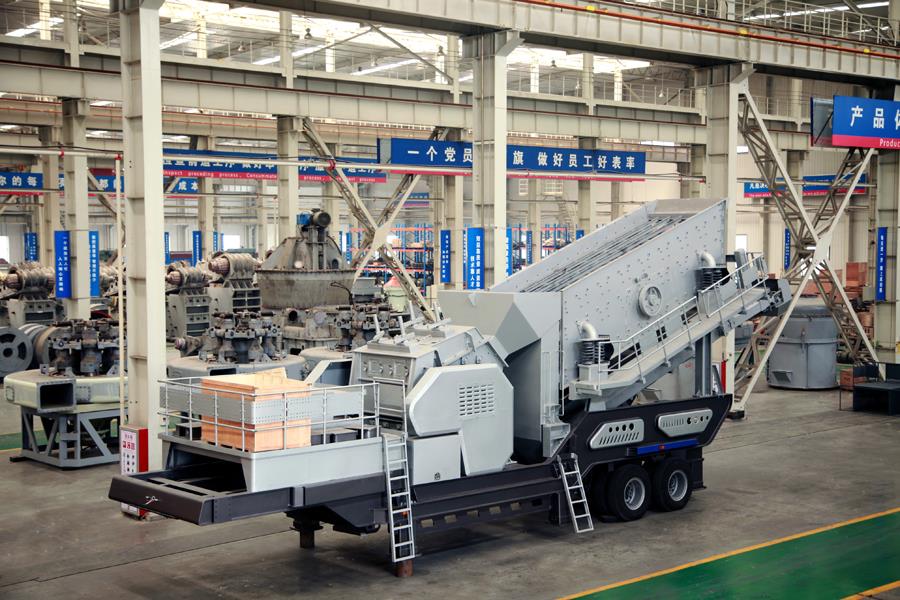
Analysis of the Advantages and Disadvantages of Track-Mounted Mobile Crushers
-
-
What are the cone crusher models with a capacity of 100 tonnes per hour
-