Cost benefit of closed circuit crushing vs open circuit
Why circuit selection is a strategic decision for Brazilian operations
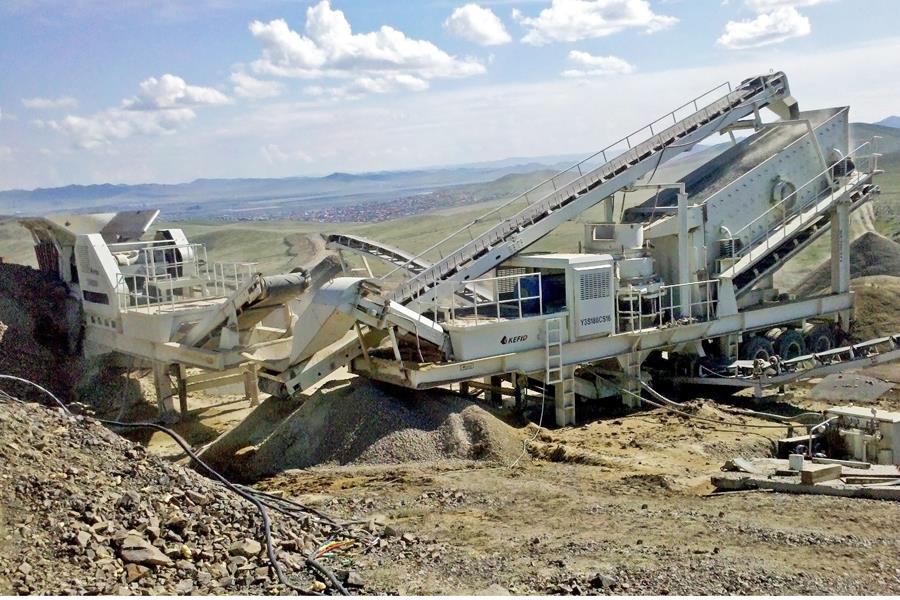
Brazil's mining and quarrying sector is one of the most diverse in the world, processing everything from iron ore in Carajás to granite in Espírito Santo and limestone in Mato Grosso. For plant designers and operations managers, the choice between closed-circuit and open-circuit crushing is a fundamental decision that affects equipment sizing, product quality, operating costs, and overall profitability. A closed-circuit system recirculates oversize material back to the crusher via a screen, while an open-circuit system passes material through the crusher only once. Each approach has distinct advantages and cost implications. Understanding the Cost benefit of closed circuit crushing vs open circuit is essential for Brazilian operators who must balance capital investment against long-term operating expenses. OCP Mechanical Company, with over 40 years of direct manufacturing experience, designs both types of circuits and offers factory-direct consultation to help Brazilian customers select the most cost-effective solution for their specific application.
Product quality and gradation control
Product quality is often the deciding factor in the Cost benefit of closed circuit crushing vs open circuit. Closed-circuit systems provide superior control over product gradation because the screen continuously removes fines and returns oversize for re-crushing. This results in a tighter particle size distribution, reduced flakiness, and consistent product quality—critical for Brazilian concrete and asphalt specifications (ABNT standards). For applications requiring high-value products such as concrete sand or premium aggregates, closed-circuit operation typically delivers a 10–20% improvement in spec compliance compared with open-circuit. Open-circuit systems, on the other hand, produce a broader gradation with more variability, which may be acceptable for lower-grade applications such as road base or fill material. The Cost benefit of closed circuit crushing vs open circuit often favours closed-loop when product quality is paramount, as the reduced waste and higher saleable yield offset the additional equipment cost.
Energy efficiency and operating costs
Energy consumption is a significant operating cost for Brazilian crushing plants, where electricity tariffs have seen steady increases over recent years. Open-circuit systems typically consume less power per tonne because material passes through the crusher only once. However, this apparent efficiency can be misleading. Open-circuit crushers must be operated at a tighter setting to achieve the target product size, which increases power draw and accelerates wear. Closed-circuit systems allow crushers to operate at a wider setting because the screen removes fines and returns oversize for further reduction, reducing the power required per tonne of finished product. Studies show that closed-circuit operation can reduce specific energy consumption by 8–15% compared with open-circuit when producing the same final product. The Cost benefit of closed circuit crushing vs open circuit must therefore consider not just the crusher's power draw but the entire circuit's energy use. OCP's engineering team provides site-specific energy models to guide this comparison.
Wear parts consumption and maintenance
The Cost benefit of closed circuit crushing vs open circuit extends to wear parts and maintenance. In open-circuit systems, the crusher must work harder to achieve the desired product in a single pass, resulting in faster liner wear. Additionally, the wider product gradation often means more material is wasted as reject or off-spec, increasing the effective cost per saleable tonne. Closed-circuit systems produce less waste, and the crusher's reduced CSS requirement lowers liner wear by 15–25% compared with open-circuit operation. However, closed-circuit systems include a vibrating screen and recirculating conveyors, adding wear parts and maintenance requirements. The trade-off typically favours closed-circuit for operations processing hard, abrasive rock—common in Brazilian iron ore and granite—where extended liner life and higher product yield offset the additional screening costs. OCP's life-cycle cost models quantify these trade-offs for each customer's specific application, providing a clear financial comparison.
Capital investment and footprint considerations
The initial capital required for a closed-circuit system is higher than for an open-circuit system, due to the additional screen, conveyors, and structural supports. For Brazilian operators with limited capital or small-scale operations, the lower upfront cost of open-circuit may be attractive. However, the additional investment in a closed-circuit system often pays for itself within 12–24 months through improved product yield, reduced waste, and lower wear costs. Space constraints also influence the decision—closed-circuit systems require a larger footprint for the screen and recirculation conveyors. For greenfield projects with adequate space, closed-circuit is increasingly the standard. For brownfield upgrades where space is limited, open-circuit may be the only feasible option. The Cost benefit of closed circuit crushing vs open circuit must consider site-specific constraints, and OCP's engineers conduct site surveys to evaluate these factors.
When to choose each circuit: practical guidelines
Based on the Cost benefit of closed circuit crushing vs open circuit, the following guidelines apply. Choose closed-circuit when: (1) product spec compliance is critical; (2) the rock is abrasive and liner wear is a major cost; (3) the operation is high-volume and sustained; (4) space allows for the additional equipment. Choose open-circuit when: (1) product gradation tolerance is wide; (2) capital is severely limited; (3) space constraints prevent screening; (4) the operation is small-scale or short-term. Many Brazilian operations adopt closed-circuit for their main product line and open-circuit for tailings or lower-grade production. OCP offers both configurations and can supply modular closed-circuit packages that reduce installation time. All technical data and cost projections are estimates; final decisions should be based on a site-specific feasibility study. OCP reserves the right to update technical data and pricing based on market conditions.
Get your custom cost benefit analysis and quote
Choosing the right crushing circuit is a strategic decision that requires a detailed cost-benefit analysis. OCP Mechanical Company offers a free, site-specific Cost benefit of closed circuit crushing vs open circuit study for your Brazilian operation, covering energy consumption, wear parts, product yield, and capital costs. Our 24-hour online customer service team is ready to answer your questions and provide technical guidance. To receive your personalised analysis and equipment quote, simply click the chat button on our website or complete the enquiry form with your feed and product specifications. Our engineers will respond within 24 hours with a detailed proposal, including circuit recommendations, projected ROI, and a clear price breakdown. All quoted figures and parameters are for reference and subject to final confirmation. OCP's 40-year track record ensures reliable, cost-effective crushing solutions for Brazil's diverse aggregates and mining industry. Reach out today and make a confident, data-driven decision.