Common Faults of Cone Crushers
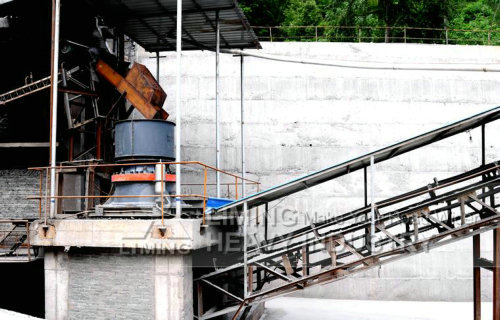
Cone crushers operate in harsh environments and are prone to malfunctions. These issues not only impair the crusher's efficiency but also significantly reduce the service life of its components and lubricants, leading to increased consumption of spare parts and materials, and heightened maintenance and production workloads. Therefore, proper management of these faults is essential to ensure stable operation of cone crushers and enhance production efficiency.
Common faults of cone crushers:
1. Wear and tooth breakage of the large and small cone gears.
2. Deterioration of lubricant quality.
3. Frequent vibration of the crusher.
4. Severe impact noise, with the support sleeve jumping up before returning to normal operation.
5. Splitting sounds during mineral crushing.
6. The crusher exhibits strong vibration, and the moving cone rotates rapidly.
13 methods for fault prevention and resolution:
1. Improve the assembly relationship between the large cone gear and the eccentric shaft sleeve, ensuring that after assembly, the axis of the large cone gear deviates 2-2.3mm from the axis of the eccentric shaft sleeve toward the thin side.
2. Install electromagnetic iron removers, metal detectors, and video surveillance systems on the conveyor belt to promptly remove non-crushable objects before they enter the crusher.
3. Install overcurrent protection in the electrical control system. When non-crushable objects are mixed into the crusher or the machine is overloaded, the motor can automatically stop running to provide protection.
4. Regularly inspect the meshing clearance of the cone gears and the clearance between the eccentric sleeve and the frame bushings. Replace worn-out eccentric sleeves or frame bushings that exceed the wear limit to ensure the clearances remain within the specified range.
5. Regularly inspect the thickness of the thrust disc and adjust the meshing clearance between the large and small cones of the cone crusher to ensure the clearances remain within the specified range.
6. Regularly inspect the drainage condition of the dust-proof device. If a large amount of dust enters the lubricating oil, causing the oil quality to deteriorate rapidly, stop the machine to inspect the dust-proof device, identify the cause, and eliminate it.
7. Regularly inspect the operational status of the oil pump, filter, cooler, valves, and piping in the thin oil lubrication station, as well as the oil quality and oil pressure and temperature of the thin oil lubrication system.
8. Regularly inspect the wear condition of the liners and the tightness of all fasteners, and promptly tighten bolts or replenish zinc alloy.
9. Operators must strictly adhere to the specified operating procedures for starting and stopping the crusher.
10. Ensure uniform feeding during crusher operation.
11. Regularly inspect the wear condition of spherical bearing shells and promptly replace those with excessive wear.
12. Check the oil level in the oil tank. If the oil level significantly decreases due to reduced oil volume, shut down the machine to identify the cause of the issue and take appropriate measures.
13. Regularly inspect the spring tension of the crusher. If the spring tension is insufficient, shut down the machine and tighten the springs within the specified range.
Proper operation and maintenance of cone crushers to reduce failure rates, ensure normal equipment operation, and maximise production efficiency are the goals of every equipment manager.
Our company manufactures various models of jaw crushers. Click on the website customer service for free consultation, available 24/7.