
Working Principle and Structural Features of Jaw Crushers
Working Principle of Jaw Crushers
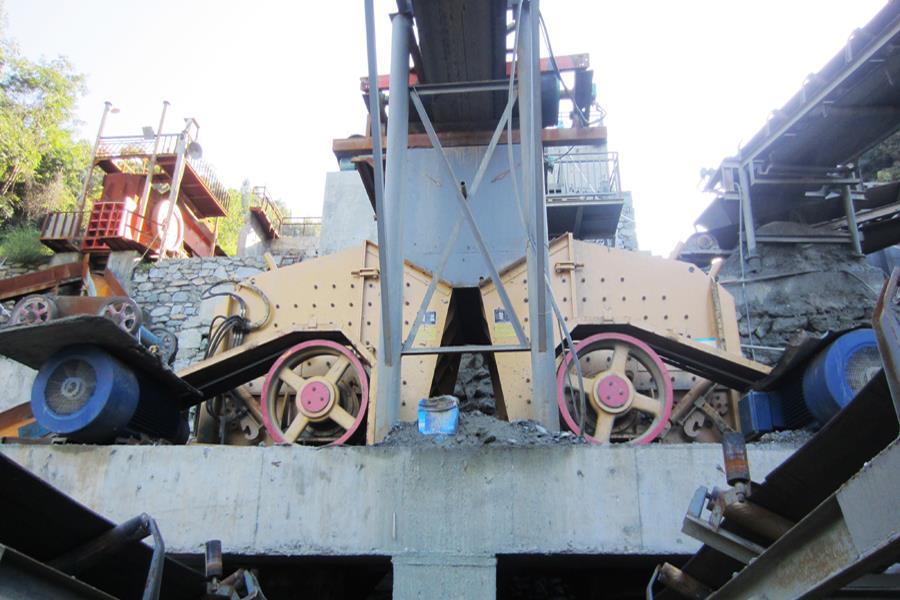
This machine primarily consists of components such as the frame, moving jaw, eccentric shaft, jaw plates, and adjustment seat. During operation, the motor drives the eccentric shaft via a V-belt and pulley, causing the moving jaw to move along a specific trajectory. Materials entering the crushing chamber are crushed, split, and bent between the two jaw plates, and the crushed materials are discharged through the discharge opening under their own weight.
Structural Features of the Jaw Crusher
1. Frame Section
The frame is a steel plate welded structure that has undergone annealing treatment. The fixed jaw plate is mounted on the front wall plate of the frame. Left and right side guards are installed inside the crushing chamber of the frame to prevent wear on the inner walls of the frame. Four φ33 holes are machined on the front wall plate of the frame. When disassembling the fixed jaw plate, a rod is used to strike the fixed jaw plate to facilitate disassembly. φ40 holes are machined on the side wall plates of the frame. When disassembling the side guard plates, a rod is used to strike the side guard plates to facilitate disassembly.
The fixed jaw plate and left/right side guard plates are all high-manganese steel castings (wear parts) and should be replaced regularly based on the properties of the crushed material. When replacing the fixed jaw plate, first loosen the bolts of the side guard plates, remove the side guard plates, then use a rod to tap the fixed jaw plate. Once the fixed jaw plate has separated from the front wall plate of the frame, remove and lift out the fixed jaw plate. The installation sequence for the fixed jaw plate should be the reverse of the disassembly sequence. First install the fixed jaw plate in place, then install the side guards. When installing the side guards, their two sides must be tightly squeezed against the fixed jaw plate and the wedge blocks welded to the machine frame. Note that after the side guards are installed in place, they must be tightened with the side guard bolts.
2. Moving jaw section
The moving jaw body is a cast steel component with a movable jaw plate mounted on the front. The upper part is suspended from the frame via an eccentric shaft and bearings, while the lower part is supported by the elbow plate, with which it maintains a sliding contact. Pulley wheels and flywheels are installed at both ends of the eccentric shaft. A guard plate is installed on the upper part of the moving jaw to prevent wear on the upper part of the moving jaw and deformation of the bearing bore caused by feeding, thereby affecting the service life of the moving jaw and the smooth disassembly of bearings and other parts.
The front of the moving jaw body is fitted with a movable jaw plate and wedges. Both the movable jaw plate and wedges are high-manganese steel castings (wear parts) and must be replaced regularly based on the properties of the crushed material. When replacing the movable jaw plate, the wedges must first be removed. The moving jaw body has two φ40 holes machined at the wedge mounting location to facilitate wedge removal. After removing the wedge block, the movable jaw plate can be removed. The installation sequence of the movable jaw plate is the reverse of the removal sequence: first install the movable jaw plate, then install the wedge block. Steel plates can be welded onto the wedge block to achieve the purpose of tightening the movable jaw plate.
The bearings on the moving jaw body and the frame are self-aligning cylindrical roller bearings. As shown in Figure 2, the bearings are sealed with oil seals. The bearings should be filled with No. 3 synthetic lithium-based grease or other equivalent grease (note: different grades and types of grease should not be mixed). The amount of grease added to the bearings should occupy 2/3 of the bearing cavity volume. Lubricate once a week, and clean and replace the grease every six months. When replacing, clean the bearings with kerosene and refill with grease to 2/3 of the bearing cavity volume.
If the equipment is used outdoors or in high-temperature environments, shorten the lubrication and replacement cycles.
3. Elbow plate
One end of the elbow plate is supported by the lower part of the moving jaw, while the other end is supported by the adjustment seat, forming a sliding contact. In addition to supporting the moving jaw, the elbow plate also serves to protect other components from damage by immediately bending or breaking when foreign objects that cannot be crushed enter the crushing chamber, causing a sudden increase in the crusher's load.
4. Adjustment Mechanism
The top rod and adjustment shims on the rear wall of the frame can be used to adjust the size of the discharge opening according to user requirements, thereby controlling the output particle size. Note: When adjusting the top rod, the spring must be released first, the shims added, and then the top rod retracted before tightening the spring.
5. Spring Rod Assembly
The spring rod assembly of the equipment consists of components such as the rod, spring, and nut, designed to ensure precise coordination of the jaw crusher's entire moving mechanism and balance the inertial forces generated by the moving jaw and elbow plate during operation. The spring preload should not be excessively high; it should only eliminate impact noises between the elbow plate and moving jaw, as well as between the elbow plate and adjustment seat.
We are a mining machinery company integrating R&D, production, sales, and service. Our main products include jaw crushers, cone crushers, impact crushers, sand makers, mobile crushing plants, ball mills, and vibrating screens, among related equipment. We welcome all customers to visit our factory for on-site inspections. Click on the website customer service for free consultation, available 24/7.
-
-
Sand Production Line Configuration Schemes for Different Materials
-
Which type of crusher is more suitable for recycled sand and gravel aggregates
-
-