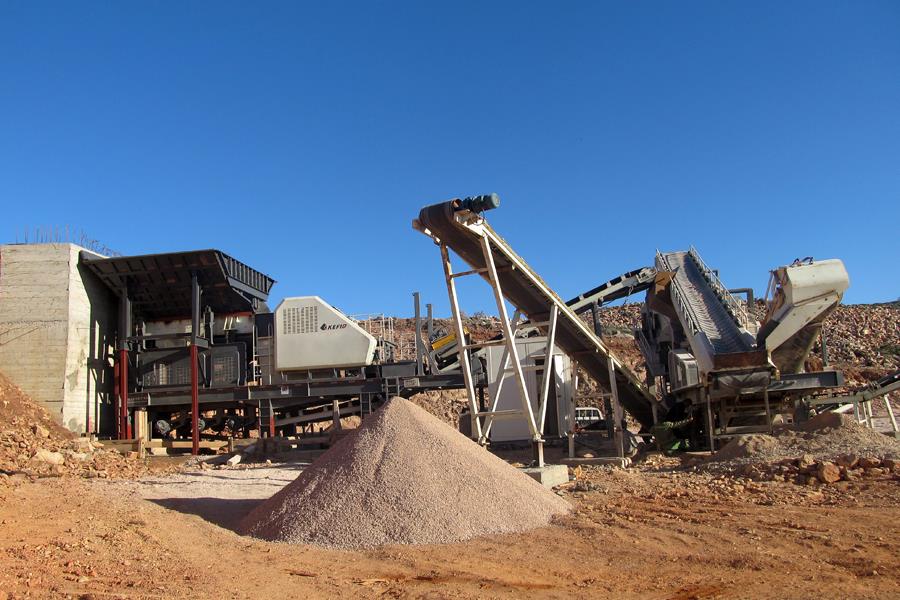
What Aspects Should Be Considered When Selecting a Site for a Sand and Gravel Plant, with Production Case Studies
The site selection of a sand and gravel plant has a significant impact on its future operation. Therefore, it is necessary to conduct a survey of the surrounding environment before opening a sand and gravel plant to ensure that the site selection meets the requirements to the greatest extent. Specifically:
1. Convenient road transportation and easy access to electricity and water; many sand and gravel plants still rely on fixed production lines, making aggregate transportation particularly important. Most sand production lines use wet sand making, involving sand washing, sedimentation, and fine sand recovery. Therefore, abundant water resources and sufficient facilities for building sedimentation tanks and treating wastewater are essential.
2. Far from residential areas; to reduce pollution, it is advisable to choose a location downwind of the prevailing wind. The production of manufactured sand involves various stages, including blasting, crushing, and sand making, which inevitably generate noise, dust, and other safety hazards. Therefore, sand and gravel plants are generally built far from residential areas, choosing a location downwind of the prevailing wind to avoid pollution.
3. The distance between the plant area and the blasting point should be at least 200 meters according to industry standards. 4. Plant area, and storage capacity for raw materials and finished products; Due to environmental restrictions, many sand and gravel plants cannot operate in the open air and require constructed workshops. Therefore, the plant area must be as large as possible, as it needs sufficient space not only for the various stages of sand production but also for storing raw materials, intermediate materials, and finished products.
5. Storage and transportation of finished products.
Having understood the site selection for a sand and gravel plant, let me introduce the actual production situation of a 200-ton-per-hour river pebble production line built by OCP Heavy Industry for your reference:
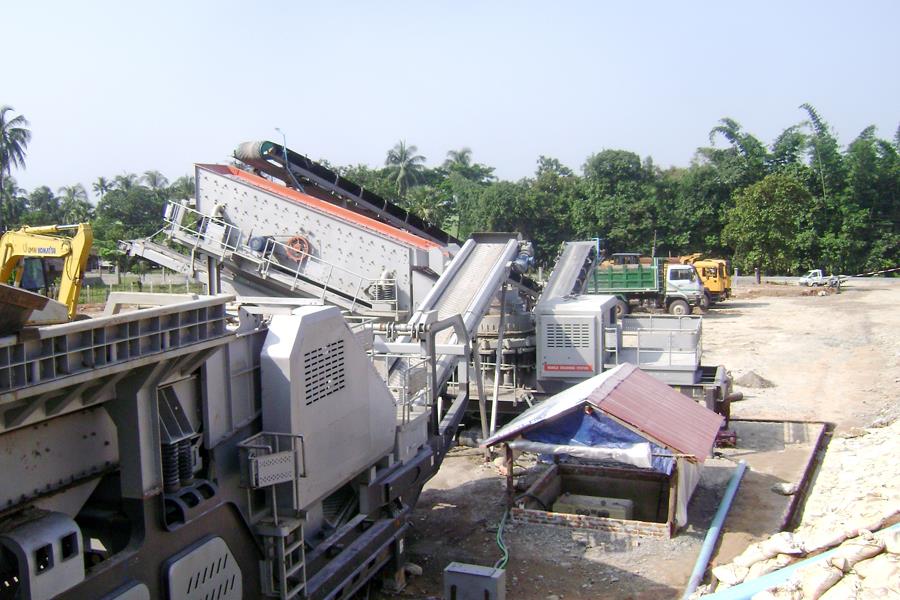
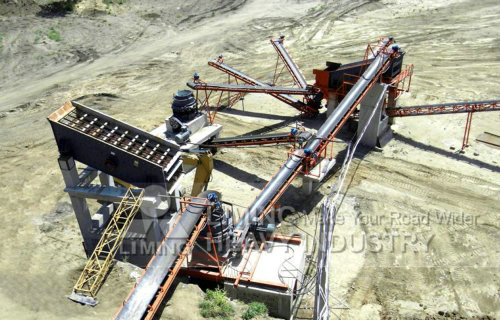
This production line has a production capacity of 200 tons of sand and gravel per hour. The plant adopts a fully enclosed production workshop. Aggregate production uses a three-stage crushing process. All materials are washed with water, fundamentally solving the quality requirements of high-quality building sand and gravel aggregates, such as particle size and gradation, particle shape, particle composition consistency, and cleanliness. It also achieves one-button start/stop of the production line and recycling of production wastewater, maximizing compliance with environmental protection requirements.
This sand and gravel production line uses a three-stage crushing system. Before entering the raw material silo, the river pebbles are first screened by a bar screen. The screened material then enters a pre-screening unit. Materials larger than 120mm are initially crushed by a jaw crusher. The crushed material then enters the medium crushing regulating silo. Secondary crushing is completed by a cone crusher. The material exiting the cone crusher enters the first screening workshop for further screening. Materials larger than 31.5mm are returned to the cone crusher for re-crushing, forming a closed-loop cycle. Materials smaller than 20mm enter a vertical shaft impact crusher for shaping and sand making. The material then passes through a second screening workshop for further screening. The screened material is then conveyed by belt conveyors to various finished product stockpiles.
The above information pertains to the site selection of a sand and gravel plant and related details about a river pebble production line. For more information about sand and gravel plants, please feel free to consult us online for free!