What are the differences between cone crushers and impact crushers when used as secondary crushing equipment
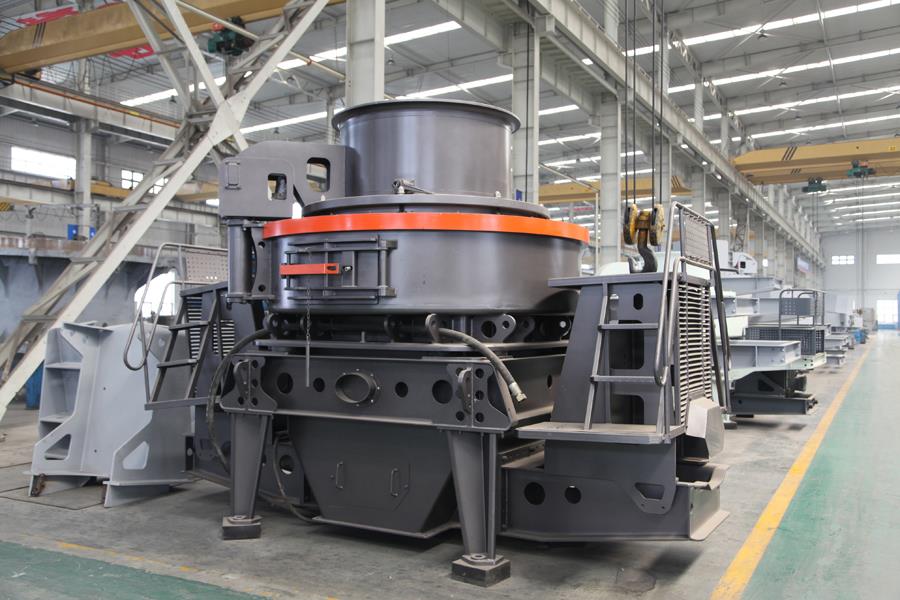
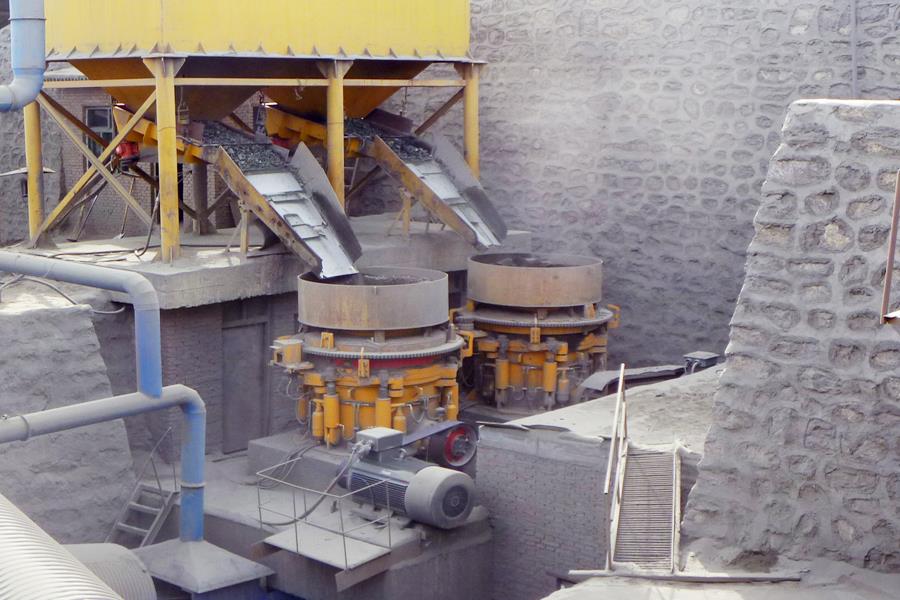
As the secondary crushing equipment in the production line, the primary distinction lies in their crushing mechanisms. Cone crushers operate on a layered crushing principle, where the rotating concave wall continuously moves, squeezing and crushing the material between them. The working principle of the impact crusher involves material freely rebounding and falling behind the toothed impact plate at the top of the vortex crusher, where it continuously collides and fractures with subsequent upward-impacting material.
Both types also exhibit several differences in actual production, specifically:
1. Differing material hardness requirements.
Both impact crushers and cone crushers can serve as secondary crushing equipment, but they handle materials of varying hardness. Cone crushers primarily process high-hardness materials like granite, basalt, tuff, and river pebbles, while impact crushers are suited for softer materials such as limestone and dolomite.
2. Differences in discharge particle size and suitable feed material size.
The particle size of crushed material produced by these two crushers also differs. Generally, cone crushers produce finer particles than impact crushers. In actual production, cone crushers are more prevalent in mineral processing, while impact crushers are more common in building materials and construction projects.
3. Differences in finished product particle shape.
Impact crushers produce well-shaped particles with fewer sharp edges and higher powder content. Cone crushers yield more needle-shaped particles with poorer grain shape.
4. Different processing capacities
Compared to impact crushers, cone crushers feature lower energy consumption, higher output, and more stable production rates. Consequently, cone crushers are commonly employed in large-scale, high-output production lines.
5. Different Investment Costs
Cone crushers are more expensive than impact crushers, but their wear parts have a longer lifespan, eliminating the hassle of frequent replacements. From a long-term perspective, cone crushers offer better value for money.
In summary, both cone crushers and impact crushers have their advantages and disadvantages in practical applications. The choice of equipment depends on factors such as geological conditions, material properties, and production requirements. If you are looking to establish a sand and gravel production line, please contact OCP Heavy Industry. We will configure a cost-effective production line tailored to your needs. We look forward to collaborating with you. Click the website chat icon for an immediate free consultation—available 24/7.