
Single-Cylinder Hydraulic Cone Crusher: A Brief Overview
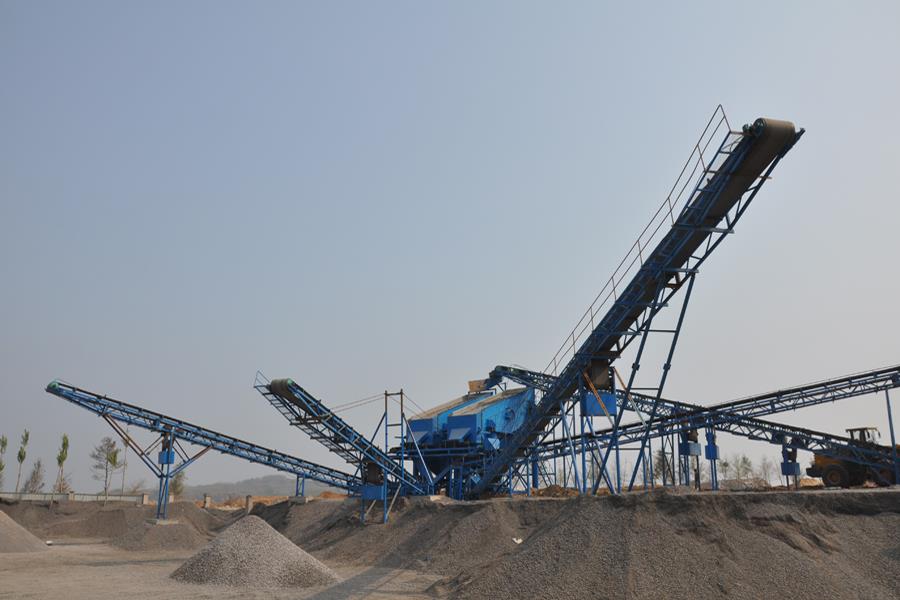
The single-cylinder hydraulic cone crusher stands as a highly favoured medium-crushing solution among contemporary cone crushers. Developed independently by OCP Heavy Industry, this high-efficiency, high-output crushing equipment employs a laminar crushing mechanism. Its versatile cavity configurations accommodate diverse particle size requirements, rendering it suitable for medium, fine, and ultra-fine crushing operations.
During operation, the motor drives the crusher's horizontal shaft via V-belts and pulleys. This shaft houses high-precision spiral bevel gears (offering advantages such as high transmission stability, strong load capacity, large transmission ratio, smooth operation, and low noise). These gears mesh with larger and smaller bevel gears to rotate the eccentric sleeve assembly. The eccentric sleeve, featuring an eccentric inner cylindrical surface, compels the body's moving cone section (crushing chamber) to perform a swinging motion. This generates periodic relative movement between the eccentrically oscillating moving cone liner and the fixed stationary cone liner. Material enters the crushing chamber via the top feed hopper, where it is subjected to compressive and bending forces between the periodically oscillating movable cone liner and stationary cone liner, thereby achieving fragmentation. The crushed material is discharged from the machine body through the circumferential cavity in the lower frame under its own weight.
Single-Cylinder Hydraulic Cone Crusher Principle
Through years of technical operation experience, the sliding bearings of single-cylinder hydraulic cone crushers have undergone technological enhancements. The improved equipment accommodates higher rotational speeds, increasing the swing velocity of the main shaft. This results in finished products that more closely meet dimensional specifications while simultaneously boosting output capacity. The single-cylinder hydraulic cone crusher features a straightforward body structure with minimal components. Its compact design, simple construction, and low manufacturing costs result in a price point lower than multi-cylinder hydraulic cone crushers. Employing a specialised crushing chamber and the principle of laminar crushing, it significantly increases the proportion of cubical particles in the final product while reducing needle-shaped stones and achieving more uniform particle size distribution.
Single-cylinder cone crushers are typically installed downstream of jaw crushers to perform secondary crushing within production lines. In contemporary crushing operations, primary or coarse crushing is predominantly handled by jaw crushers, while secondary crushing is generally undertaken by impact crushers or cone crushers. Single-cylinder hydraulic cone crushers are currently widely deployed, offering low power consumption and high productivity during the crushing process. The single-cylinder hydraulic cone crusher holds a significant position within large-scale production lines.
Driven by the increasing demand for sand and aggregate across various sectors, coupled with the superior crushing performance, advanced design, and mature technology of single-cylinder hydraulic cone crushers, these machines are poised for broader development prospects and clearer investment opportunities in the coming years.
Should you be interested in crushers or related equipment, please feel free to click on our website's customer service for an immediate complimentary consultation.
-
Mobile Sand Making Machine: Scope of Application and Working Principle
-
What are the wear parts of a cone crusher and how often should they be replaced
-
-
What are the advantages of impact crushers over hammer crushers
-
What equipment is required for a 100-tonne-per-hour bluestone crushing production line