
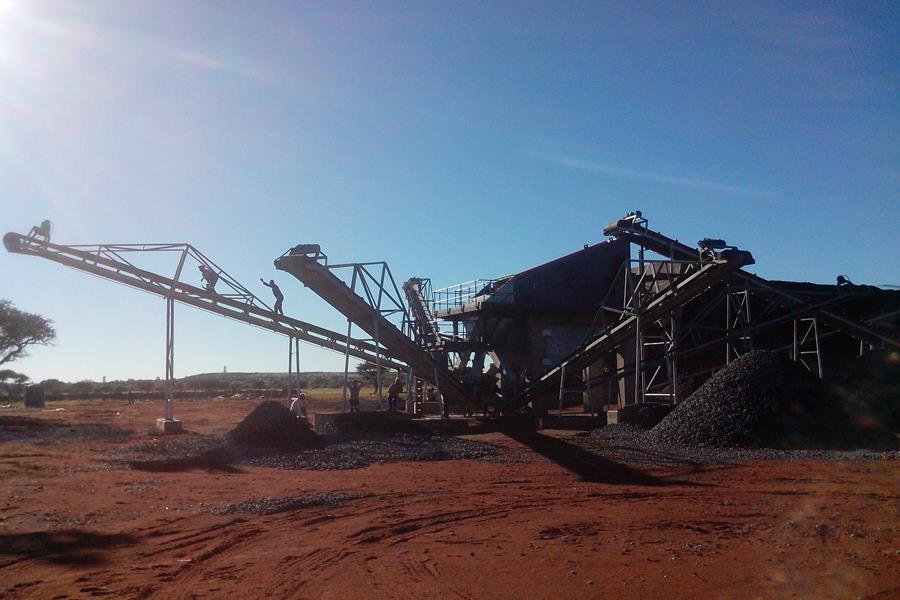
Setting Up an 800 tph Manganese Cone Crusher Plant in Nigeria
What an 800 tph manganese circuit looks like
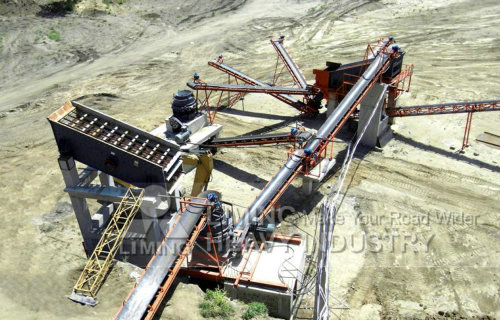
Setting up an 800 tph manganese cone crusher plant in Nigeria means planning a staged circuit, not a single machine. Manganese ore is hard and abrasive, with a crushing strength that spends liners faster than limestone, and 800 tph is a duty that rarely fits one cone. The usual arrangement runs a primary jaw for run-of-mine lump, one or more secondary cones, then tertiary cones in closed circuit with screens. An 800 tph manganese cone crusher plant in Nigeria is balanced so feed, cone and screen hold the same capacity line, with no bottleneck waiting in a single chamber.
Cone chamber and cavity selection
Cone crushers split by chamber: coarse cavity for secondary reduction on larger feed, medium or fine cavity for tertiary sizing and a tight product shape. At 800 tph the secondary stage often uses two cones in parallel, with tertiary units behind them. The feed should be graded and evenly spread across the chamber, not dropped in one side; a regulated feeder ahead of the cone keeps the choke-fed condition that protects liners. Match the closed-side setting to the required product size, and ask the supplier to state the tph at that setting on manganese, not the maximum range on soft rock.
Manganese wear and liner budget
Manganese feed wears mantle and concave through both impact and abrasion. The proposal should list liner alloy, weight per set and an expected interval in tonnes, even when consumables are priced separately. Work the cost per tonne: liner price divided by tonnes delivered before the product grows off spec. Keep a spare mantle and concave on site, because a liner change on a remote quarry stops the whole line. Wear on conveyor parts, feed chute and screen panels should be estimated alongside the cone liners; the cone is rarely the only wearing item.
Power, voltage and starting
Nigerian industrial supply runs 50 Hz at 230/415 V. Cone crushers carry large installed motor ratings, and the local grid or generator must start and sustain that load without repeated trips. Confirm motor winding, starter type and protection with the supplier; a VFD or soft starter reduces starting current, and the control system should interlock feed belt, cone and screen so the line cannot choke. Where grid supply is unstable, size a backup generator to restart the main drives after an outage and keep the plant within its duty cycle.
Plant layout, water and dust
The layout should place the primary jaw, cones, screens and stockpiles so material moves downhill in short flows. Dust suppression — spray points at transfer chutes and a baghouse or dry collection where permitted — keeps airborne fines down, and water for washing or suppression should be supplied and settled in a closed loop. Leave headroom for liner changes, side access for the drive and a crane or lifting beam over the cone. Foundations are sized for cone vibration and the static load of the structure, not guessed from a similar plant elsewhere.
Nigeria compliance and port route
Equipment reaches Nigeria through Apapa or Tin Can in Lagos, Onne in the south-east or Calabar in the east, and clearance follows SONCAP conformity requirements before arrival. Plan the route from port to quarry, bridge limits and the truck size that can reach the site, and allow time for customs handling in the schedule. Documentation should be in English, with wiring diagrams, parts lists and liner change instructions an on-site crew can follow. Mining or quarry permits and any environmental approval are confirmed with the relevant state authority before commissioning.
Budget envelope
An 800 tph manganese circuit with primary jaw, secondary and tertiary cones, screens, feeders, belts and basic electricals lands roughly between USD 1.6 million and 3.2 million, depending on machine count, cone stages and screening configuration. Prices are indicative and for reference only. Add the first spare liner sets, screen panels and a bearings pack to the capital budget, and plan port clearance, inland haul and any generator capacity separately from the factory price.
How OCP builds the manganese circuit
OCP Mechanical Company has built crushing equipment for more than 40 years: PE and PEW class jaw crushers, spring, single-cylinder and multi-cylinder cone crushers, impact and VSI machines, feeders, screens, washers and complete plants for metal and non-metal ores. We select chambers to your feed and product, estimate liner life on abrasive manganese, and ship direct from the factory with spares listed in the offer and commissioning guidance on site. Setting up an 800 tph manganese cone crusher plant in Nigeria should be settled on chamber fit, wear life and power capacity before the foundation is poured.
Send the ore description and product size
Share your manganese feed size, hardness, required product, site voltage and port of entry, and we will return a circuit layout, liner estimate and delivered price at no cost. The chat button on this site reaches an engineer 24 hours a day. The 800 tph manganese cone crusher plant in Nigeria runs most reliably when feed regulation, wear spares and backup power are planned in the design stage. Capacity and price figures above are indicative and updated continuously.
Notes: Actual results vary with material characteristics, operating conditions, installation and maintenance practice. OCP Mechanical Company reserves the right to update technical data and prices. All prices and parameters above are for reference only — confirm final figures with our team.
-
How to Choose a Cone Crusher for 150 tph Copper Ore Crushing in Saudi Arabia
-
Aggregate Crushing Plant Supplier Nigeria: Product Grading Signals from a Three-Way Price Adjustment
-
Requesting a 250 tph Gold Ore VSI Crusher Quotation in Uzbekistan
-
900 tph Construction Waste Impact Crusher Price & Direct Manufacturer Guide for Brazil
-
Mobile Crushing Plant Supplier Nigeria: What a First Mobile Crusher Launch Signals