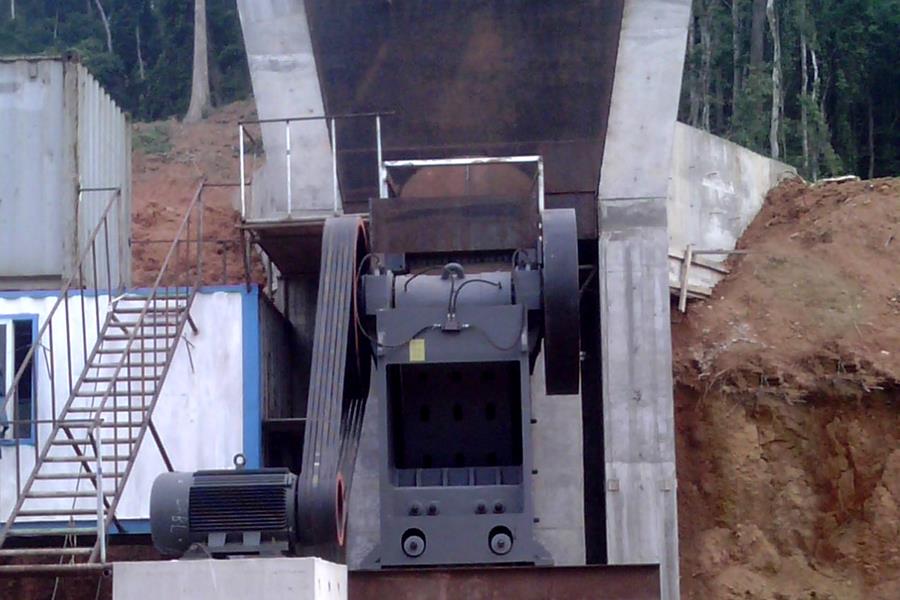
Jaw crusher toggle plate design for high reduction ratio
Why jaw crusher toggle plate design for high reduction ratio is critical for efficient primary crushing
The toggle plate is one of the most important yet often overlooked components in a jaw crusher. It serves as the force-transmitting link between the swing jaw and the crusher frame, converting the rotational motion of the eccentric shaft into the reciprocating crushing action. But its role goes far beyond simple force transmission. The toggle plate also functions as a critical overload protection device—often described as the "safety fuse" of the crusher—designed to fracture when uncrushable material enters the chamber, protecting the frame and eccentric shaft from costly damage. When you consider jaw crusher toggle plate design for high reduction ratio, you are looking at a component that directly influences the crusher's ability to achieve a higher reduction ratio, improve product shape, and reduce operating costs. With conventional jaw crushers typically achieving a reduction ratio of only about 4:1, optimising the toggle plate design can push that ratio closer to 6:1 or even 8:1, significantly reducing the load on downstream crushers. At OCP Mechanical Company, with over 40 years of manufacturing experience, we engineer our PE Series and PEW Series jaw crushers with advanced toggle plate geometries that deliver high reduction ratios while maintaining reliable operation.
The role of toggle plate geometry in determining reduction ratio
The toggle plate's geometry—specifically its length, angle, and the position of the toggle seats—directly affects the movement of the swing jaw. A well-designed toggle plate creates a more aggressive crushing action, increasing the stroke of the jaw and allowing the crusher to achieve a higher reduction ratio. The toggle angle, which is the angle between the toggle plate and the horizontal plane, is a critical parameter. A steeper toggle angle increases the vertical component of the crushing force, which improves the crusher's ability to pull material into the chamber and reduce it more effectively. However, a steeper angle also increases the stress on the toggle plate and the frame. Finding the optimal balance requires careful engineering and a deep understanding of the material being crushed. When you focus on jaw crusher toggle plate design for high reduction ratio, you must consider the feed size, the desired product size, and the hardness of the material. Our PEW Series jaw crushers feature an adjustable toggle plate geometry that allows operators to fine-tune the crushing action to match the specific application, providing flexibility without compromising reliability.
How toggle plate design influences product shape and fines generation
The toggle plate not only affects the reduction ratio but also the shape of the final product and the amount of fines generated. A crusher with a well-optimised toggle plate produces a more cubical product with a lower flakiness index, which is highly desirable for concrete aggregates. The toggle plate's geometry influences the jaw's stroke and the point at which the material is released from the crushing chamber. A design that provides a longer stroke at the discharge end of the chamber tends to produce a more cubical product, as the material is subjected to more compression and less shearing. Conversely, a design that creates excessive shearing can generate more fines, which may not be suitable for certain applications. When you are evaluating jaw crusher toggle plate design for high reduction ratio, it is also important to consider the trade-off between reduction ratio and product shape. Our PE Series jaw crushers are designed with a toggle plate geometry that balances these competing factors, delivering a high reduction ratio while maintaining product quality that meets the most demanding construction specifications.
The mechanical advantage and force transmission
The toggle plate is not a rigid link; it is a carefully engineered component that must transmit significant forces while providing a degree of flexibility. The mechanical advantage of the toggle plate system is determined by the ratio of the distance from the toggle seat to the pivot point on the swing jaw, relative to the distance from the pivot point to the crushing face. A higher mechanical advantage allows the crusher to generate greater crushing force for a given input power, improving efficiency and enabling a higher reduction ratio. However, a very high mechanical advantage can also increase the stress on the toggle plate and the frame, requiring stronger materials and more robust construction. When you are working with jaw crusher toggle plate design for high reduction ratio, understanding the mechanical advantage is essential. Our PEW Series crushers utilise a toggle plate system that provides an optimal mechanical advantage for high reduction applications, maximising the crushing force while minimising stress on the components.
Material selection and durability for high-reduction applications
In high-reduction applications, the toggle plate and its seats are subjected to significant cyclic loading and impact forces. The material used for the toggle plate must be strong enough to transmit these forces without deforming, yet ductile enough to absorb shock loads. The most common material is high-strength forged steel, often with a manganese content that provides work-hardening properties. The toggle seats—the surfaces against which the toggle plate bears—must be equally robust and are typically made from hardened steel or manganese steel. Regular inspection of the toggle plate and seats is essential, as wear or damage can lead to reduced performance and potential failure. When you consider jaw crusher toggle plate design for high reduction ratio, the material selection is as important as the geometry. Our toggle plates and seats are manufactured from high-quality alloy steels, heat-treated to achieve the optimal balance of strength and toughness, ensuring reliable performance even in the most demanding applications.
Adjustability and maintenance considerations
Modern toggle plate designs often include features that allow for adjustment of the crusher's setting without the need for shims. Hydraulic toggle adjustment systems are increasingly common, allowing operators to change the crusher's closed side setting quickly and precisely. This adjustability is particularly valuable for operations that process different materials or that need to respond to variations in feed size. In terms of maintenance, the toggle plate is designed to be a sacrificial component—it is intended to break in the event of an overload, protecting the more expensive components of the crusher. Therefore, having a reliable supply of replacement toggle plates is essential for minimising downtime. When you are implementing jaw crusher toggle plate design for high reduction ratio, consider the ease of access for replacement and the availability of spare parts. Our PE Series crushers feature a hydraulic toggle adjustment system that simplifies setting changes, and we maintain a comprehensive inventory of genuine toggle plates to ensure rapid replacement when needed.
Sample toggle plate design parameters (For reference only)
| Parameter | Value |
|---|---|
| Toggle angle (typical range) | 15‑22° * |
| Toggle plate material | High-strength forged steel, 18% Mn * |
| Toggle seat material | Hardened alloy steel * |
| Adjustability | Hydraulic or mechanical shim * |
| Overload protection | Toggle plate fracture (sacrificial) * |
| Typical replacement interval | 1‑3 years (depending on operating conditions) * |
All figures and recommendations are for reference only and are continuously updated. For the latest parameters, please consult our online customer service. Prices are for reference only and are subject to change based on configuration and market conditions. Actual results may vary depending on feed characteristics, operating conditions, and maintenance practices. OCP Mechanical reserves the right to update technical data and pricing without prior notice.
Why OCP Mechanical is your partner for high-performance jaw crushers
With over 40 years of manufacturing experience, OCP Mechanical combines engineering excellence with practical, field-tested knowledge of jaw crusher design and operation. We are a factory-direct supplier, meaning you avoid the markups charged by dealers and intermediaries. Our PE Series and PEW Series jaw crushers are built with high-quality components, including optimised toggle plate designs that deliver high reduction ratios while maintaining reliability. We provide comprehensive after-sales support, including spare parts availability, technical assistance, and on-site training. We are committed to helping you achieve the highest possible productivity from your primary crushing operation.
Conclusion – Optimise your toggle plate design for higher reduction ratios and improved efficiency
The toggle plate is a critical component that significantly influences the performance of a jaw crusher. By understanding the principles of toggle plate geometry, mechanical advantage, and material selection, you can optimise your crusher to achieve higher reduction ratios, improve product quality, and reduce operating costs. OCP Mechanical offers the equipment, expertise, and factory-direct pricing you need to succeed. Our online customer service team is available 24/7 to provide free consultation, technical data, and a customised quotation for your operation. Click the chat button now – let us help you implement the best jaw crusher toggle plate design for high reduction ratio and build a more efficient, productive crushing operation.