
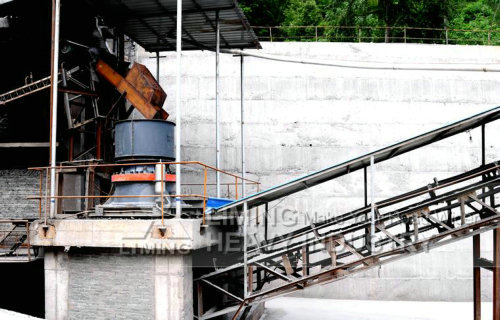
Jaw crusher capacity calculation for amphibolite 165 tph
For aggregate and mining operations in Canada and Brazil processing amphibolite – a hard, metamorphic rock similar to basalt – accurate jaw crusher capacity calculation is essential to size the equipment correctly. Amphibolite is dense and abrasive, with compressive strength often exceeding 200 MPa. Under‑sizing a jaw crusher leads to bottlenecks and premature wear; over‑sizing wastes capital. Knowing jaw crusher capacity calculation for amphibolite 165 tph helps you select a model that delivers reliable throughput while controlling operating costs. OCP Mechanical Company, a factory‑direct manufacturer with over 40 years of experience, supplies Type J jaw crushers designed for hard rock, backed by 24/7 online support.
Note: Product data are constantly updated; the latest specifications should be confirmed with our online customer service.
Basic capacity formula for jaw crushers
The theoretical capacity (C) of a jaw crusher can be estimated using the following formula:
C = (W × L × CSS × d × S × F) / 27,000 (for imperial units) or metric equivalents.
Where:
W = width of feed opening (feet or meters)
L = length of feed opening (feet or meters)
CSS = closed side setting (inches or mm)
d = bulk density of amphibolite (typically 2.8‑3.0 t/m³ or 175‑190 lb/ft³)
S = stroke factor (0.4‑0.6 for hard rock)
F = material factor (0.9‑1.0 for average friability)
For amphibolite, a stroke factor of 0.45 and a material factor of 0.95 are a practical starting point. Using metric units for a Type J-900x1,200 mm jaw crusher (W=0.9 m, L=1.2 m) at a CSS of 120 mm (0.12 m), with bulk density 2.9 t/m³, the calculation yields:
C = 0.9 × 1.2 × 0.12 × 2.9 × 0.45 × 0.95 ≈ 0.158 m³/s → 569 m³/h → approx. 1,650 t/h theoretical.
This theoretical capacity is rarely achieved in practice. Actual capacity for hard amphibolite is typically 40‑55% of theoretical due to feed segregation, liner wear, and material characteristics. Therefore, for 165 tph, a Type J-900x1,200 or J-750x1,060 is a practical choice.
All performance data are for reference only; actual capacity depends on feed gradation and operating conditions.
Practical capacity estimation using manufacturer tables
A more reliable method for jaw crusher capacity calculation for amphibolite 165 tph is using empirical tables from manufacturers. OCP provides capacity charts based on extensive testing. For amphibolite with a CSS of 100‑150 mm:
Type J-750x1,060 – 110‑140 tph at 100 mm CSS; 130‑170 tph at 120 mm CSS.
Type J-900x1,200 – 150‑190 tph at 100 mm CSS; 180‑230 tph at 120 mm CSS.
Type J-1,100x1,300 – 200‑260 tph at 100 mm CSS; 250‑320 tph at 120 mm CSS.
For 165 tph, a Type J-900x1,200 at 110‑120 mm CSS is a widely used configuration. This size provides a safety margin (operating at 70‑80% of maximum capacity) while handling occasional feed surges. Many Canadian and Brazilian amphibolite quarries have successfully used this crusher size.
Note: Product data are constantly updated; contact OCP for current capacity charts for your specific CSS and amphibolite hardness.
Factors that affect real‑world capacity
When performing jaw crusher capacity calculation for amphibolite 165 tph, you must account for these variables:
Feed size distribution – A well‑graded feed (mix of coarse, medium, fine) increases capacity by 10‑20% compared to a feed with mostly large boulders. Use a vibrating grizzly feeder to scalp out fines below CSS.
Moisture content – Dry amphibolite flows freely. Moisture above 5‑6% causes packing and reduces capacity by 15‑30%. In Brazilian rainy seasons or Canadian spring thaws, consider temporary CSS widening.
Liner wear – New, sharp jaw plates grip material better. Capacity drops by 10‑15% toward the end of plate life. Plan CSS adjustments every 200‑300 hours.
Crusher speed – Higher eccentric speed (e.g., 350 rpm vs. 280 rpm) increases capacity but also increases wear. For amphibolite, moderate speed (300‑320 rpm) is recommended.
Many Brazilian operations have achieved 165 tph consistently by using a Type J-900x1,200 at 120 mm CSS with a choke‑fed condition and a well‑maintained grizzly feeder.
How to verify your capacity calculation
To validate your jaw crusher capacity calculation for amphibolite 165 tph, conduct a simple site test. Run the crusher for 30 minutes at a fixed CSS, measuring the feed rate (using a belt scale or by timing a loader bucket). Compare the measured throughput to your calculation. If the measured rate is below target, check:
CSS setting – measure with lead balls.
Feed gradation – remove oversize above 80% of feed opening.
Feeder speed – increase to maintain choke‑fed condition.
Jaw plate wear – replace if worn beyond 50% of profile.
OCP’s engineers can assist with remote capacity verification using video and data logs.
Why OCP is your trusted partner for jaw crusher sizing in Canada and Brazil
Mastering jaw crusher capacity calculation for amphibolite 165 tph ensures you select the right crusher for your hard rock operation. OCP Mechanical Company has four decades of experience in crushing equipment for the global mining and aggregate industries. Our 24/7 online team helps with capacity simulations, CSS selection, and wear part optimization. We keep common jaw plates and spare parts in our regional warehouses for fast delivery to Canada and Brazil. We invite you to request a no‑obligation quote and free capacity assessment.
For a no‑obligation jaw crusher capacity calculation for amphibolite 165 tph tailored to your site, simply click the live chat icon on this page. Our online customer service team is available 24 hours a day, 7 days a week, to provide free technical advice, equipment recommendations, and installation support – helping you crush amphibolite efficiently and profitably.
-
-
-
-
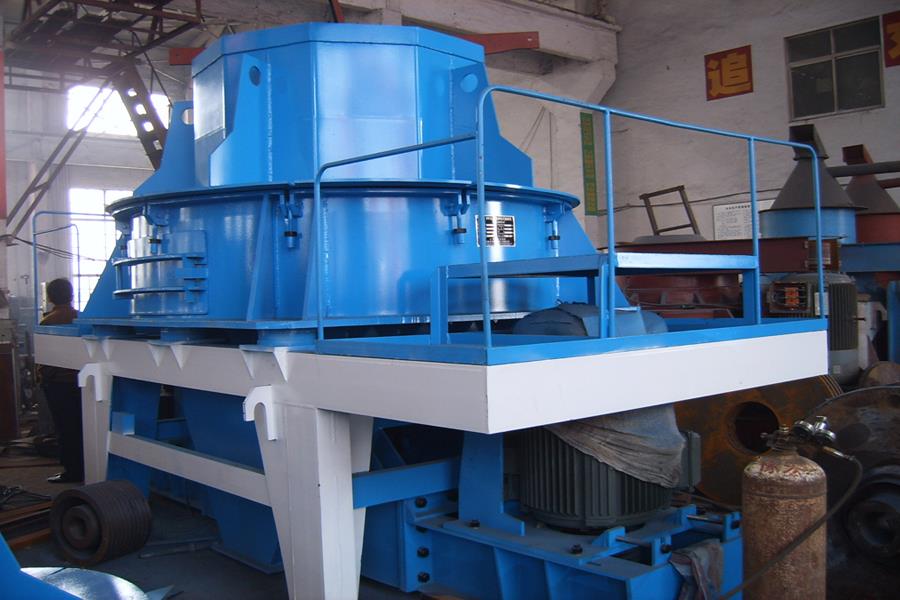
Factory direct price of mobile impact crusher for basalt 155 tph in Kenya
-
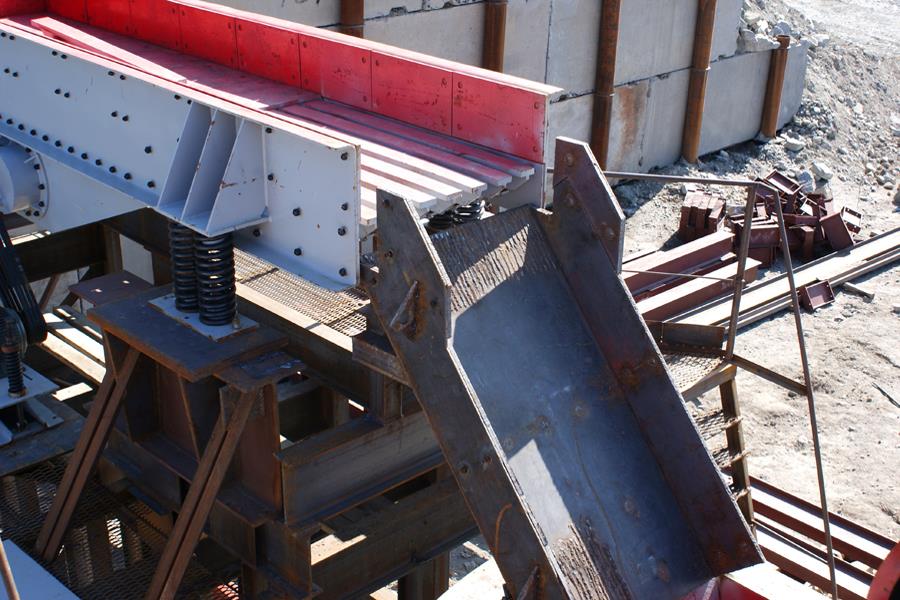
Order VSI rotor assembly for sand from river pebble 95 tph in Vietnam