
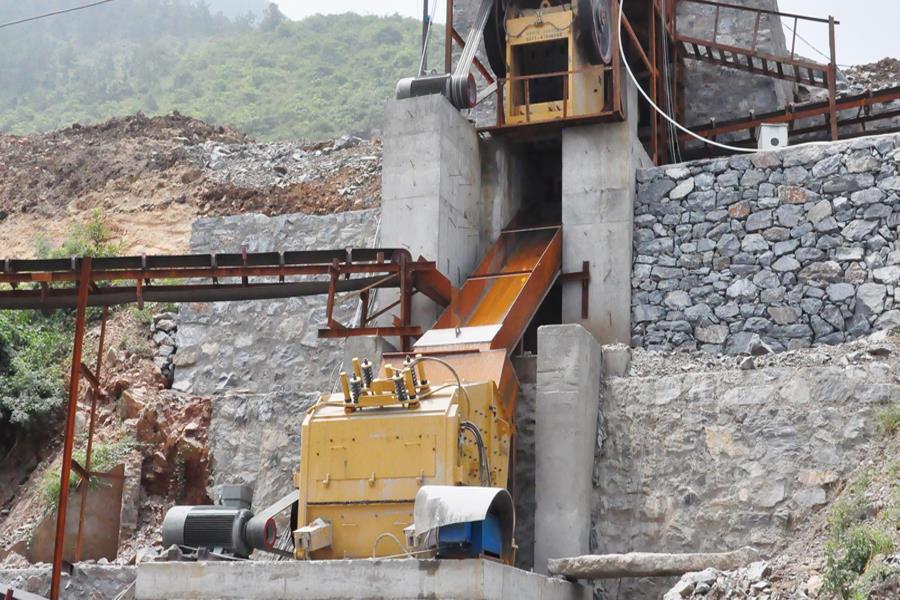
How to Select the Right Jaw Crusher
In a production line, jaw crushers are typically used for the primary crushing of sand and gravel materials. They play an irreplaceable role, especially in crushing high-hardness rocks like granite and basalt. To enhance the overall efficiency of a crushing or sand-making production line, it is crucial to prioritize the selection of the primary jaw crusher. So how should one select the appropriate jaw crusher model?
1. Material Properties
Factors such as moisture content, volume, origin, abrasiveness, and hardness all influence the selection of a jaw crusher. Particularly, the size of the material determines the feed size and discharge size of the jaw crusher. The specifications of the material dictate the size of the crusher equipment required. If the user's material is too large, using undersized equipment is inadvisable. This not only reduces production efficiency but also shortens the equipment's lifespan. After all, crushers handle materials with inherent hardness. Mismatched material specifications can severely damage equipment longevity. Therefore, understanding the material is essential before selecting equipment. Feed size must not be excessively large or small, as this may render the equipment unusable or lead to energy waste.
2. Environmental Regulations
Environmental concerns cannot be overlooked. Jaw crushers operate in harsh conditions, generating dust and noise. Thus, crushers must comply with industrial production standards—reducing pollution while avoiding regulatory compliance issues that could disrupt production schedules.
3. Equipment Quality
Inspect equipment quality in person, focusing on key areas—machinery is no exception. Prioritize examining the quality of wear-resistant components in jaw crushers, such as jaw plates, liner plates, and tooth plates. These parts are prone to wear during operation and require frequent replacement, making them critical factors during selection.
4. Production Energy Consumption
Production energy consumption determines future operational costs, primarily involving material usage and electricity consumption. The length of the jaw crusher's liner plates is directly proportional to power consumption—longer liners consume more energy and carry a higher price tag. Generally, shorter liners are recommended for materials with low hardness, while longer liners suit high-hardness materials. Similarly, shorter liners are preferred for finer particle sizes, and longer liners for coarser particle sizes.
5. Production Capacity
The production capacity of a jaw crusher depends on its specifications and model. Key factors determining capacity include rotational speed, jaw angle, main shaft eccentricity, feed opening size, and discharge particle size. The feed opening length corresponds to the jaw plate length. Generally, smaller discharge particle sizes result in lower production capacity, while larger discharge sizes yield higher capacity. Higher capacity isn't always better; it must be reasonably matched to the production line's output requirements to select the most suitable option.
6. Price and Operating Costs
Price isn't the sole factor, but it significantly influences purchasing decisions. When selecting a jaw crusher, adopt a balanced perspective on pricing: neither the lowest nor the highest is ideal. The best choice is one offering the optimal cost-performance ratio for your specific production line.
7. Operating Environment
The operating environment must not be overlooked, particularly outdoor temperatures. Temperature affects hydraulic adjustments and lubrication in jaw crushers. Buyers must clearly specify the intended operating conditions to sellers.
OCP specializes in developing and manufacturing complete sets of equipment for crushing, screening, grinding, washing, feeding, conveying, environmental protection, dust removal, as well as steel, metallurgy, and steel slag processing and recycling. Our products are widely applied in the crushing and processing of metals, non-metallic minerals, energy raw materials, and metallurgical waste residues within the steel and metallurgical sectors. Click the website chat icon for immediate free consultation—available 24/7.
-
How to Ensure Efficient Operation of Hydraulic Cone Crushers
-
Which customers benefit most from mobile crushing plants in terms of cost-effectiveness
-
-
-
What Advantages Does the Vertical Impact Crusher Offer in the Sand and Gravel Industry