
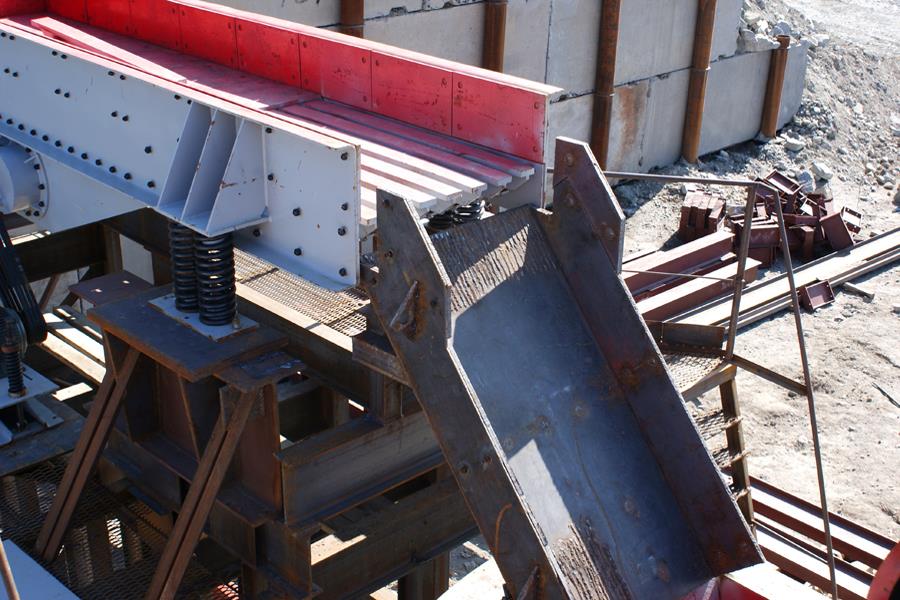
How to Enhance the Production Capacity of a Cone Crusher
How to Enhance the Production Capacity of a Cone Crusher? Maximising equipment output is the aspiration of many aggregate producers, and the cone crusher stands as one of the most favoured crushing machines. Today, we present 11 time-tested methods to help you further boost your cone crusher's productivity.
A. Maintain Consistent Tight-Side Discharge Parameters
To ensure stable aggregate output, quality, and production line load, it is paramount to maintain consistent tight-side discharge parameters on the cone crusher. Deviations can readily cause unexpected increases in product particle size, adversely affecting the entire production system and final output.
For instance: If a machine's tight-side discharge opening is set at 10mm, yet due to neglected inspections and equipment wear this expands to 13mm, output of particles smaller than 10mm will decrease by 15%, significantly reducing target product yield. The annual revenue lost by many aggregate producers in this regard is staggering.
Recommendation: Inspect the tight-side discharge opening parameter at every shift change.
B. Maintain Full-Chamber Operation Wherever Possible
If a cone crusher experiences intermittent overfeeding or underfeeding due to unstable feeding, fluctuations will occur in product shape and yield. Products from cone crushers operating at half-chamber capacity exhibit suboptimal gradation and excessive needle and flake particles.
Recommendation: Aggregate producers should endeavour to maintain full-chamber operation of cone crushers to achieve optimal throughput and particle shape. This is particularly crucial for tertiary cone crushers (short-head type) producing final products.
C. Avoid excessively low feed rates
Supplying minimal feed does not alleviate the cone crusher's load. On the contrary, insufficient material not only compromises output volume and product shape but also adversely affects the crusher's bearings.
Based on the cone crusher's operating principle, its actual power consumption should not fall below 40% of the rated power. To achieve proper bearing load positioning and maximise productivity, the actual power should be maintained between 40% and 100% of the rated power. Operating at 75% to 95% of the rated power is optimal.
Impact: Operating beyond the rated power will shorten the cone crusher's service life and cause various issues.
D. Feed drop point must align with the centre of the cone crusher's feed opening
It is recommended to use vertical guide plates to direct the feed drop point towards the centre of the cone crusher's feed opening. Should the drop point become eccentric, one side of the crushing chamber will become overloaded while the other remains underloaded or empty. This will result in reduced crusher throughput, increased needle and flake-shaped products, and oversized product particle sizes.
Improper operation: When this occurs, operators often reduce the tight-side discharge opening to force the crusher to produce the target particle size. However, this risks overload and adjustment ring vibration on the overfed side. Prolonged operation under such conditions may cause adjustment ring tilting, lifting, or base damage, leading to greater production losses.
E. Ensure uniform feeding
Impact: Uneven feeding causes abnormal increases in bulk density, leading to compaction and blockages on the side with concentrated fine particles. This triggers adjustment ring vibration. When faced with blockage-induced vibration, operators are forced to increase discharge parameters, resulting in larger product sizes. Over time, this also damages the adjustment ring, causing greater production losses.
F. Minimising Buffer Bin Retention to Enhance Production Line Efficiency
The cone crusher's buffer bin, as an enemy of output, requires meticulous arrangement alongside other related equipment.
Recommendation: Prudent use of buffer bins/hoppers and variable-speed feeding devices (conveyor belts, vibrating plate feeders) enables operators to sustain full-chamber operation of the cone crusher for extended periods, effortlessly boosting output by 10%.
G. Precisely Managing the Three Design Limits of Cone Crushers
The cone crusher possesses three design limits: throughput (capacity) limit, power limit, and crushing force limit.
The capacity limit denotes the crusher's maximum throughput. A cone crusher operating at full cavity capacity has already reached this maximum throughput; exceeding this limit will cause overflow at the feed inlet. When feed rate increases and material is crushed to finer sizes, the crusher's actual power consumption rises. Similarly, the crushing force generated between the bowl liner and crushing wall increases with higher feed rates and finer material. Exceeding this limit causes the adjusting ring to bounce and loosen.
Ideal operating conditions: When the crusher operates at maximum throughput, both actual power consumption and crushing rate remain slightly below their upper limits. Operating beyond rated power and crushing force limits causes cone crushers to overload and sustain permanent fatigue damage. This damage is irreversible and accumulates progressively, ultimately shortening the crusher's service life.
H. Ensure operation within the crusher's design limits
Should the cone crusher exceed its maximum crushing force (adjustment ring oscillation) or rated power, you may:
Slightly increase the tight-side discharge opening parameter while ensuring full-chamber operation wherever possible. The benefit of full-chamber operation is that stone-on-stone crushing occurs within the chamber, thereby maintaining product shape when the discharge opening is slightly larger;
Reduce the feed rate, though this may compromise optimal product shape.
Root Cause Analysis: Typically, issues such as adjusting ring bounce or exceeding rated power in cone crushers stem from material jamming, eccentric feeding, uneven feed distribution, excessive fine material in feed, high clay content, incorrect use of crushing walls and bowl liners, or simply the operator setting the tight-side discharge opening too narrowly.
I. Monitor and Maintain Optimal Crusher Speed
Impact: Failure to maintain proper drive belt tension, incorrect or neglected drive maintenance can lead to belt slippage and reduced crusher speed during operation. A speed-reduced crusher experiences sharply diminished aggregate throughput while simultaneously incurring significantly higher power consumption, increasing energy costs per unit output and elevating operational expenses.
Recommendation: Install speed monitoring devices at locations such as the intermediate shaft, connected to a PLC or directly to an alarm system. This enables immediate notification to maintenance personnel for belt adjustment upon speed reduction, thereby extending belt lifespan while ensuring optimal production capacity and energy efficiency.
J. Controlling Fine Material Content in Feed
Fine material in feed: Refers to rock entering the crusher with particle size equal to or smaller than the tight side discharge setting. Based on experience, for secondary cone crushers, fine material content should not exceed 25%; for tertiary cone crushers, it should not exceed 10%.
Reasons and impacts: Excessive fine material is typically caused by vibrating screen issues, such as insufficient screen aperture diameter or inadequate screening capacity. Excessive fine material leads to inefficient power utilisation during crushing and abnormal increases in energy consumption per unit.
K. Avoid excessive feed height
For small and medium-sized cone crushers, the optimal maximum drop height from the feeding device to the inlet is approximately 0.9 metres. Excessive feed height allows material to enter the crushing chamber at high velocity, imposing impact loads on the crusher and potentially exceeding the design limits for crushing force or power consumption.
OCP Heavy Industry, with 40 years of experience in manufacturing and developing large-scale mining equipment, offers a comprehensive range including jaw crushers, impact crushers, cone crushers, sand makers, washing and sorting equipment, and conveying systems. We tailor production line solutions to client requirements, providing complimentary installation and training. Site visits to our facilities are welcome! Click our website chat for immediate free consultation – available 24 hours.
-
-
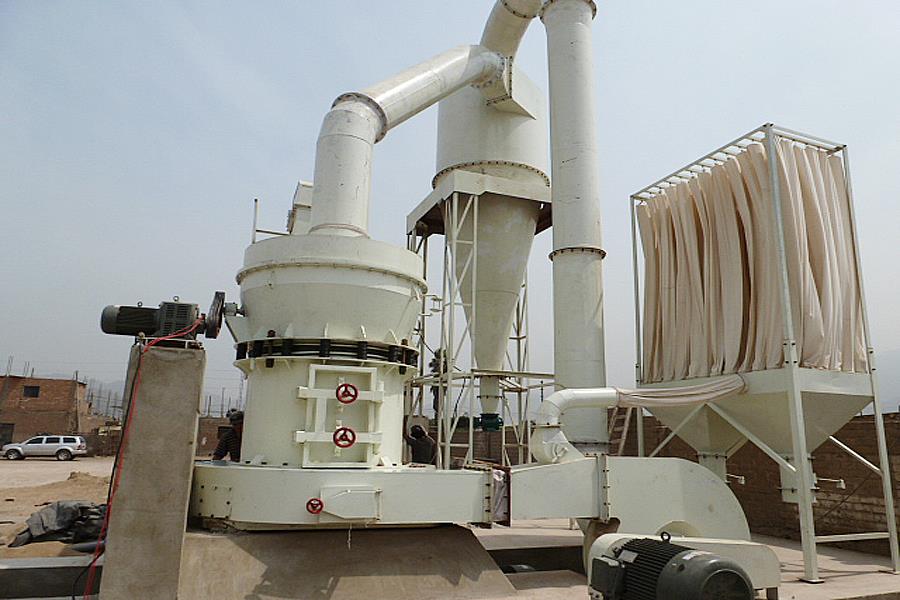
What equipment comprises a 400-tonne-per-hour river pebble production line
-
-
-
Mobile Sand Making Machine: Scope of Application and Working Principle