
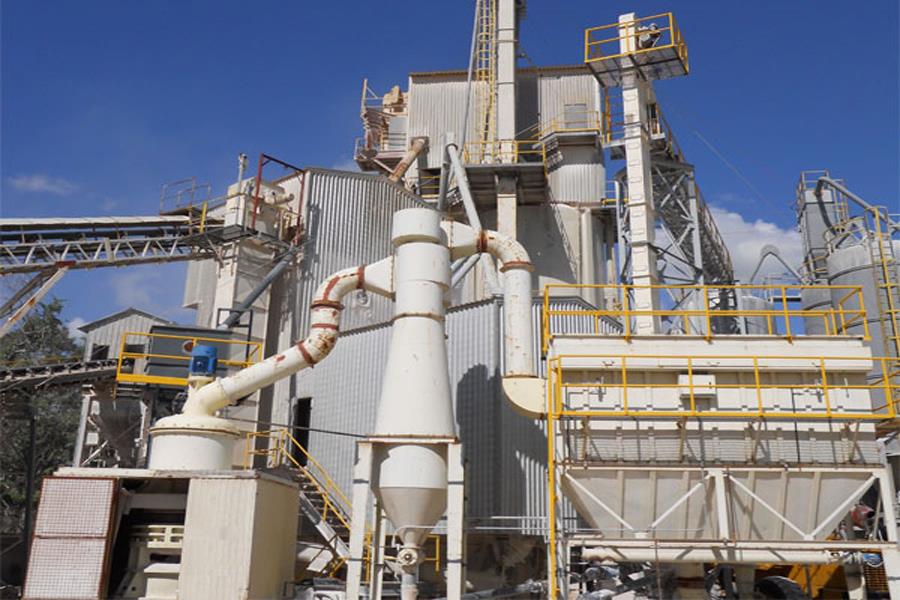
Comprehensive Process Design Guide for Sand and Gravel Aggregate Production Lines
Process design for sand and gravel aggregate production lines often becomes the primary concern for investors during construction planning. Key considerations typically include equipment selection, workshop layout, and environmental protection measures. The production process can be broadly summarized as: crushing, screening, and storage.
1. Pre-Screening Feeding Equipment
Aggregate products demand strict control over soil content. Typically, a vibrating feeder is installed before the primary crusher to remove soil at the source. This equipment ensures continuous, uniform feeding to the primary crusher while simultaneously performing coarse screening based on preset bar gap dimensions.
When raw materials contain minimal soil and are dry, the bar spacing of the vibrating feeder can be adjusted to an appropriate value to screen out soil after material passage.
When raw materials contain high soil content or exhibit high stickiness, slightly increase the bar spacing. Most soil-laden waste is screened out, then passed through a circular vibrating screen to remove residual soil. Oversize rock from the circular vibrating screen can be reintroduced into the secondary crusher for further processing.
2. Crushing Equipment
Crushing equipment is generally categorized into primary crushers (jaw crushers, hammer crushers), secondary crushers (cone crushers, impact crushers), and sand-making/shaping crushers (vertical impact crushers, vertical compound crushers, vertical shaft impact crushers).
For materials, special distinction is required between medium-fine crushers, specifically cone crushers and impact crushers. For hard rock with high hardness and abrasion index, secondary crushing is recommended using cone crushers. Cone crushers employ a layer compression crushing principle with highly wear-resistant consumable parts. For limestone with moderate hardness and abrasion index, impact crushers are recommended. These crushers employ an impact crushing principle, though their liners exhibit lower wear resistance.
Note: Hammer crushers are rarely used in typical sand and gravel aggregate production. Although hammer crushers serve as primary crushers with a simple process, they yield low finished aggregate rates for large pieces, prone to over-crushing, excessive fines, micro-cracks in finished aggregates, and reduced compressive strength—all of which compromise aggregate quality and sales.
3. Screening Equipment
The aggregate industry typically selects linear vibrating screens and circular vibrating screens for screening equipment. In actual production, the choice between circular and linear vibrating screens primarily depends on the material type being processed, the application field, and the screening objectives. The selection of equipment will vary accordingly. While the design and structural composition of circular and linear vibrating screens are fundamentally similar—both achieve screening through vibrating screens—the differing vibration trajectories directly impact screening outcomes.
4. Finished Material Yard Layout
Finished aggregates can be stored in stockpiles or storage silos. For stockpile storage, to minimize secondary dust generated during loader loading, design loading conveyors beneath the stockpile whenever terrain elevation differences permit. For dust control at finished aggregate unloading points, water spray dust suppression can be selected based on local water availability. In areas with limited water resources or cold climates, constructing storage silos and stockpile sheds can also reduce dust emissions.
5. Environmental Issues
The primary environmental impacts of sand and gravel production lines stem from dust, noise, and wastewater generated during operations.
Dust arises throughout the aggregate production process. To effectively control emissions, the design minimizes dust-generating stages by selecting low-dust equipment and employing well-sealed conveying and feeding systems. When designing material pipes connecting equipment, optimize pipe geometry and angles to reduce drop height.
For noise control: First, prioritize low-noise equipment selection. Second, house high-noise machinery within enclosed workshops.
Wastewater Treatment: Domestic sewage undergoes preliminary treatment in septic tanks before reuse for landscaping, agricultural irrigation, etc., with no external discharge. Spray dust suppression water is consumed and evaporates naturally post-dust removal.
The above outlines recommendations for equipment selection, workshop layout, and environmental protection measures in sand and gravel aggregate production line design. We hope this proves helpful! For further inquiries regarding production line design, consult our online experts! 24/7 free consultation available.
-
-
How to Select the Cavity Type for Multi-Cylinder Hydraulic Cone Crushers
-
-
What are the advantages of using a hydraulic cone crusher for granite crushing
-
How to Select an Appropriate and Efficient Sand Making Machine for a Sand Production Line